Bookkeeping for Freelancers: A Practical Setup Guide
Nomad Toolkit

US freelancers pay 15.3% self-employment tax on net earnings before income tax even starts, and the IRS expects that money in four estimated payments a year. Good bookkeeping is how you know what to set aside, which deductions to claim and whether last quarter made money. You do not need an accounting degree or a $400 software stack. You need a simple system, an hour a week and a record of every dollar that moves.

This guide covers a realistic setup for solo freelancers and remote workers: the accounts to open first, the tools worth paying for, the categories that matter at tax time, and the weekly habit that prevents April panic.
Why Solid Books Are Worth the Hour a Week
Freelancers without records overpay taxes by missing deductions, underprice work because they cannot see real margins, and get caught out by quarterly tax bills they did not save for. An hour a week prevents all of it.
Clean books also help with things you might want later: a mortgage, a business loan, or selling the business one day. Lenders usually ask for two years of clear records, so start the habit while the business is small.
Separate the Money First
Before any software, open a dedicated business checking account and a dedicated business credit card. This is the single most useful move in freelance bookkeeping. When personal and business money share an account, every transaction has to be sorted by hand and you will miss things.
Run all client payments into the business account. Pay all business expenses from it: software subscriptions, coworking fees, flights for client work, your accountant. Once a month, move a fixed amount to your personal account. That transfer is your owner draw, and it makes profit visible.
If you travel full-time, pick accounts that handle foreign transactions without heavy fees. Wise, Mercury and Relay all serve solo operators, with multi-currency or international support and accounting integrations.

Pick a System You Will Actually Use
Three setups work for solo freelancers. Pick the one that matches your volume and your patience for software.
Spreadsheet plus a receipts folder (under 30 invoices a year)
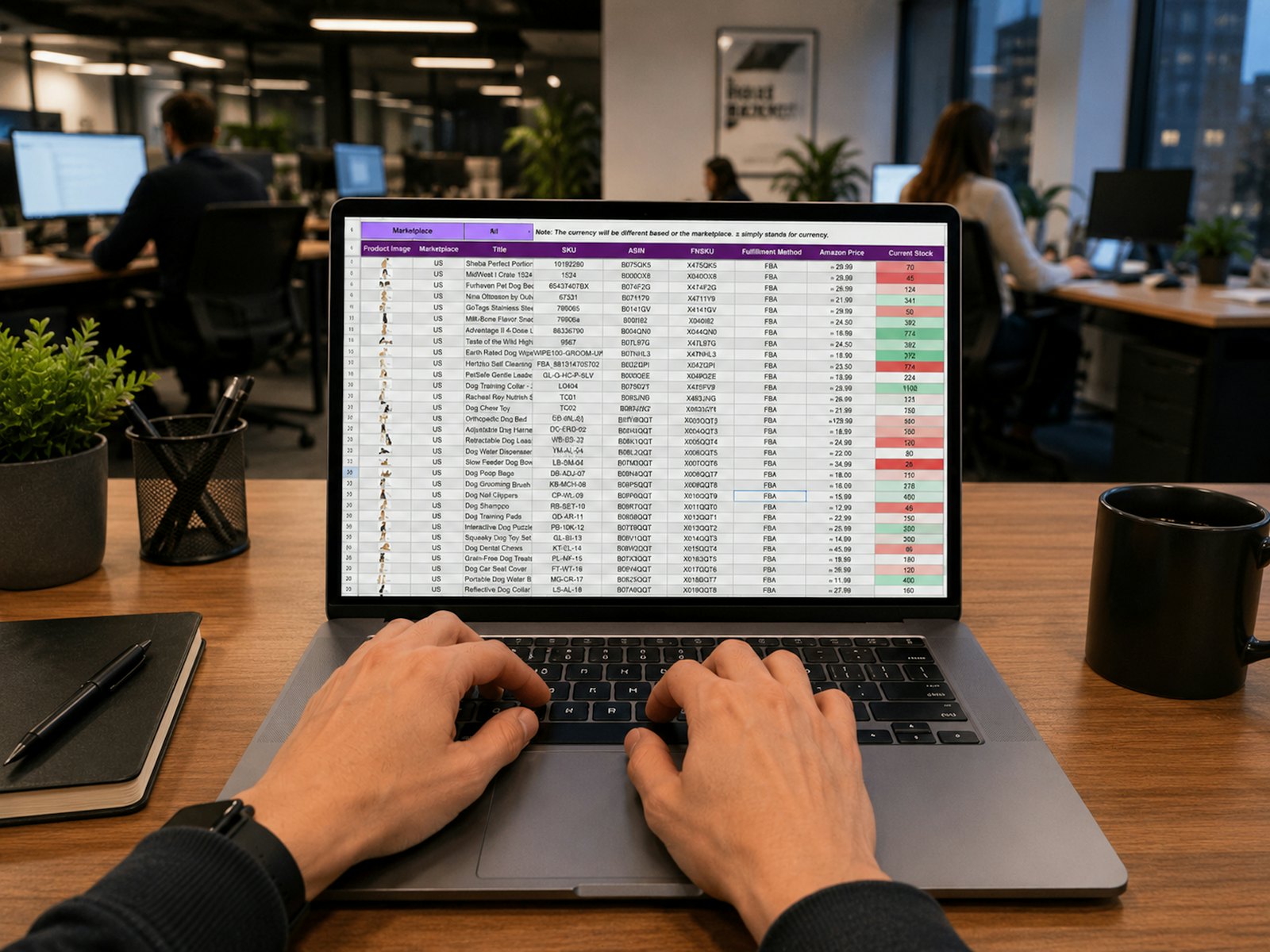
A Google Sheet with two tabs (income and expenses) plus a receipts folder gets you through year one. Columns: date, payer or vendor, category, amount, notes, receipt link. Total it monthly. This works fine while your transaction count is low.
Wave or Zoho Books (30 to 200 invoices a year)
Wave has a free starter plan that covers invoicing, expense tracking and basic reports. Zoho Books has a free tier for very small businesses and paid plans that add project tracking. Either is plenty for a one-person shop, and both export reports your accountant can read.
QuickBooks Online or Xero (200+ invoices, several revenue streams, employees)
Once you have payroll, regular contractors or several income streams, the bigger platforms earn their fee. QuickBooks Online Simple Start lists at $38 a month for one user and Essentials at $85 a month for three, according to NerdWallet's October 2026 pricing check. Setup is steeper, so consider paying a bookkeeper to configure it once.
The Categories That Matter
Every expense should land in a category that maps to a deduction line on your tax return. For US freelancers filing Schedule C, the common buckets are advertising, contract labor, supplies, travel, meals, home office, software and subscriptions, professional services (your accountant, your lawyer), insurance and education. UK and EU freelancers have similar categories under their own tax codes.
Pick ten categories and stick with them. Inventing a new one every week is how spreadsheets become unusable. When in doubt, file it under "miscellaneous business" and ask your accountant at year end.
Track Income the Day You Invoice, Not the Day You Get Paid
Cash basis accounting (recording revenue when money arrives) is fine for most freelancers, and the IRS allows it. Still log each invoice the day you send it. That gives you an aging report: who owes you money, how long it has been outstanding and which clients pay late every time.
A simple tracker with "sent" and "paid" date columns shows the late payers. Two weeks past due gets a polite nudge. Four weeks gets a firmer email. Eight weeks means stop work until the balance clears.
Receipts: A System That Works on the Road
The IRS expects documentary evidence such as a receipt for any lodging expense and for any other business expense of $75 or more. Most accountants recommend keeping receipts for everything, since you cannot reconstruct a client dinner from memory three years later.
A system that survives airport WiFi and 14-hour bus rides: photograph every paper receipt with your phone, drop it into a dated cloud folder (Google Drive, Dropbox or iCloud), and move on. For digital receipts, set up a Gmail filter that forwards anything containing "receipt" or "invoice" to a dedicated inbox. Once a week, code each transaction in your accounting tool.
Apps such as Expensify, Hubdoc and Dext read receipts automatically and push them to QuickBooks or Xero. They are worth a look once you handle more than about 20 receipts a week.
Quarterly Taxes: The Biggest Freelancer Trap
US freelancers owe self-employment tax (15.3% of net earnings) plus federal and state income tax, and the IRS expects estimated payments four times a year rather than one lump sum in April. Miss a quarter and you can owe an underpayment penalty. Skip them all year and the bill lands at once.
A simple rule: every time a client pays you, move 25 to 30% of the gross to a separate savings account. That money is not yours; you are holding it for the government. On the four estimated-tax due dates (usually April 15, June 15, September 15 and January 15), pay from that account.
US citizens working abroad still file US returns, though the Foreign Earned Income Exclusion shields up to $132,900 of foreign earned income for tax year 2026 if you qualify. It does not cover self-employment tax. Freelancers based elsewhere should check their own schedule: the UK runs Self Assessment with payments on account, and Australian businesses registered for GST usually lodge quarterly BAS statements.
Tax figures in this guide are for general planning and change every year. Confirm your own numbers with a tax professional before you file.
When to Hire an Accountant
Hire one once you cross about $50K in revenue, or the first time you face a tax question you cannot answer. A good one pays for themselves in deductions you would have missed.
Ask for an annual return, a 30-minute call before tax season to flag anything unusual, and someone who has worked with freelancers before. If you travel internationally, find one who knows expat tax rules. Greenback and Bright!Tax both work with Americans abroad.
Mistakes That Cost Freelancers Real Money
- Mixing personal and business spending. The biggest source of audit risk and missed deductions.
- Forgetting estimated taxes. The underpayment penalty grows the longer a payment is late. Pay quarterly even if the amount is rough.
- Ignoring the home office deduction. If you have a space used regularly and only for work, claim it. The simplified method allows $5 per square foot, up to 300 square feet.
- Losing track of mileage. Use MileIQ or a notebook. The IRS business rate for 2026 is 72.5 cents a mile for driving before July 1 and 76 cents from July 1, which adds up fast on a road-trip year.
- No emergency fund. Three months of expenses in a separate account stops a slow month from eating the tax savings.
A Realistic Weekly Routine
Friday afternoon, one hour. Open your accounting tool. Match every transaction to a category. Send any unsent invoices. Note late payers. Move 25 to 30% of new deposits into the tax savings account. Drop new receipts into the cloud folder. Close the laptop.
Sixty minutes a week beats a three-day scramble in March. Set the habit while the business is small and it keeps working as the client list grows.
More from Nomad Toolkit: compare where to find clients in Upwork vs Toptal vs Fiverr vs Freelancer, read the next step in going from freelancer to business owner, and see what it takes to keep working remotely for a US company while traveling in Europe.
Photos: Creatopy, Gorilla ROI and Mehdi Mirzaie on Unsplash (Unsplash License). This guide is general information, not tax or legal advice.