Florentine Steak Recipe: Butter-Basted T-Bone on the Grill
Nomad Toolkit
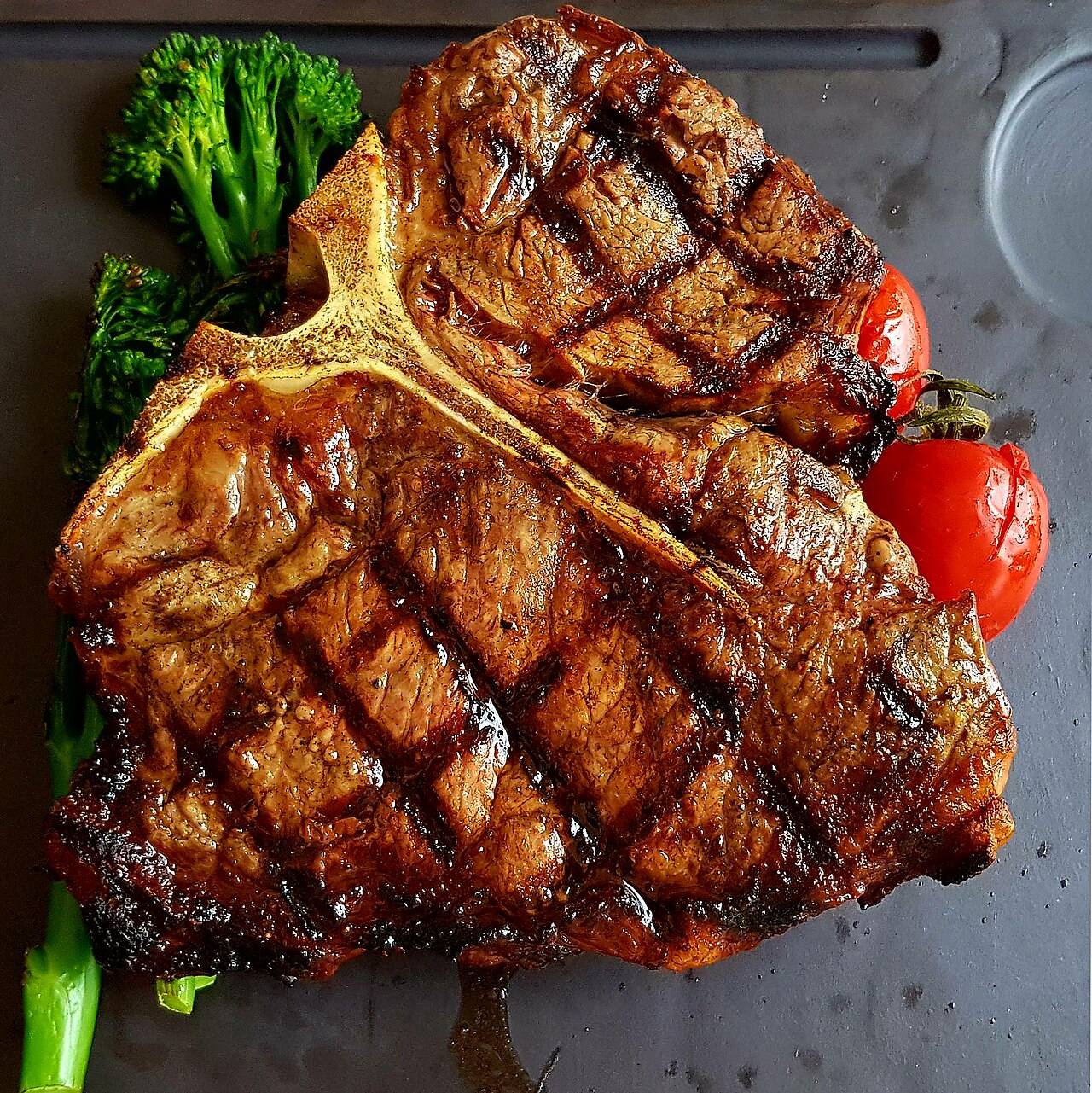
Bistecca alla fiorentina is a thick T-bone cooked over a grill, the signature steak of Florence and Tuscany. This is my version for a backyard grill: a 3-finger-thick T-bone or porterhouse rubbed with truffle salt, seared hard, then finished over medium heat while I ladle on melted butter, olive oil, garlic, lemon and Italian spices. It comes off the heat at 90 degrees Fahrenheit and gets nothing but a squeeze of lemon at the table.
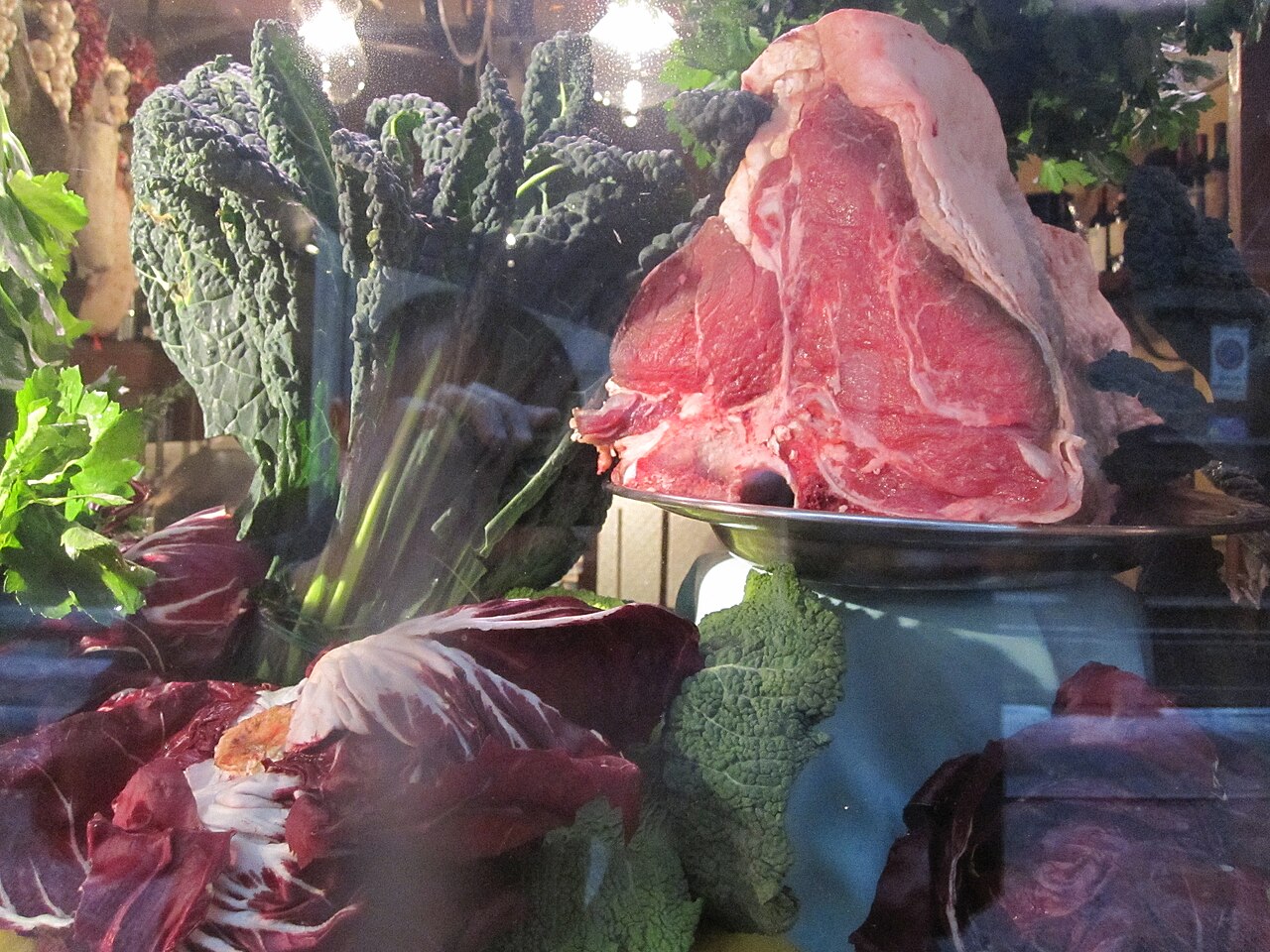
What Makes a Florentine Steak
In Tuscany the steak is cut from the loin of a young steer or heifer, traditionally of the Chianina breed, with the T-shaped bone in the middle: fillet on one side, sirloin on the other. Wikipedia puts the modern cut at 3 to 4 fingers high, about 5 to 6 cm, and a restaurant bistecca at 0.9 to 1.2 kg. Florence restaurants sell it by weight, at anywhere from 20 to 100 euros per kilo.
The thickness is the whole trick. My rule is the same as the Tuscan one: the steak should be thick enough that it could sit up on its side. A thin steak overcooks before the outside gets a crust, and you lose the window where the butter baste does its work.
A Brief History
The Italian word bistecca was borrowed from the English beefsteak in the early 19th century, according to Wikipedia. Pellegrino Artusi described Florentine steak in his 1891 cookbook La scienza in cucina e l'arte di mangiare bene as a chop with its bone, a finger or a finger and a half thick, cut from the sirloin of a steer. In 2021 the dish was added to Italy's list of traditional food products (PAT). For the classic version, people make the drive to Antica Macelleria Cecchini in Panzano in Chianti, a butcher shop in the Chianti hills south of Florence.
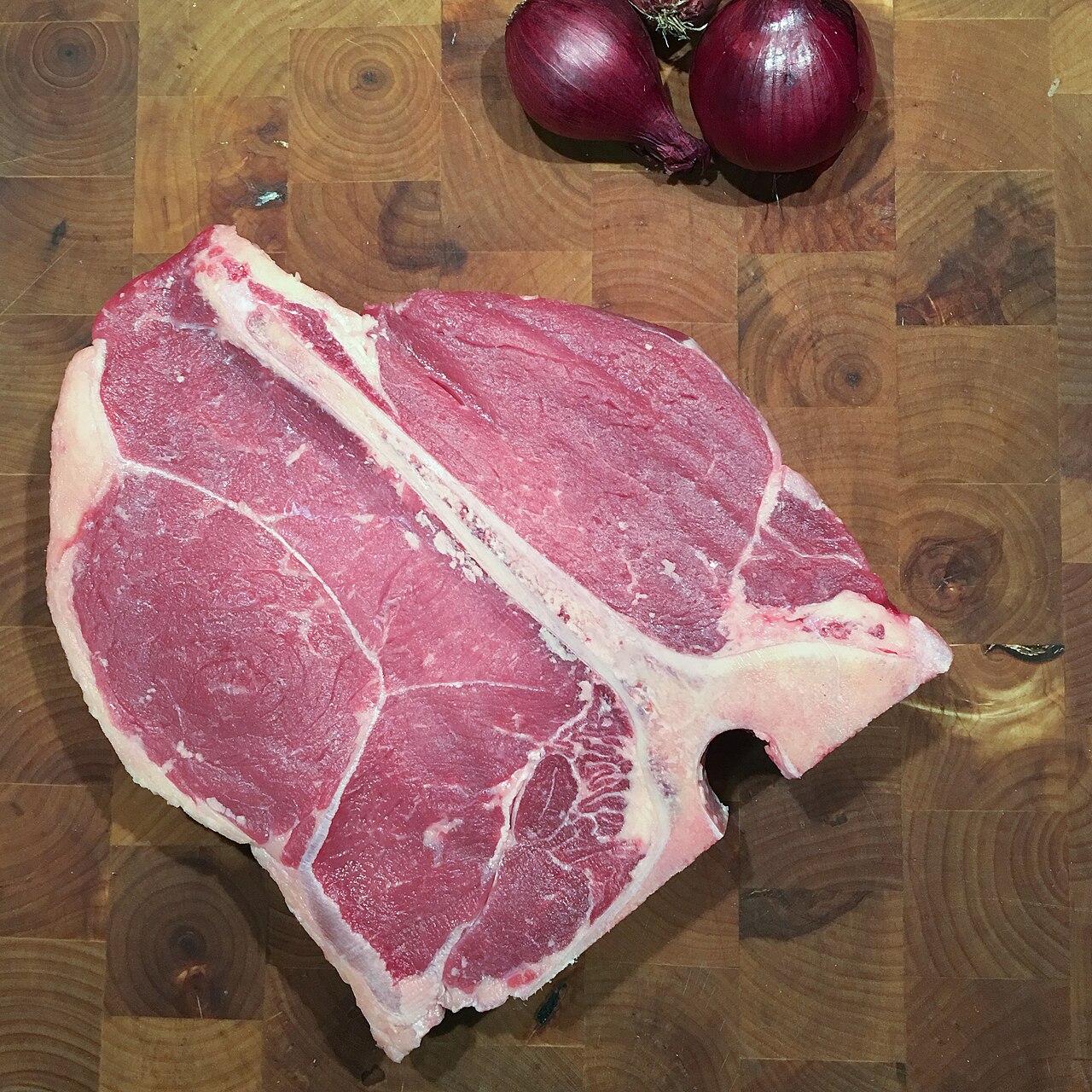
Ingredients
- 1 T-bone or porterhouse steak, about 3 fingers thick (thick enough to stand on its side)
- Truffle salt, for rubbing the steak
- Butter
- Olive oil
- Minced garlic
- Italian mix spices
- 1 lemon for the basting mix, plus lemon wedges to serve
I measure the butter, oil, garlic and spices by eye, not by the spoon. You want enough melted mixture to ladle over the steak several times during the finish, so make more than you think you need.
Gear: a grill with two heat zones (or a grill plus a smoker), a grill-safe bowl for the butter mix, a ladle or large spoon, and a grill-safe probe thermometer you can leave in the steak.
How to Make It
- Put the lemon, butter, Italian mix spices, olive oil and minced garlic in a grill-safe bowl.
- Rub the steak with truffle salt.
- Set half of the grill to max heat and the other half to medium heat. Pro tip: it is much better if you use a smoker on max heat (around 500 degrees) in place of the medium-heat side of the grill.
- Put the butter and oil mixture on the medium side of the grill, top rack preferred. The intent is to melt the butter.
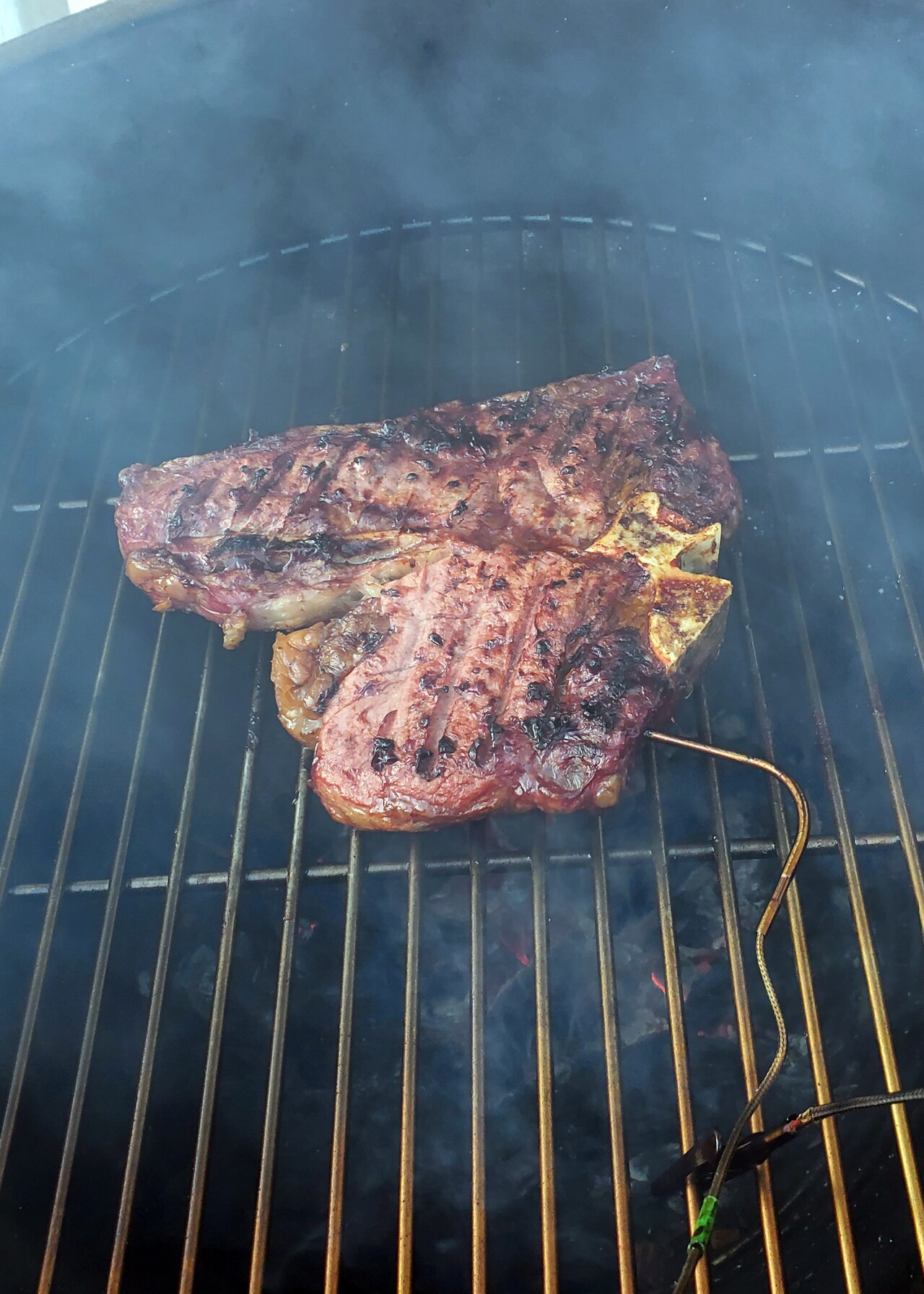
- On the hot side of the grill, sear the steak on the top, bottom and each side for a few minutes.
- Insert a grill-safe thermometer. Target about 20 or more degrees lower than usual, because of the heat of the steak and the fact that it will continue cooking after you pull it off. For example, I usually grill my steak to 124 degrees Fahrenheit, but I pull it off at 90 degrees when cooking with this method.
- Move the steak to the medium-heat side of the grill or to the smoker.
- The butter should be melted. Remove the dish from the grill safely (it is very hot). Mix with a spoon, then ladle the mixture over the steak. Careful: it can cause a flare-up.
- Flip the steak every 5 minutes or so, repeating the butter and oil ladling. Repeat until you reach the desired temperature.
- Serve with lemon wedges, which you should squeeze over the steak. No other sauce needed.
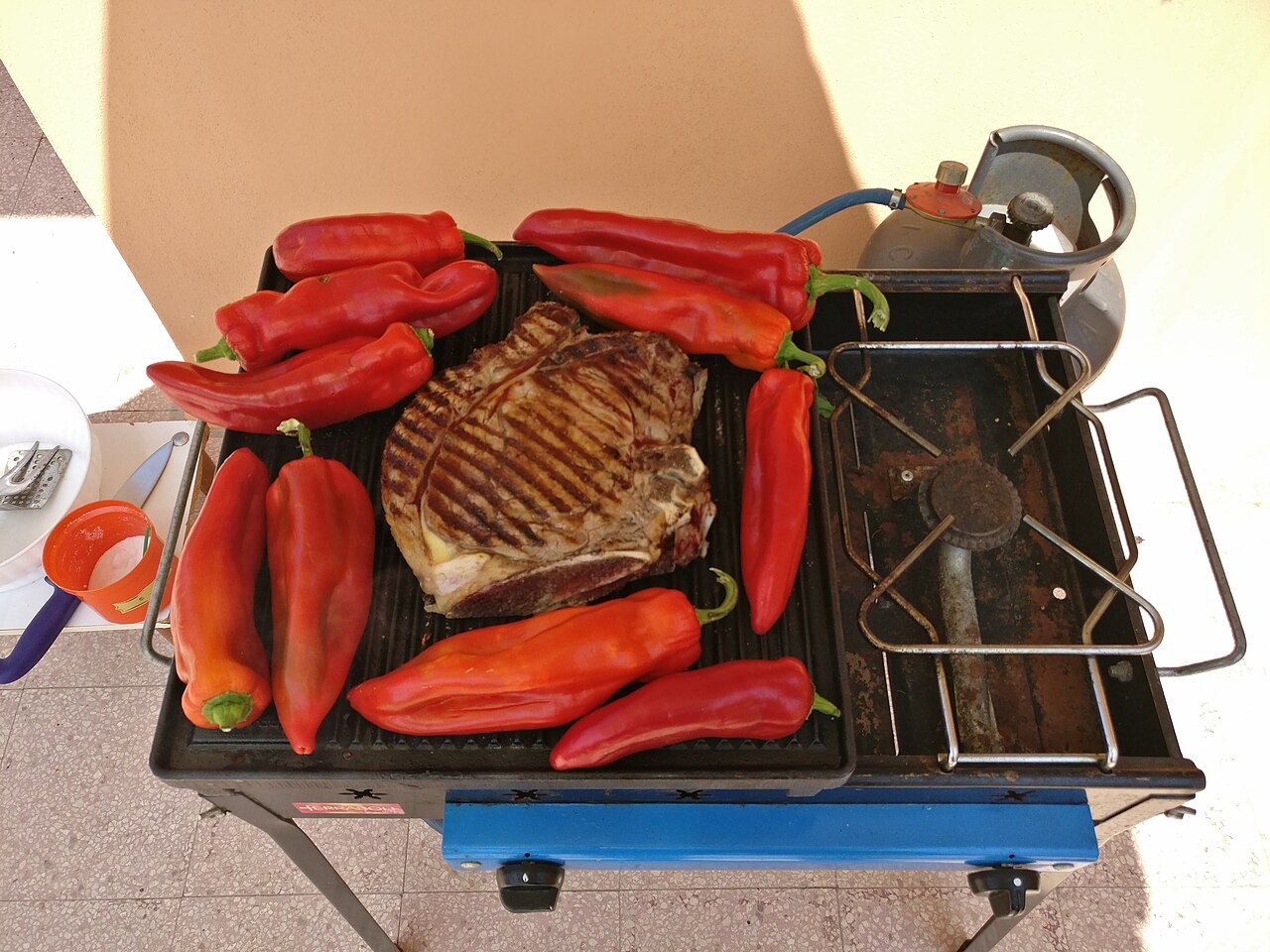
Why Pull It at 90 Degrees
This is the step people question. I usually grill a steak to 124 degrees Fahrenheit, but with this method I pull it at 90. A steak this thick holds a lot of heat after the sear and the hot butter baste, and it keeps cooking after it comes off. Start about 20 degrees or more below your normal pull temperature.
Tips from making it
- A smoker on max heat, around 500 degrees, is much better than the medium side of a grill for the finish.
- Keep the butter bowl on the medium side, top rack preferred. The point is only to melt the butter.
- The bowl comes off the grill very hot, and ladling the mixture over the steak can cause a flare-up. Be careful.
- Skip the steak sauce. The lemon squeezed over the top is all it needs.
Other Cuts That Work
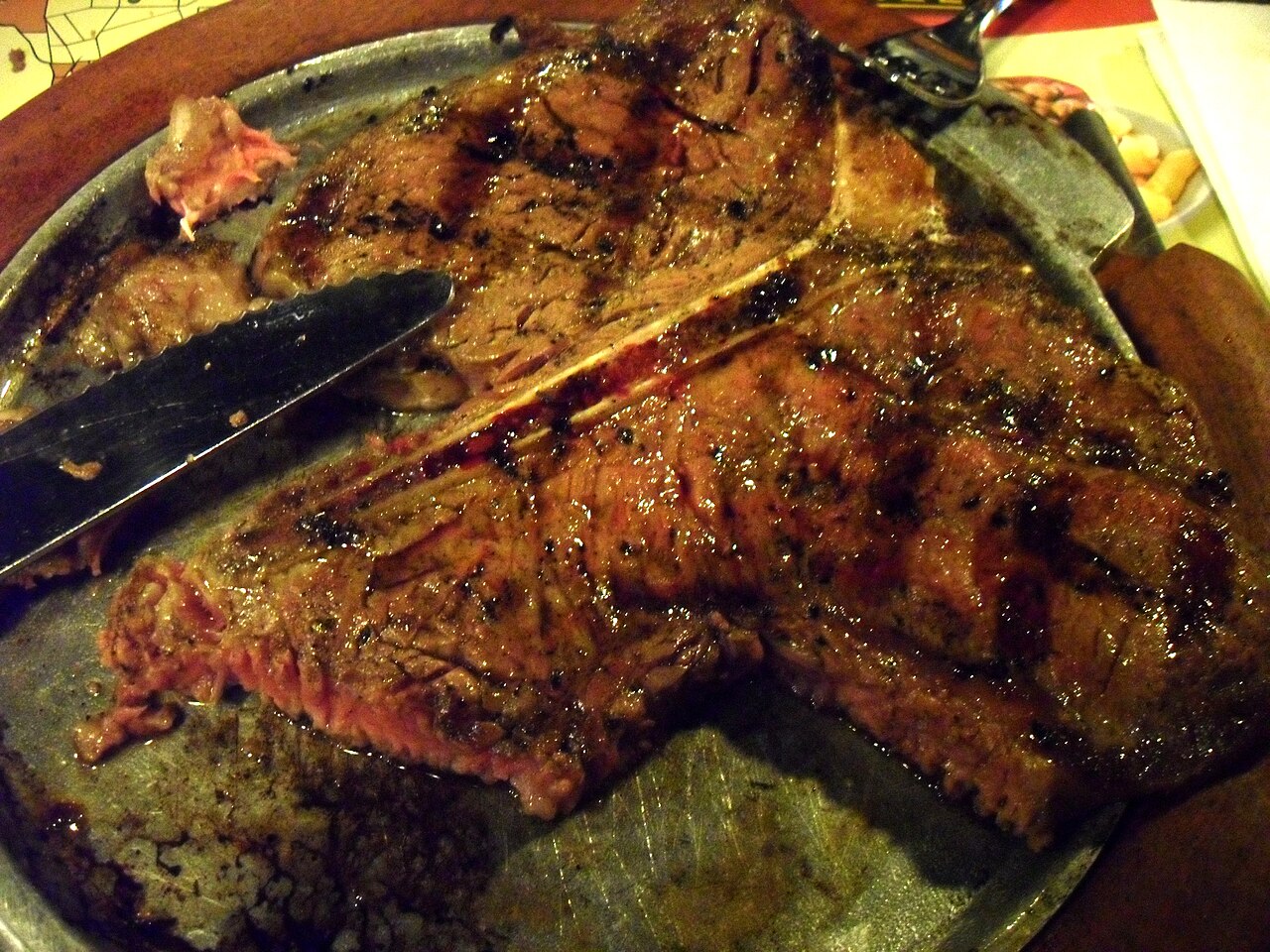
The textbook cut is the T-bone. The same method works with a ribeye, New York strip or porterhouse, and with bison, as long as the steak is of similar thickness.
More recipes from our travels: our Beef Wellington recipe, the Turkish spice mix for grilled meat, Pasta alla Norma from Sicily and Sicilian arancini.
FAQ
What is Florentine steak?
Bistecca alla fiorentina is a thick T-bone steak on the bone, grilled, from Florence and Tuscany. In Italy it is traditionally cut from young Chianina cattle.
How thick should a Florentine steak be?
About 3 fingers thick, or roughly 5 to 6 cm. It should be thick enough to stand on its side.
What temperature do I pull the steak at?
With this method I pull it at 90 degrees Fahrenheit, about 20 or more degrees below my usual 124, because the steak keeps cooking after it comes off the grill.
Do I need a smoker?
No. A grill with a max-heat side and a medium-heat side works. A smoker around 500 degrees in place of the medium side is better if you have one.
What do I serve with it?
Lemon wedges to squeeze over the steak. No other sauce is needed.
Recipe and method from our own backyard grill. Photos via Wikimedia Commons: T-Bone Steak by Anagoria (CC BY 3.0); Bistecca alla Fiorentina @ Firenze by Thomas Oboe Lee (CC BY-SA 4.0); Porterhouse Steak roh by Alice Wiegand (CC BY-SA 4.0); Grigliata di fiorentina e peperoni by Stefano Travasci (CC BY 4.0); Another steak on the Big Green Egg by Corvair Owner (CC BY-SA 2.0); Bistecca alla fiorentina (400gr) by Number55 (CC BY-SA 3.0).