Madison: Wisconsin's Lake Capital
Nomad Toolkit
Overview & Vibe
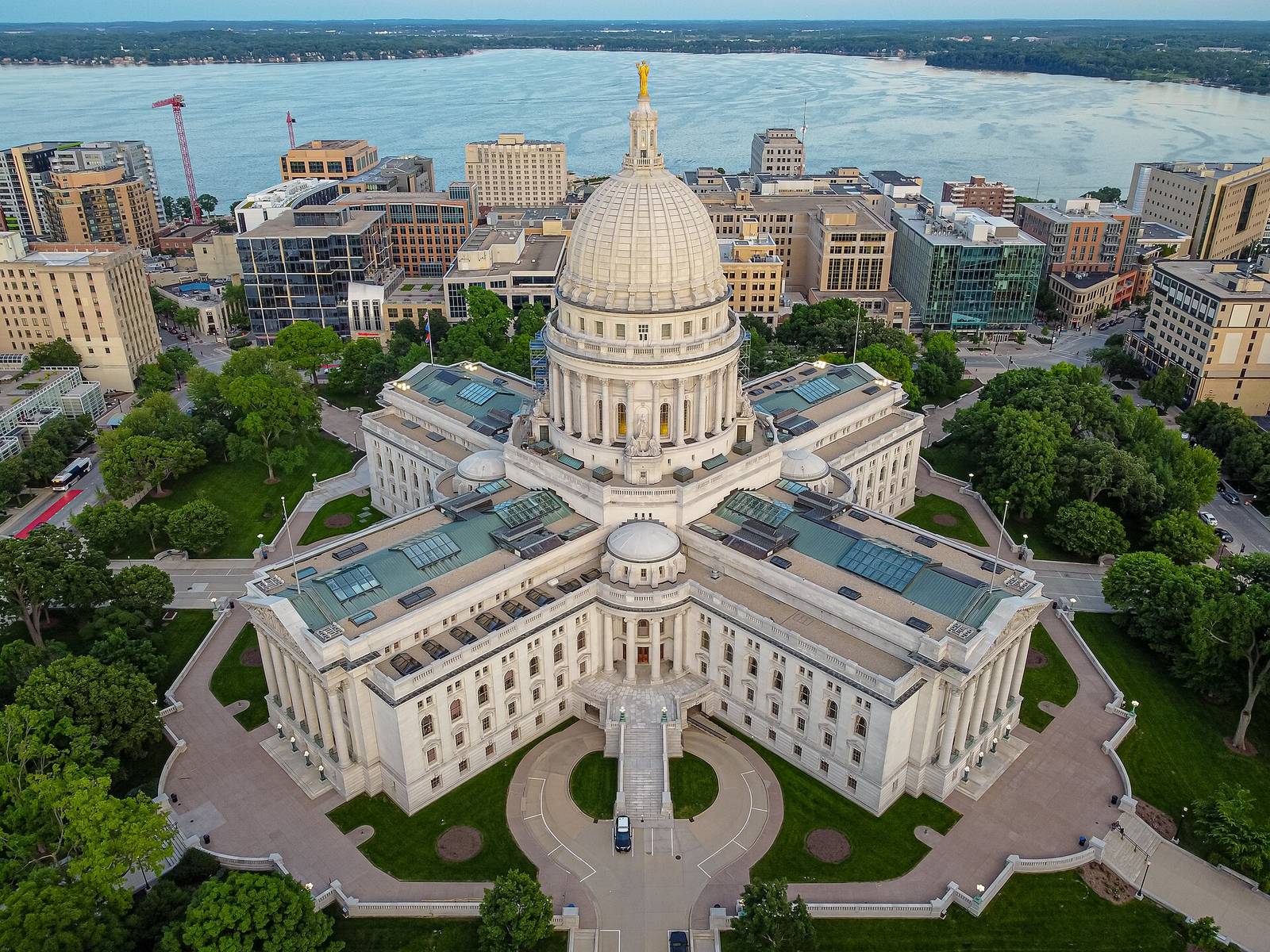
Madison counted 269,840 residents in the 2020 census, making it Wisconsin's second largest city after Milwaukee. Downtown sits on a narrow isthmus between Lake Mendota and Lake Monona, which is where the city's "Lake, City, Lake" slogan comes from. The state capitol anchors one end of State Street and the University of Wisconsin campus anchors the other.
For a remote worker, Madison pairs a college town's cafes and cheap eats with a state capital's services. The University of Wisconsin, UW Health and state government are the largest employers, and Epic Systems, the medical records company, sits in suburban Verona. Summer means lakeside terraces and Saturday markets; winter means real cold, so plan your stay around it. Most visitors base themselves downtown, within walking distance of both lakes.
A Brief History
In 1829, James Duane Doty bought 1,261 acres on the isthmus for $1,500 with the plan of building a city. He lobbied the territorial legislature, which chose Madison as the capital on November 28, 1836, and he named it for President James Madison, who had died that June. Madison incorporated as a village in 1846, with 626 people, and as a city in 1856, with 6,863 (Wikipedia).
Transportation
Dane County Regional Airport (MSN) handled almost 2.5 million passengers in 2025, a record. Nonstops include Boston on American and Delta, and this winter Sun Country and Breeze fly to Fort Myers, Sun Country to Phoenix and American to Miami, starting in late October and November. Van Galder buses run from Chicago O'Hare and Badger Coaches from Milwaukee's airport.
In town, Metro Transit charges $2 a ride, with Fast Fare capping you at $5 a day and $16.25 a week. Bus rapid transit also costs $2 but takes no cash, so buy at the station. Campus routes 80, 81, 82 and 84 are free. Uber and Lyft operate; taxis do not take street hails.
Language, Customs & Etiquette
English is the working language. Wisconsin habits show up fast: the Friday fish fry, the brandy Old Fashioned and cheese curds on most bar menus. Tip 18 to 20 percent at sit-down restaurants. On Badger home football Saturdays, downtown and State Street fill with fans in red, so book rooms early for those weekends.
Safety & Security
Winter is the main hazard. Madison averages 51.8 inches of snow a year and the record low is minus 37 F, so carry real cold-weather gear from December to March and allow extra time on icy roads. Never walk onto lake ice unless local conditions are confirmed safe. Summer storms can roll in quickly over the lakes, so watch the sky if you rent a kayak or paddleboard. Downtown, watch for cyclists, lock bikes and cars, and keep valuables out of sight, as in any college town.
Weather & Climate
Madison has four distinct seasons and about 37 inches of precipitation a year, with June the wettest month. July highs average 82 F, January highs 27 F. The record high is 107 F. The table shows 1991 to 2020 normals at the airport, rounded.
| Month | High F | Low F | Precip in |
|---|---|---|---|
| Jan | 27 | 12 | 1.47 |
| Feb | 31 | 15 | 1.52 |
| Mar | 44 | 25 | 2.26 |
| Apr | 57 | 36 | 3.78 |
| May | 69 | 47 | 4.10 |
| Jun | 79 | 57 | 5.28 |
| Jul | 82 | 62 | 4.51 |
| Aug | 80 | 60 | 4.16 |
| Sep | 73 | 51 | 3.43 |
| Oct | 60 | 40 | 2.77 |
| Nov | 45 | 29 | 2.22 |
| Dec | 32 | 18 | 1.63 |
Logistics & Practical Info
Sales tax is 5.5 percent: 5 percent state plus 0.5 percent Dane County, with no city sales tax. Free guided tours of the capitol start in the rotunda Monday to Saturday at 9, 10 and 11 a.m. and 1, 2 and 3 p.m., and Sunday at 1, 2 and 3 p.m., with an extra 4 p.m. weekday tour in summer. The observation deck opens daily from mid-April through December, weather permitting.
Attractions & Activities
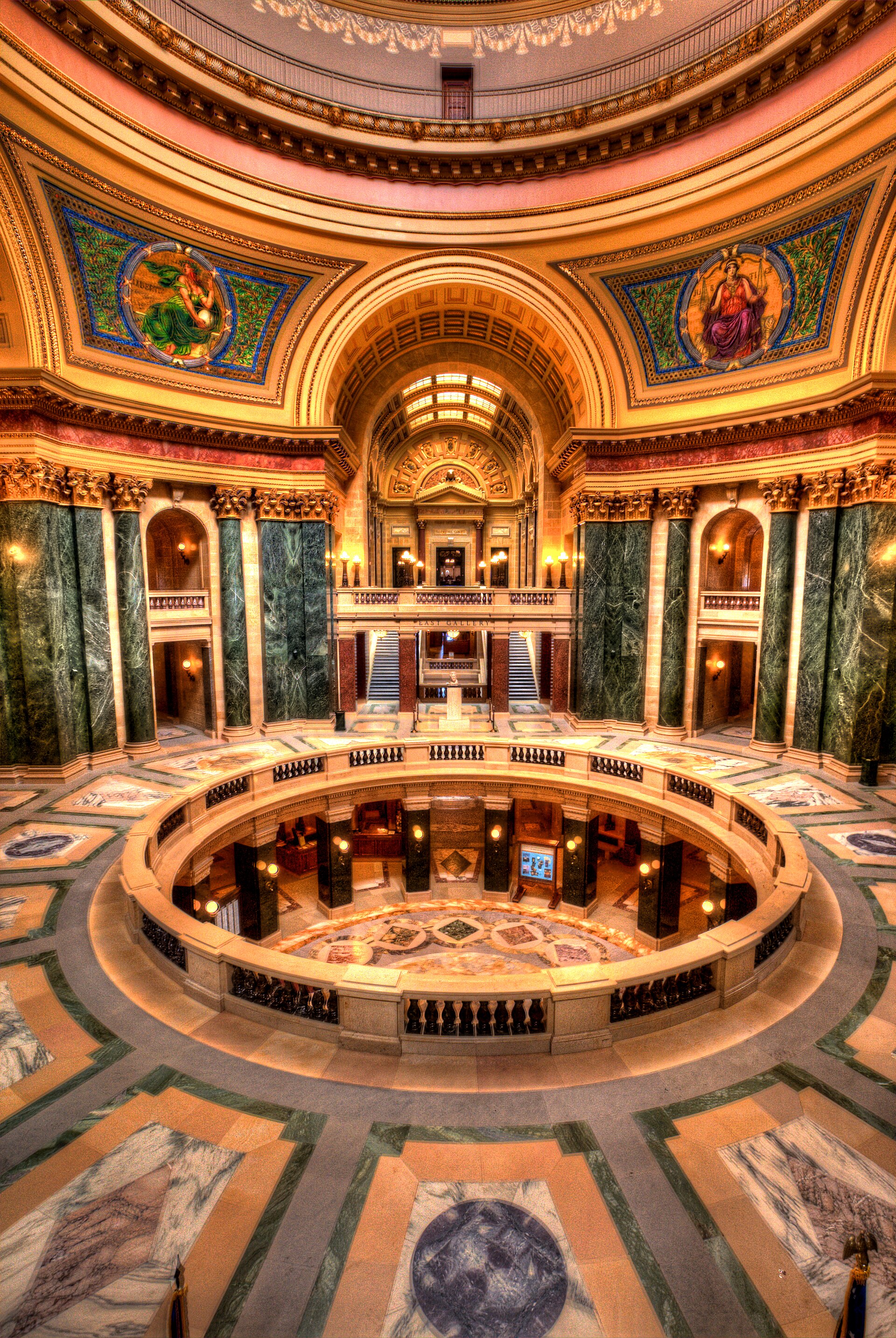
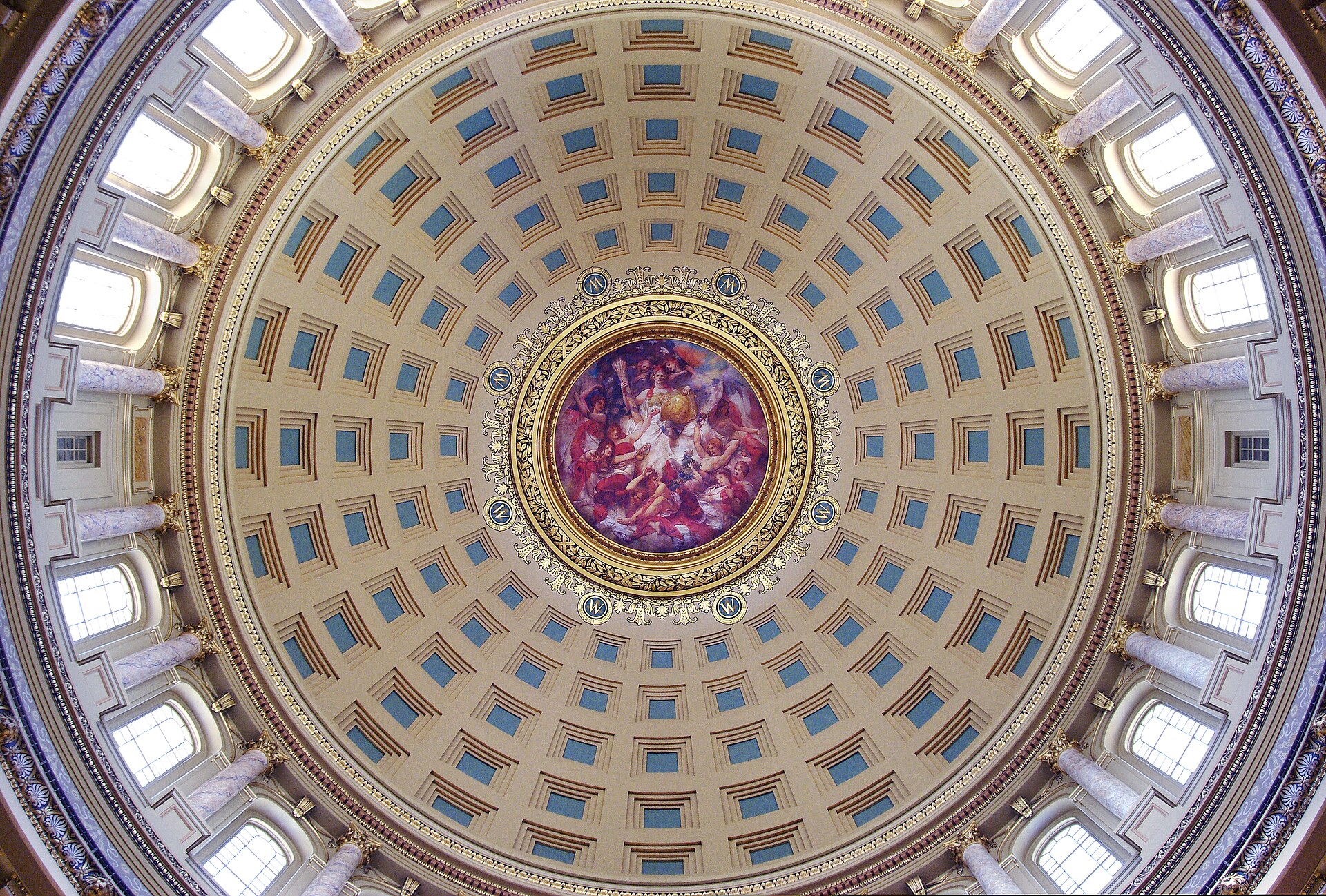
- Wisconsin State Capitol (Wikipedia): finished in 1917, 284 feet 5 inches to the top of the statue, with a dome of Vermont white granite.
- Dane County Farmers' Market: Saturdays on Capitol Square, 6:15 a.m. to 1:45 p.m., April 11 to November 14 in 2026. Vendors sell out, so go early.
- Monona Terrace (Wikipedia): Frank Lloyd Wright first proposed it in 1938, and it opened on Lake Monona on July 18, 1997.
- Memorial Union Terrace (Wikipedia): the university's lakeside patio on Lake Mendota, open since 1928, with free live music on many evenings.
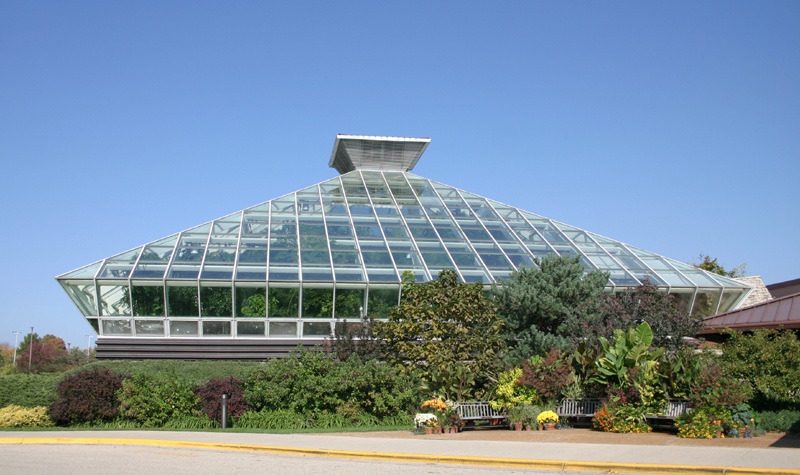
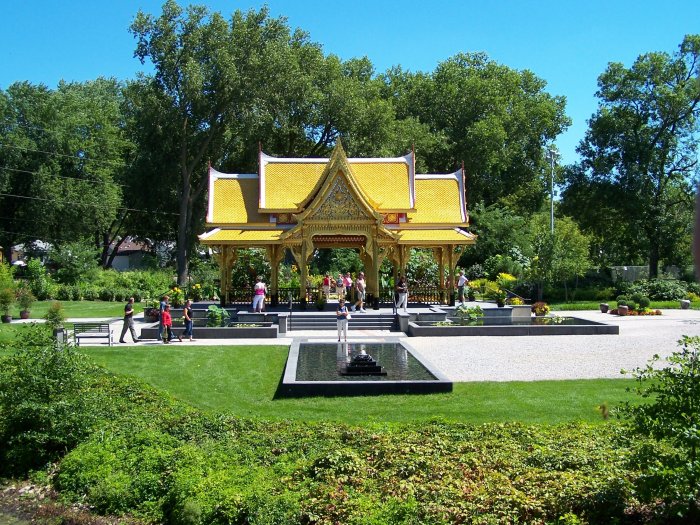
- Olbrich Botanical Gardens (Wikipedia): 16 acres of free outdoor gardens, a Thai pavilion from 2002 and the 10,000 square foot Bolz Conservatory, which charges a small fee.
- Henry Vilas Zoo (Wikipedia): free admission and free parking, open 9:30 a.m. to 5 p.m. daily on 28 acres.
- Chazen Museum of Art (Wikipedia): the university's art museum, with about 25,000 works.
Where to Eat
State Street Brats at 603 State Street sells a red or white brat for $7 and a cheese curd basket for $15. On the square, The Old Fashioned at 23 North Pinckney Street serves beer-battered cheese curds, a brandy Old Fashioned and a Friday fish fry with cod, perch or walleye. Expect to pay more for a sit-down dinner on the square than for a basket of curds on State Street.
Health & Medical
UW Health University Hospital has been verified as a Level I trauma center for both adults and children, the only hospital in Wisconsin with both, and it runs a burn center. St. Mary's Hospital, Meriter Hospital and the VA Medical Center also serve the city.
Demographics & Government
The 2020 census counted Madison as 69.2 percent non-Hispanic white, 9.5 percent Asian, 7.3 percent Black and 8.7 percent Hispanic or Latino. The city runs on a mayor-council system with a 20-member Common Council, and Satya Rhodes-Conway is mayor.
Legal & Substances
Recreational marijuana is illegal under Wisconsin law, and medical marijuana is not legal either. A 2020 city ordinance lets adults 18 and over hold up to 28 grams within Madison, but state law still applies, so do not assume you are protected. The drinking age is 21.
Customs & Shopping
State Street runs between the capitol and campus and holds most of downtown's shops, bars and cheap food. Capitol Square has local shops and the Saturday market, and Monroe Street on the near west side has a cluster of independent stores and cafes.
Accessibility & Inclusion
Downtown is compact and mostly flat along the isthmus, and the capitol tours and Henry Vilas Zoo are free to everyone. Metro Transit's free campus routes and its $5 daily fare cap make getting around affordable without a car. Check individual venues for accessible entrances, especially older bars and shops on State Street.
Digital Nomad Corner
StartingBlock Madison at 821 East Washington Avenue lists day passes from $20, and Expansive The Capitol lists them from $33, with monthly memberships at both. The Memorial Union Terrace works for a laptop afternoon in warm weather. The best months are May through October, when the markets and terraces are open; September and October bring football crowds but mild weather. Fast Fare's $5 daily cap keeps transit cheap if you skip the car.
Keep planning: Green Bay: Wisconsin's Bayside City, Acadia National Park Guide: Maine's Coastal Peaks and Aceh, Indonesia: A Practical Travel Guide.
Details checked October 2026. Photos: Wikimedia Commons.