Outer Banks: North Carolina Barrier Islands
Nomad Toolkit
Overview & Vibe
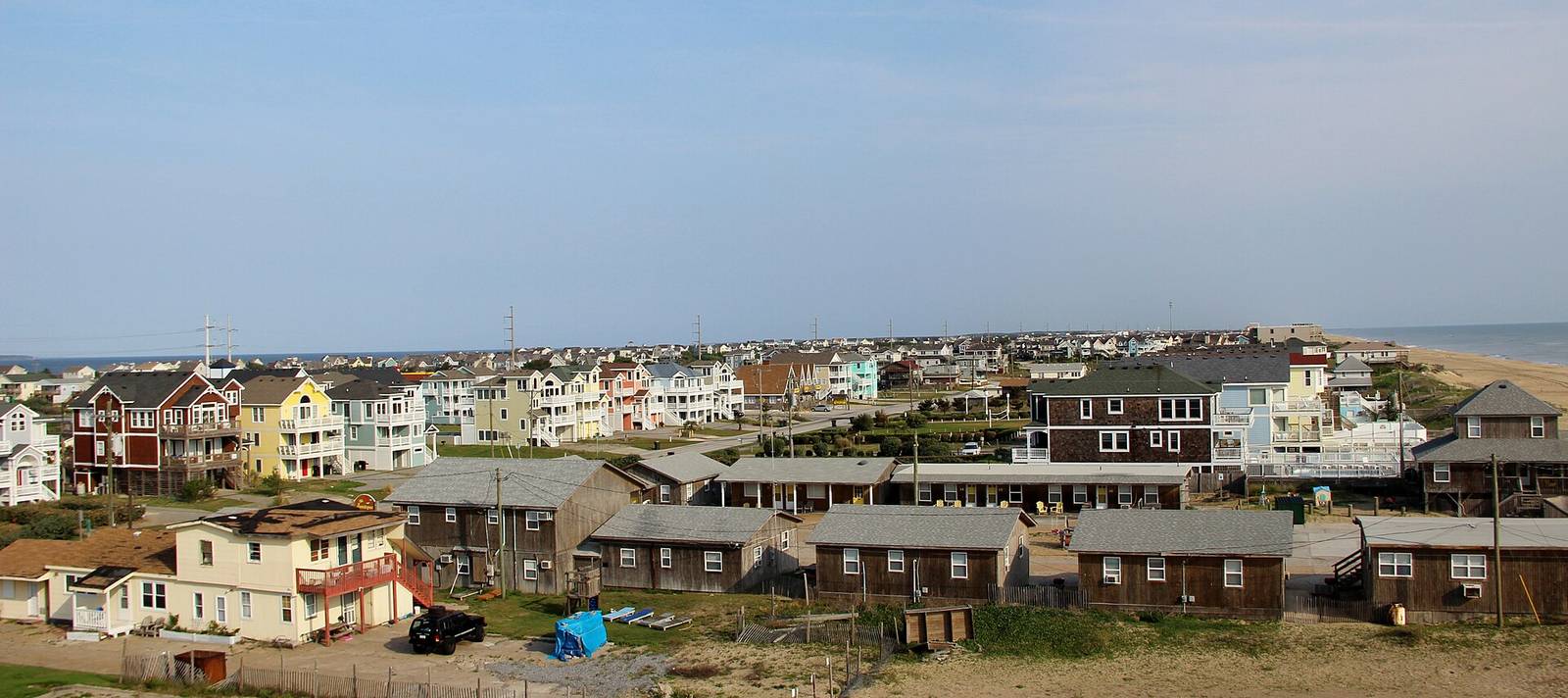
The Outer Banks are a 200-mile chain of barrier islands off the North Carolina coast, running from Carova near the Virginia line down through Corolla, Duck, Kitty Hawk, Kill Devil Hills, Nags Head, and Hatteras Island to the ferry-only village of Ocracoke. Locals shorten it to OBX, and mileposts along US 158 stand in for street addresses. The northern beaches are rental-house territory, Roanoke Island holds the museums and gardens, and everything south of Oregon Inlet is national seashore with small villages threaded along one road.
The crowd splits by season: families on weekly rentals from June through August, anglers and surfers in fall, and remote workers who take over the empty houses at winter rates once the school-year calendar clears everyone else out.
A Brief History
England’s first American settlement landed on Roanoke Island in 1587 and vanished by 1590, leaving only the word CROATOAN carved on a post. The pirate Blackbeard was killed at Ocracoke Inlet on November 22, 1718. On December 17, 1903, the Wright brothers flew the first powered airplane at Kill Devil Hills, and in 1937 Congress authorized Cape Hatteras as the country’s first national seashore. The full story runs through the Outer Banks Wikipedia page.
Transportation
You arrive by car. US 158 crosses the Wright Memorial Bridge into Kitty Hawk from the north, US 64 reaches Roanoke Island from the west, and NC 12 is the single spine road tying the islands together, crossing Oregon Inlet on the Marc Basnight Bridge. A free state ferry runs about an hour from Hatteras village to Ocracoke. Norfolk International Airport sits roughly 80 miles north of Kill Devil Hills, about a two-hour drive; Raleigh-Durham is around four hours.
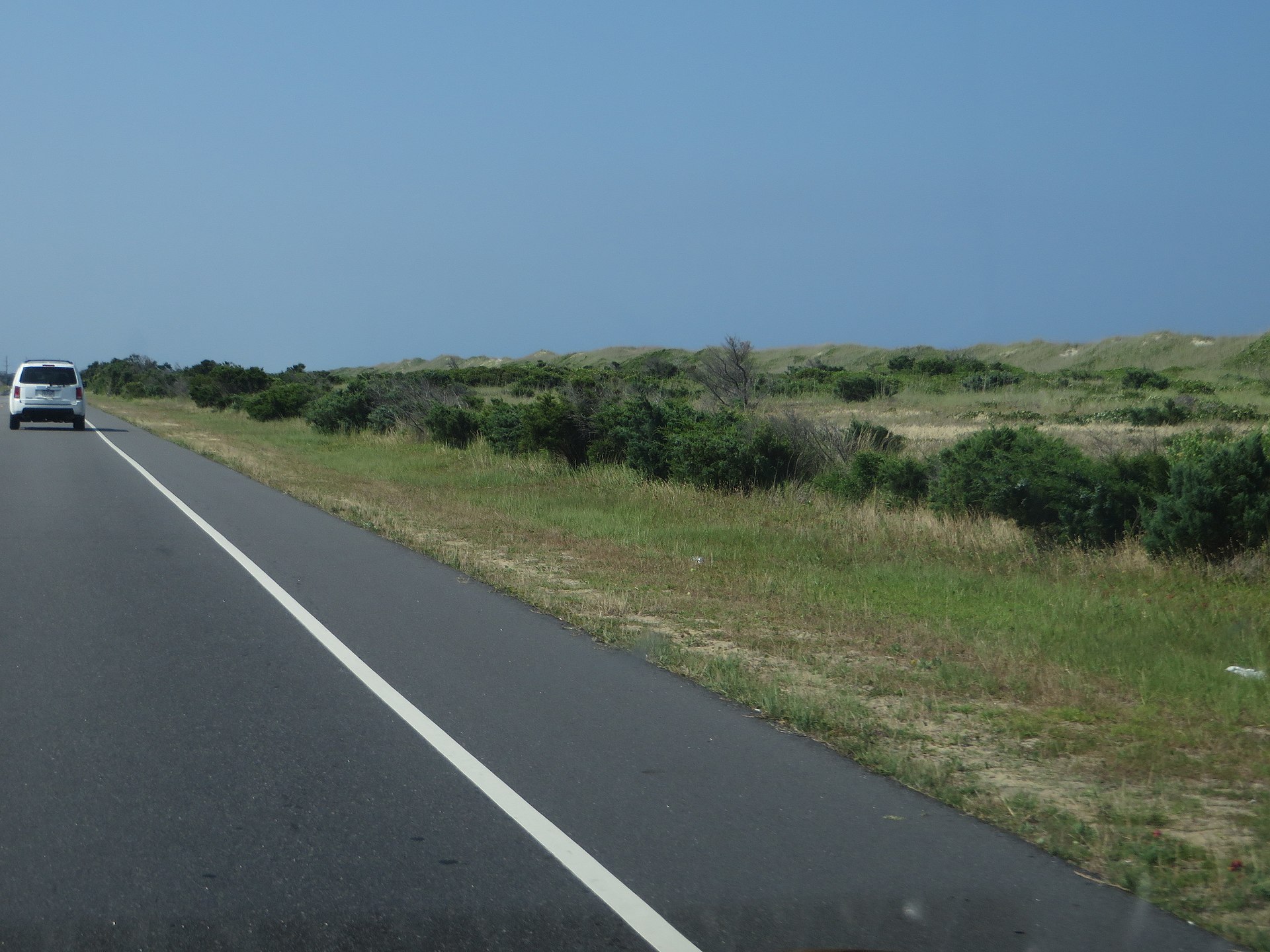
There is no public transit, and Uber and Lyft coverage is thin outside the central beaches, so plan on a car for your whole stay. Multi-use paths in Duck, Kill Devil Hills, and Nags Head make bikes practical for short trips. Americans drive on the right.
Rental turnover runs Saturday to Saturday. Cross the Wright Memorial Bridge midweek and you skip the worst traffic of the summer.
Language, Customs & Etiquette
English is universal, and on Ocracoke you can still hear the Hoi Toider brogue, a dialect left over from 18th-century English settlers. Tip 15 to 20 percent in restaurants. Beach rules carry real weight: fill in holes you dig, stay off the dunes and sea oats, and keep oceanfront lights off after 9 pm during sea turtle nesting season, May through August. Prices are fixed everywhere.
Safety & Security
Crime is low across the islands; dial 911 for emergencies. The ocean is the real hazard. Rip currents kill more visitors here than anything else, so swim near lifeguard stands and stay out when red flags fly. Hurricane season runs June through November, and NC 12 floods during strong storms; if Dare County orders an evacuation, leave early. LGBTQ+ travelers report no particular friction, and the tourist economy is used to visitors of every background.
Weather & Climate
The islands sit far enough into the Atlantic that wind is constant and temperatures stay milder than the mainland in both directions. Ranges below are typical for the central Outer Banks.
| Season | Typical high | Typical low | Avg sea temp |
|---|---|---|---|
| Winter (Dec to Feb) | 48 to 56°F | 36 to 42°F | 45 to 55°F |
| Spring (Mar to May) | 58 to 75°F | 45 to 61°F | 50 to 68°F |
| Summer (Jun to Aug) | 83 to 88°F | 70 to 76°F | 72 to 78°F |
| Fall (Sep to Nov) | 63 to 80°F | 50 to 67°F | 60 to 77°F |
Pack a windbreaker in any month. September and October bring the warmest water with the smallest crowds, at the price of watching the tropical forecast.
Logistics & Practical Info
Eastern time zone, US Type A and B plugs at 120V, and safe tap water throughout. Harris Teeter, Food Lion, and Publix cover groceries between Kitty Hawk and Nags Head, with Food Lion in Avon serving Hatteras Island. Cell coverage from Verizon and AT&T is solid on the northern beaches and patchier south of Oregon Inlet. Buy a US eSIM before arrival if you need local data; there is no censorship to route around.
Attractions & Activities
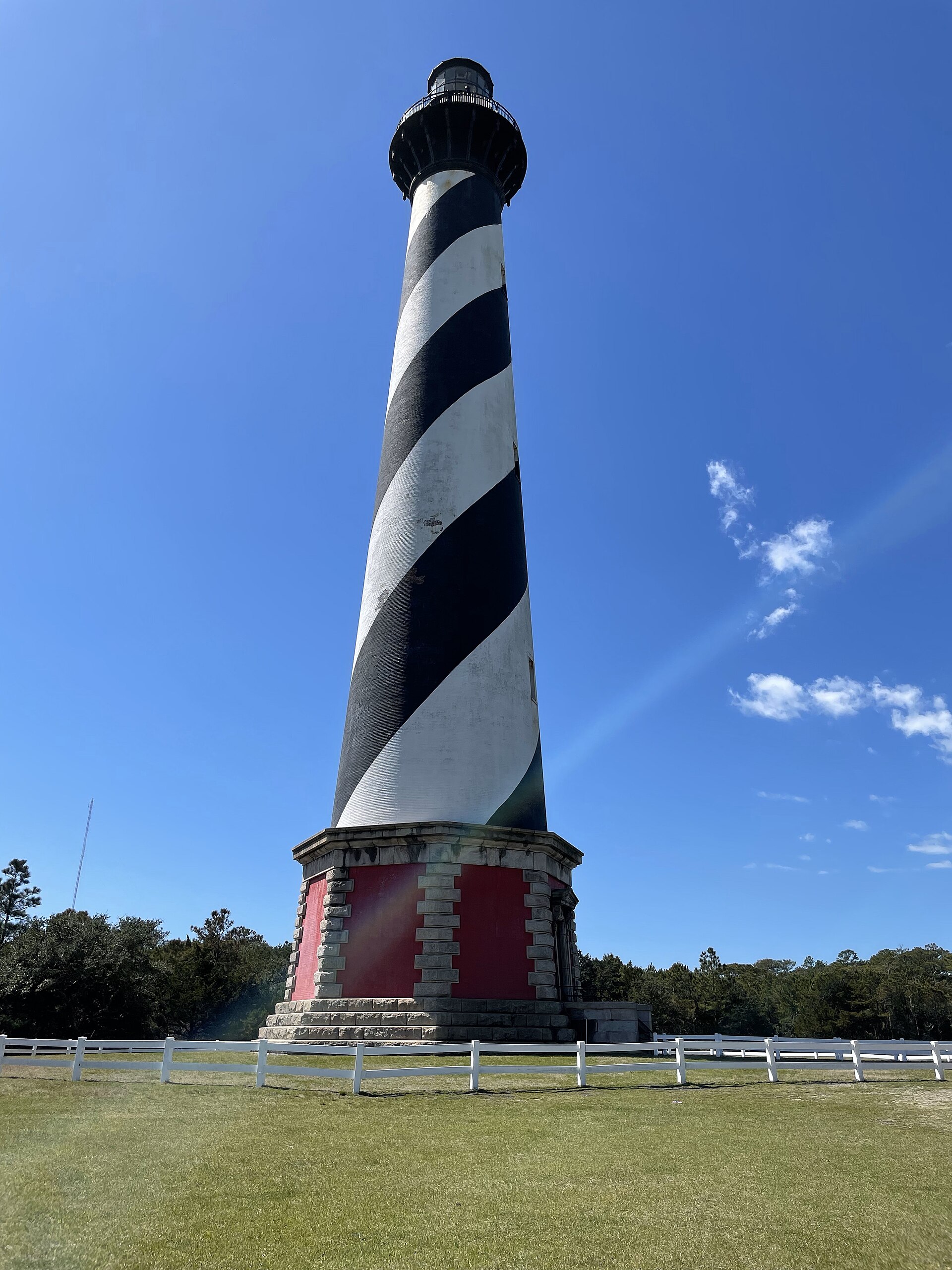
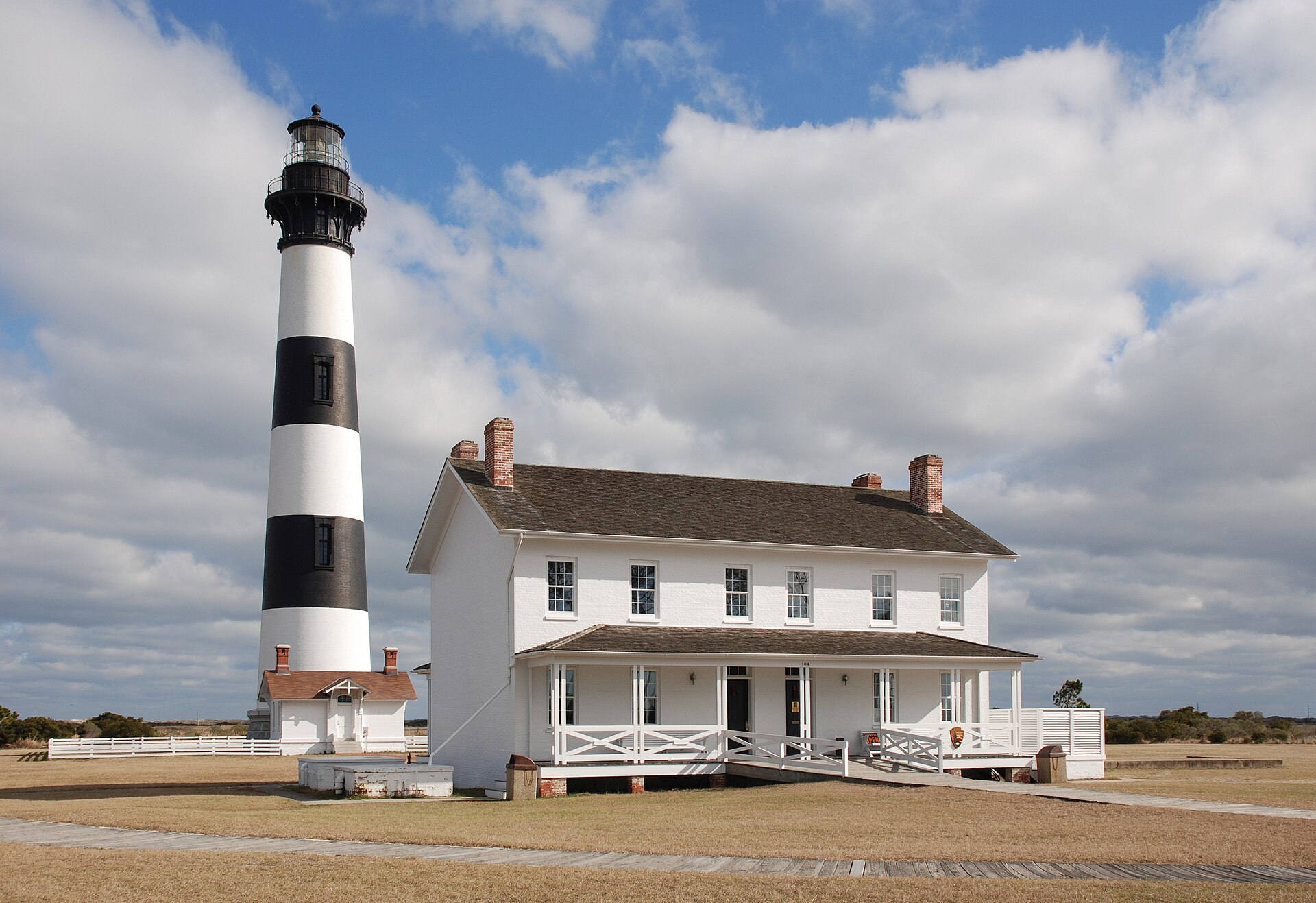
The Cape Hatteras Lighthouse, at 198 feet the tallest brick lighthouse in the country, was built in 1870 and moved 2,900 feet inland in 1999 to escape the eroding beach. Its horizontally striped sibling at Bodie Island dates to 1872, and the full lighthouse history is worth reading before you climb anything.
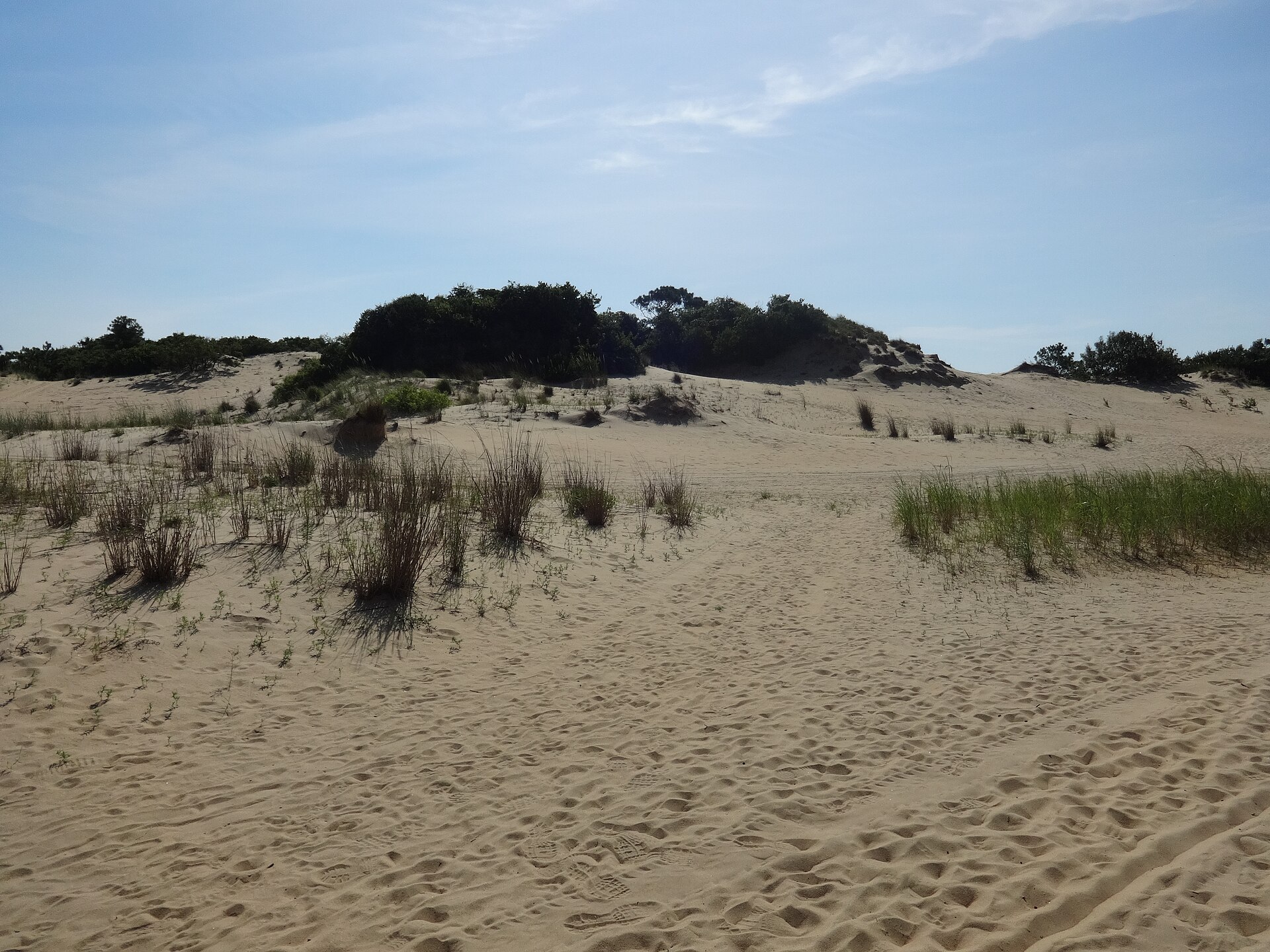
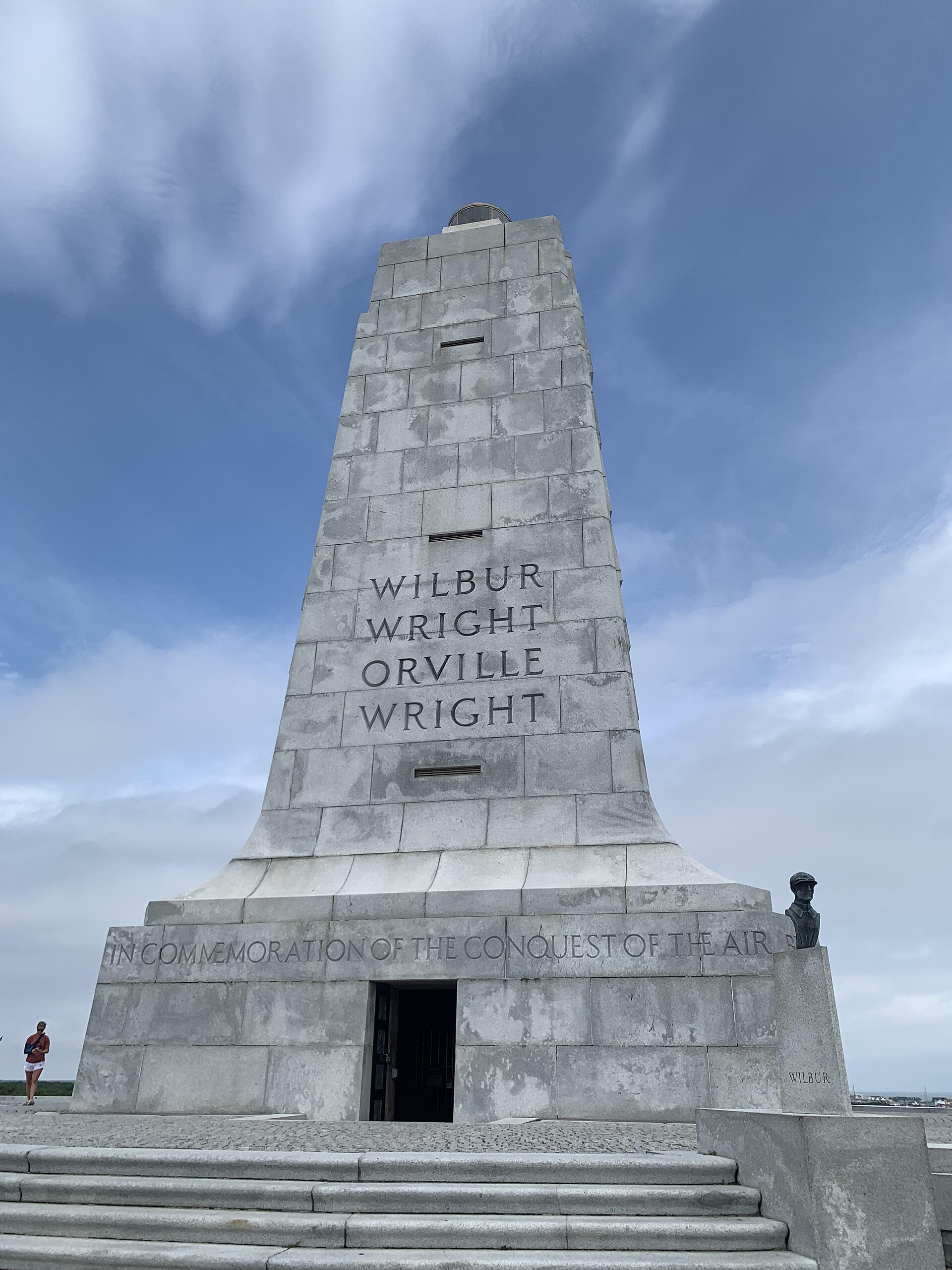
At Wright Brothers National Memorial in Kill Devil Hills, $10 buys adult admission to the monument hill and a full-scale replica of the 1903 Flyer. Jockey’s Ridge State Park in Nags Head, home of the tallest living dune system on the Atlantic coast, is free and doubles as the East Coast’s hang-gliding school.
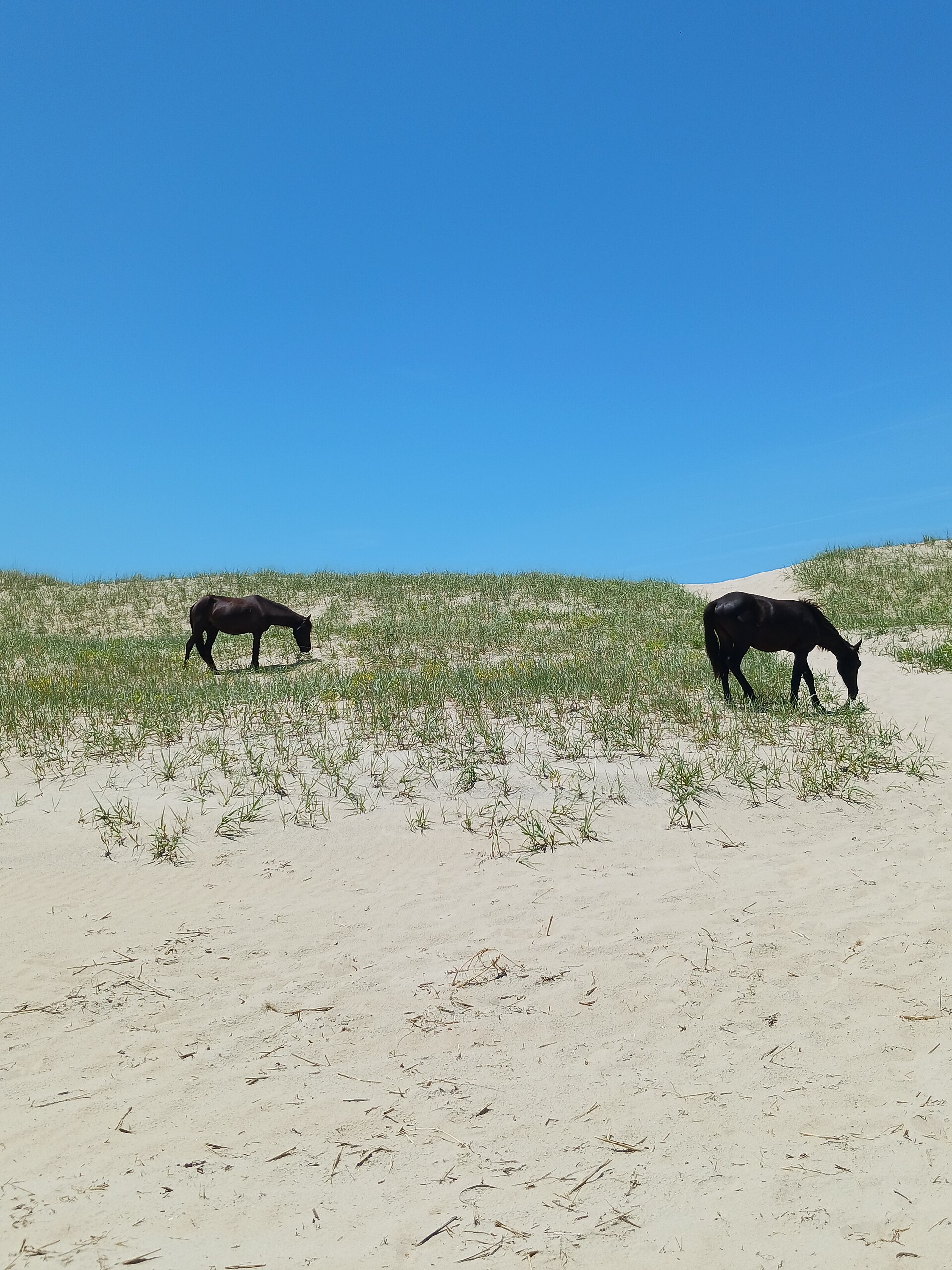
North of Corolla, wild Spanish mustangs roam the 4WD-only beach at Carova; guided tours run daily from Corolla village. On Roanoke Island, The Lost Colony outdoor drama has played the Waterside Theatre in Manteo every summer since 1937. For dinner, Sam & Omie’s in Nags Head has served fishermen since 1937; order the soft-shell crab when it is running.
Health & Medical
The Outer Banks Hospital in Nags Head handles emergencies, with urgent care clinics in Kitty Hawk and Avon and chain pharmacies along US 158. US healthcare is expensive, so visitors should carry travel insurance; providers bill it rather than accepting foreign public coverage. Food safety standards are high, and the main seasonal nuisance is mosquitoes on the soundside after summer rain.
Demographics & Government
Dare County holds roughly 37,000 year-round residents, a number that swells past 250,000 on peak summer days. Six incorporated towns run the northern beaches, while Hatteras Island’s villages and Ocracoke are unincorporated county territory. The population skews older and Protestant, with churches anchoring most villages.
Legal & Substances
Marijuana remains illegal in North Carolina, including for medical use. Beer and wine are sold in grocery stores, liquor only in state-run ABC stores, and several towns ban alcohol on the beach, so check the rules where you are staying. Smoking is banned inside restaurants and bars. Public drinking outside the beach townships is a citation.
Customs & Shopping
Returning US travelers get the standard $800 duty-free exemption. Take home OBX oval stickers, lighthouse prints, saltwater taffy, or fresh seafood packed from the Wanchese docks. Leave the sea oats and dune sand, both protected by state law, and skip shell collecting inside the pony pens on Ocracoke.
Accessibility & Inclusion
The national seashore lends beach wheelchairs free at its visitor centers, and several towns do the same seasonally. Wright Brothers Memorial and the Bodie Island boardwalk are step-free, while lighthouse climbs and soft-sand access paths remain the hard barriers. Newer rental homes often include elevators; confirm before booking.
Digital Nomad Corner
There is no coworking space on the islands, and you will not miss it. Spectrum cable serves the northern beaches with plans in the 300 to 500 Mbps range, Hatteras and Ocracoke run slower with more storm outages, and cafe workers default to Front Porch Cafe in Kill Devil Hills or Nags Head. The financial play is seasonal: oceanfront weeks that rent for $3,000 to $12,000 in July drop to monthly rates around $1,200 to $2,500 from October through April.
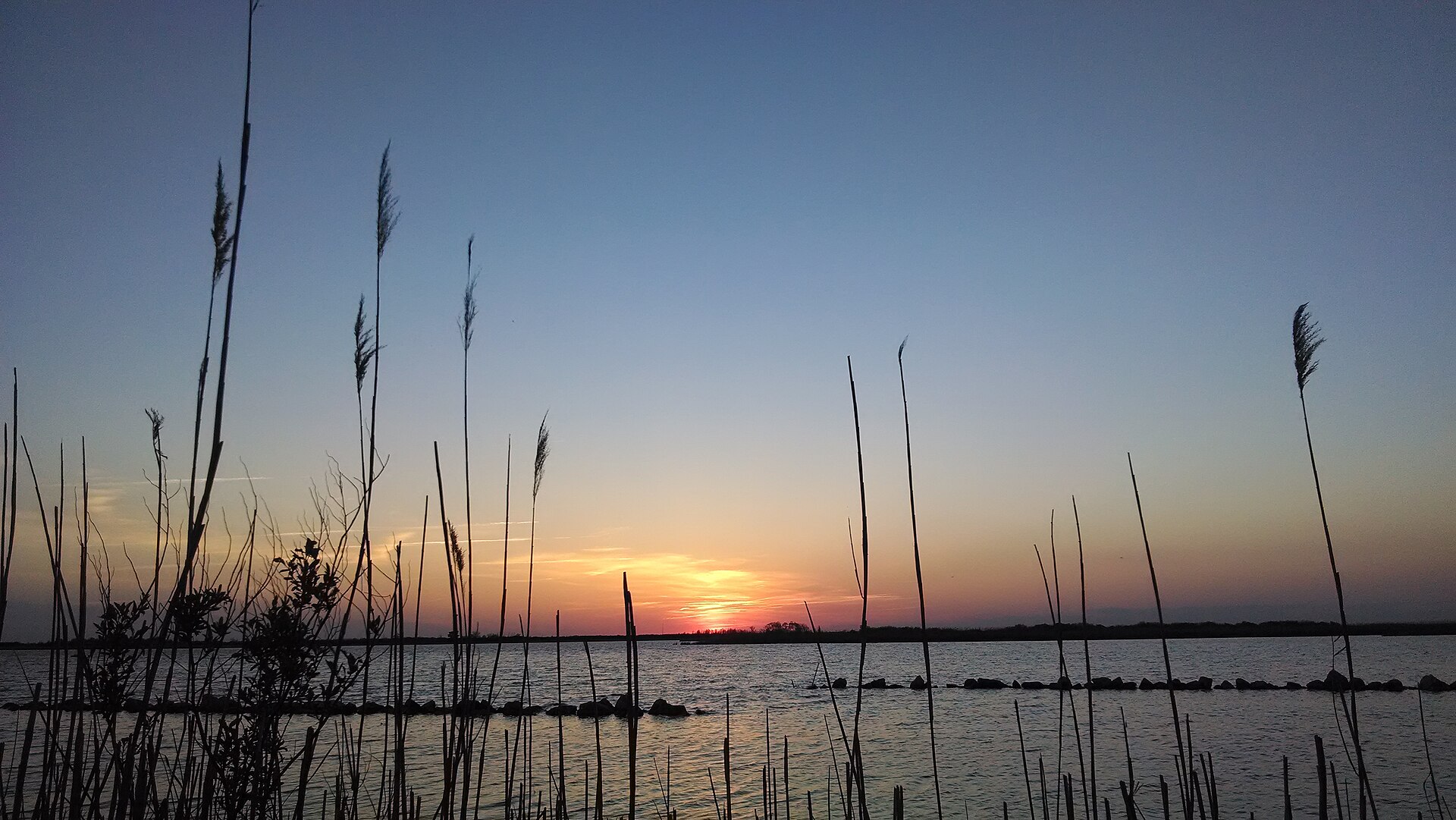
Book October or November: sea temps hold in the 60s, restaurants stay open through Thanksgiving, and monthly rents hit their floor.
Visa-wise, citizens of 40-plus countries enter the US visa-free for up to 90 days with an approved ESTA, and B-2 visitor visas allow stays of up to six months per entry. The year-round remote work community is small and scattered, so plan on making your own schedule rather than finding a scene.
Keep planning: Asheville: Blue Ridge Views, Breweries & Remote Work, Duck: Outer Banks Beach Town and Acadia National Park Guide: Maine's Coastal Peaks.
Photos: lns1122 (CC BY 2.0); Bohemian Baltimore (CC BY-SA 4.0); Ken Lund (CC BY-SA 2.0); CynthiaCola (CC BY 4.0); Progress P (CC0); Kabongolei (CC BY-SA 4.0); Jarek Tuszyński (CC BY-SA 3.0); Lago Mar (CC BY-SA 4.0), via Wikimedia Commons.