Minneapolis: Lakes, Mills & Remote Work
Nomad Toolkit
Overview & Vibe
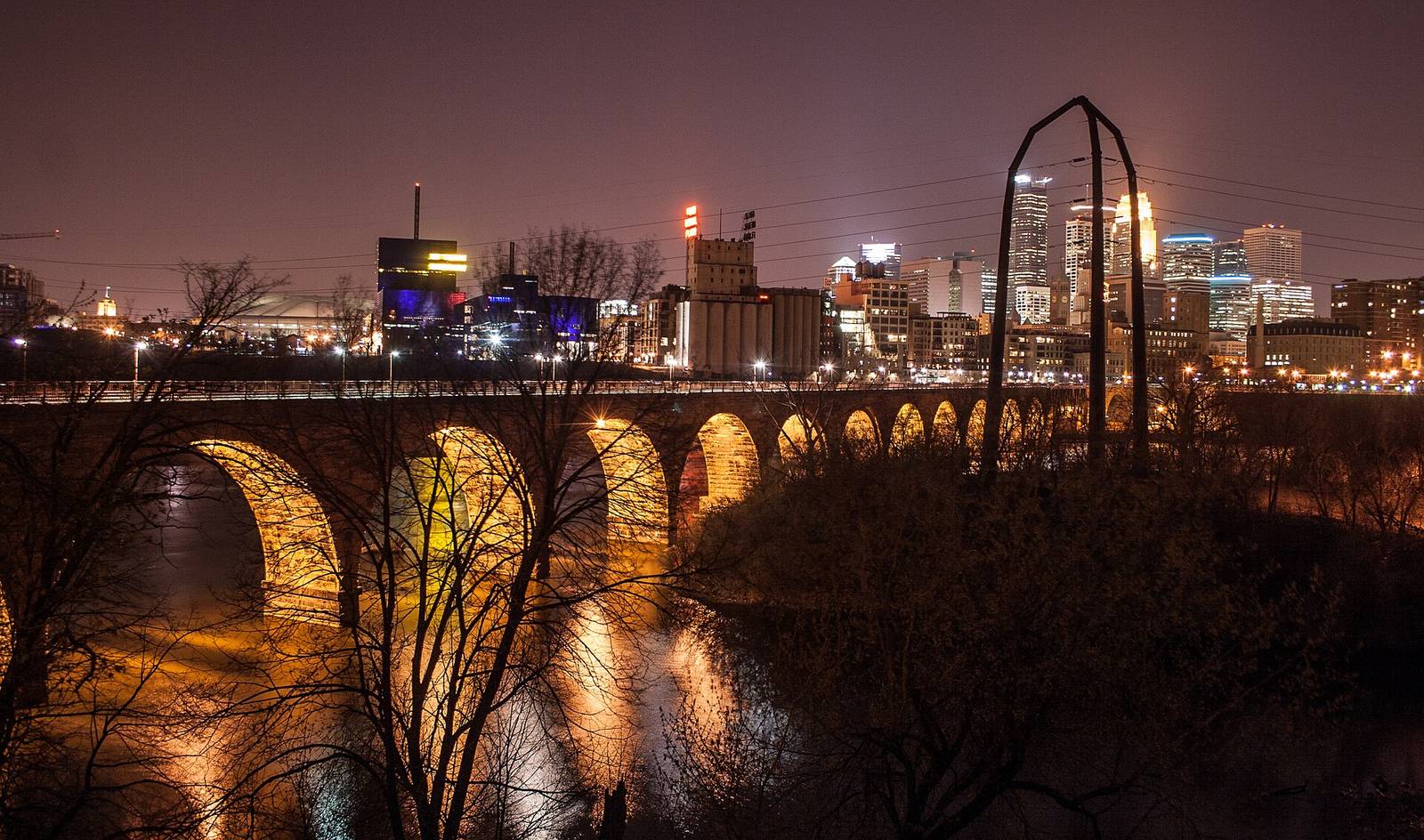
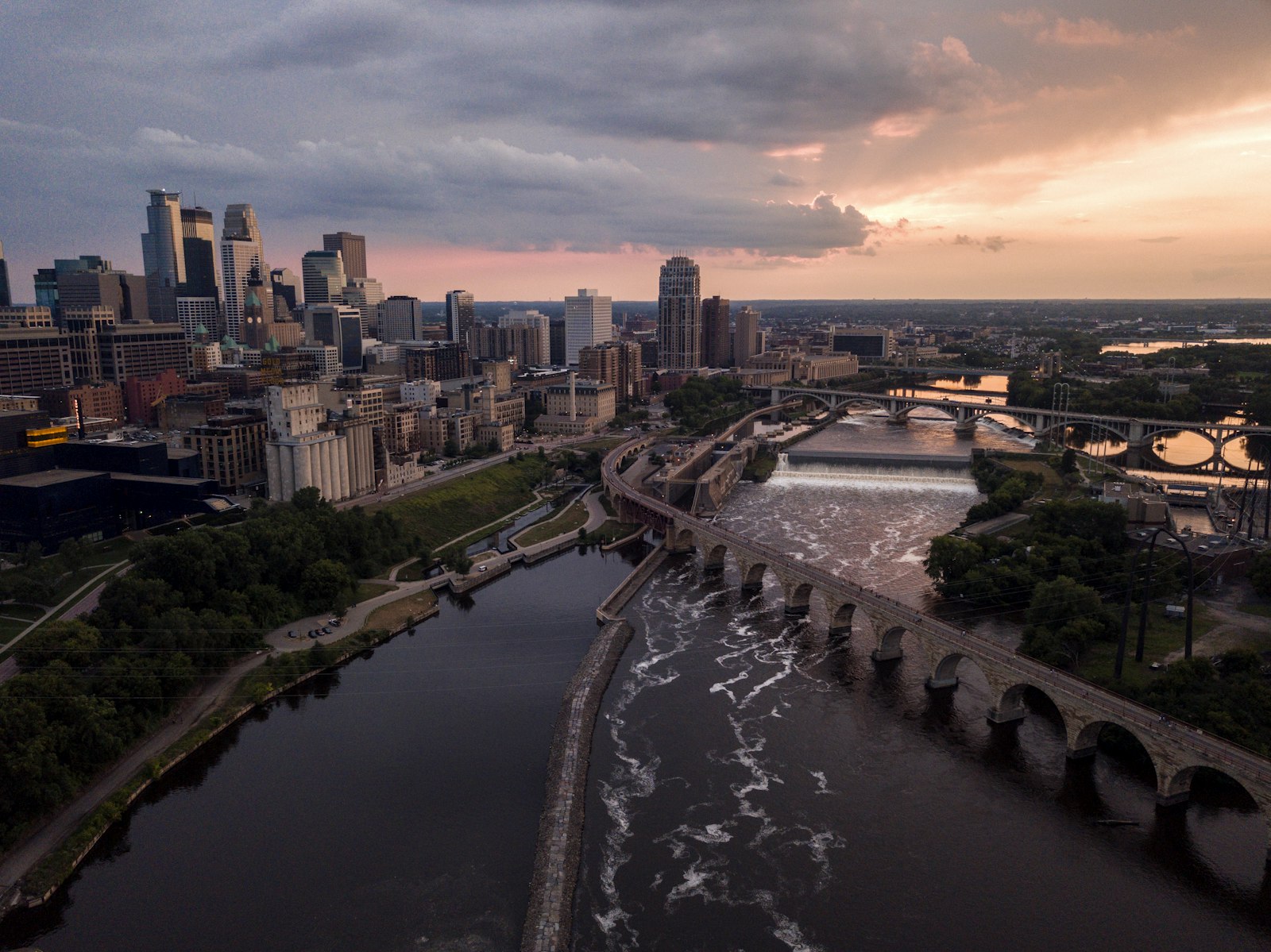
Minneapolis counted 429,954 residents in the 2020 census, and the city holds 13 lakes with 24 miles of shoreline inside its limits. It grew up around Saint Anthony Falls, the only natural waterfall on the Mississippi River, and by 1884 its mills led the world in flour output. Today the riverfront mills are museums and lofts, the lakes are ringed with paved paths, and the Grand Rounds National Scenic Byway ties the park system together.
The city works well for a remote worker who wants a big-city base without coastal prices. Downtown connects to the airport by light rail, the North Loop and Northeast hold most of the new restaurants and coworking, and South Minneapolis has the lakes and the cheap eats. Winters are long and cold, so most visitors plan around May through October.
A Brief History
Minneapolis was founded in 1856 and incorporated in 1867. On May 2, 1878, flour dust ignited inside the Washburn A Mill, and the explosion and fire killed 18 people. Flour production still peaked at 18.5 million barrels in 1916, led by Washburn-Crosby (later General Mills) and Pillsbury, before the industry declined in the 1920s (Wikipedia).
Transportation
Minneapolis-Saint Paul International Airport has a light rail station at each terminal. The METRO Blue Line runs from the airport to downtown and on to U.S. Bank Stadium, with Mall of America at the other end. The Green Line links downtown, the University of Minnesota and downtown Saint Paul. Metro Transit's standard fare is $2 at any hour, good for two and a half hours of travel, and a $4 day pass covers unlimited rides until 2 a.m.
Downtown has a weather-proof option too. The skyway system covers 9.5 miles and links 80 full city blocks, though each building sets its own hours. A car helps for day trips, but you can live in downtown, the North Loop or Uptown without one.
Language, Customs & Etiquette
English is the working language, and you will hear Somali, Spanish and Hmong in parts of the city. Locals are polite and a little reserved, and "Minnesota nice" usually means friendly small talk rather than quick invitations. Tip 18 to 20 percent at sit-down restaurants. On the lake paths, walkers and wheeled traffic use separate trails, so stay in your own lane.
Safety & Security
Downtown, the North Loop and the lake neighborhoods feel busy and comfortable in daytime. As in any large city, keep valuables out of sight in parked cars, watch your phone on late trains, and check a neighborhood before booking a long stay. Winter is the bigger risk for newcomers: icy sidewalks and wind chill can turn a short walk into a problem, so buy proper boots and gloves early.
Weather & Climate
Minneapolis has a humid continental climate with warm summers and hard winters. The record high is 108 F (July 1936) and the record low is minus 41 F (January 1888). June through August is the wettest stretch, and September is the sweet spot for warm days and fewer storms. The table shows 1991 to 2020 airport normals.
| Month | High F | Low F | Precip in |
|---|---|---|---|
| Jan | 24 | 9 | 0.89 |
| Feb | 28 | 13 | 0.87 |
| Mar | 42 | 25 | 1.68 |
| Apr | 57 | 38 | 2.91 |
| May | 69 | 50 | 3.91 |
| Jun | 79 | 60 | 4.58 |
| Jul | 83 | 65 | 4.06 |
| Aug | 81 | 63 | 4.34 |
| Sep | 73 | 54 | 3.02 |
| Oct | 58 | 41 | 2.58 |
| Nov | 42 | 28 | 1.61 |
| Dec | 29 | 15 | 1.17 |
Logistics & Practical Info
Minnesota does not charge sales tax on most clothing, which helps if you arrive without winter gear. Many lake and riverfront sights are free, including the Minneapolis Sculpture Garden and the Stone Arch Bridge. Some old-school spots are cash only, so carry a little cash. For a winter stay, a downtown or North Loop base keeps most daily errands indoors or a short walk away.
Attractions & Activities
- Mill City Museum (Wikipedia): opened in 2003 inside the ruins of the Washburn A Mill at 704 South 2nd Street.
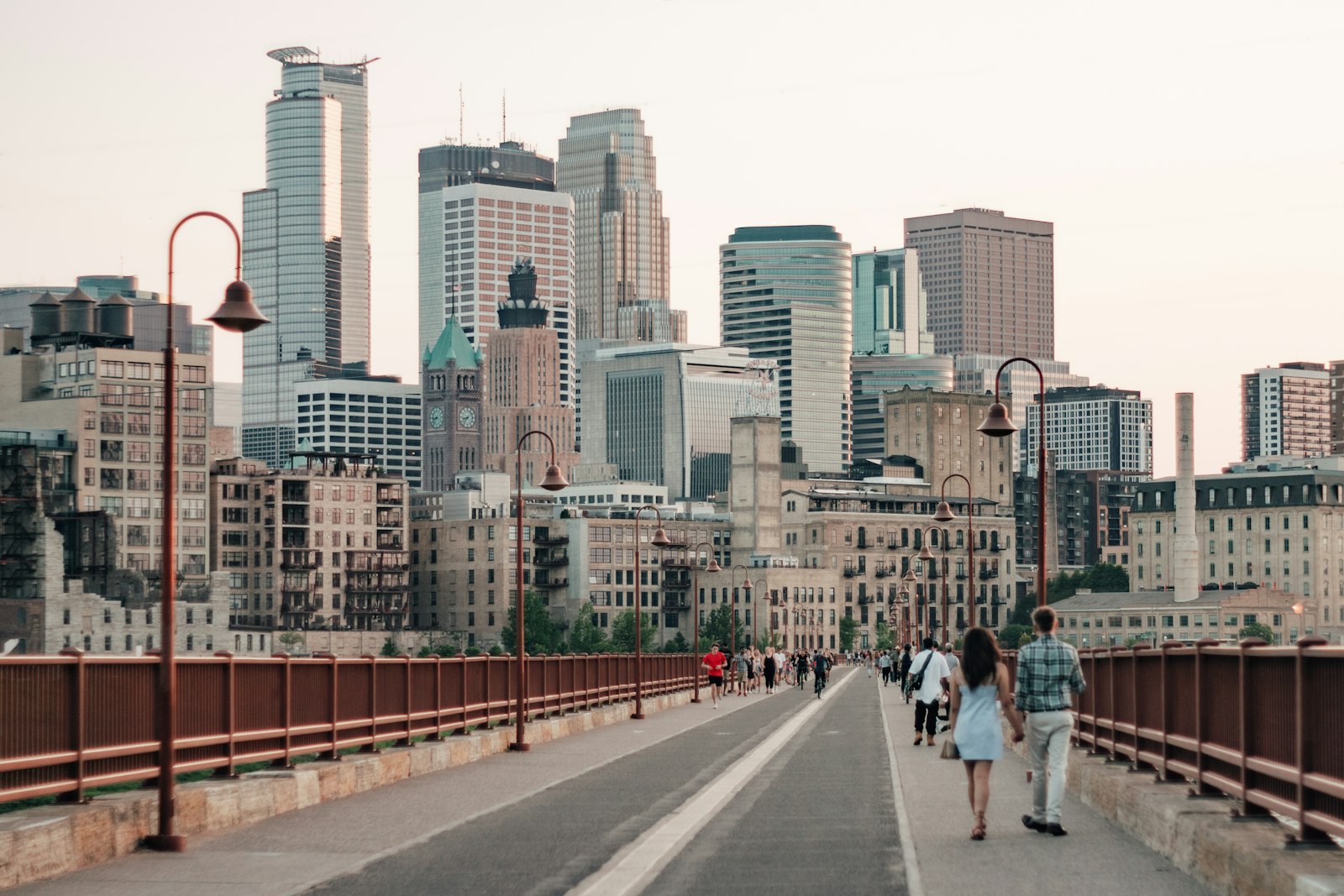
- Stone Arch Bridge (Wikipedia): a 2,100 foot bridge built in 1883 for James J. Hill's railroad, now open to walkers and cyclists with views of Saint Anthony Falls.
- Minneapolis Sculpture Garden (Wikipedia): opened in 1988 next to the Walker Art Center, home of Spoonbridge and Cherry by Claes Oldenburg and Coosje van Bruggen.
- Bde Maka Ska (Wikipedia): the 424 acre lake formerly called Lake Calhoun, renamed in 2018, with a 3.2 mile walking path and a separate 3.4 mile bike trail.
- Minnehaha Falls (Wikipedia): a 53 foot waterfall in a 167 acre park, made famous by Longfellow's The Song of Hiawatha.
Where to Eat
Matt's Bar at 3500 Cedar Avenue South lists its Jucy Lucy, a burger with the cheese sealed inside, at $11.50, and a full order of fries at $8.25. It takes cash and local checks only and has an ATM on site. Midtown Global Market fills part of a 1928 Sears building on Lake Street with food stalls, and Kramarczuk's in Northeast is the stop for Eastern European sausages.
Health & Medical
Hennepin County Medical Center at 701 Park Avenue downtown became the state's first Level I trauma center in 1989 and is run by Hennepin Healthcare. Pharmacies and urgent care clinics are easy to find across the city. Bring your own insurance, since U.S. care is expensive without it.
Demographics & Government
The 2020 census counted Minneapolis as 58.0 percent white, 18.9 percent Black, 10.4 percent Hispanic or Latino, 5.8 percent Asian and 5.2 percent multiracial. Jacob Frey has served as mayor since 2018. The city sits in Hennepin County, and Saint Paul, the state capital, lies just to the east.
Legal & Substances
Recreational cannabis became legal in Minnesota on August 1, 2023, for adults 21 and older, with up to 2 ounces allowed in public. Smoking is banned in cars, indoor public spaces and workplaces, and driving while high is illegal. The drinking age is 21, and bars check ID closely.
Customs & Shopping
Mall of America sits at the south end of the Blue Line if you need a big shopping run. For local goods, Northeast has makers and breweries, and the Midtown Global Market sells groceries and gifts from many immigrant communities. The clothing tax break makes Minneapolis a sensible place to buy a winter coat.
Accessibility & Inclusion
The light rail stations and trains are step-free, and the skyways give level indoor routes across much of downtown. The lake paths are paved and flat. Minneapolis has long had a visible LGBTQ community and hosts Twin Cities Pride each June.
Digital Nomad Corner
Coworking is easy to find, and Meet Minneapolis lists several day passes. Impact Hub at 825 Washington Avenue SE lists a $25 day pass, Flock at 2611 1st Avenue South lists $35, and WeWork at Capella Tower starts at $29 a day. For free WiFi, the Minneapolis Central Library at 300 Nicollet Mall, a César Pelli building opened in 2006, is a solid downtown option. Base yourself near a Green Line or Blue Line stop, and you can reach coworking, the airport and the university without a car.
Keep planning: Acadia National Park Guide: Maine's Coastal Peaks, Aceh, Indonesia: A Practical Travel Guide and Acre: Brazil's Amazon Frontier.
Details checked October 2026. Photos: Unsplash.