New Orleans: Culture, Cuisine & Jazz
Nomad Toolkit
Overview & Vibe
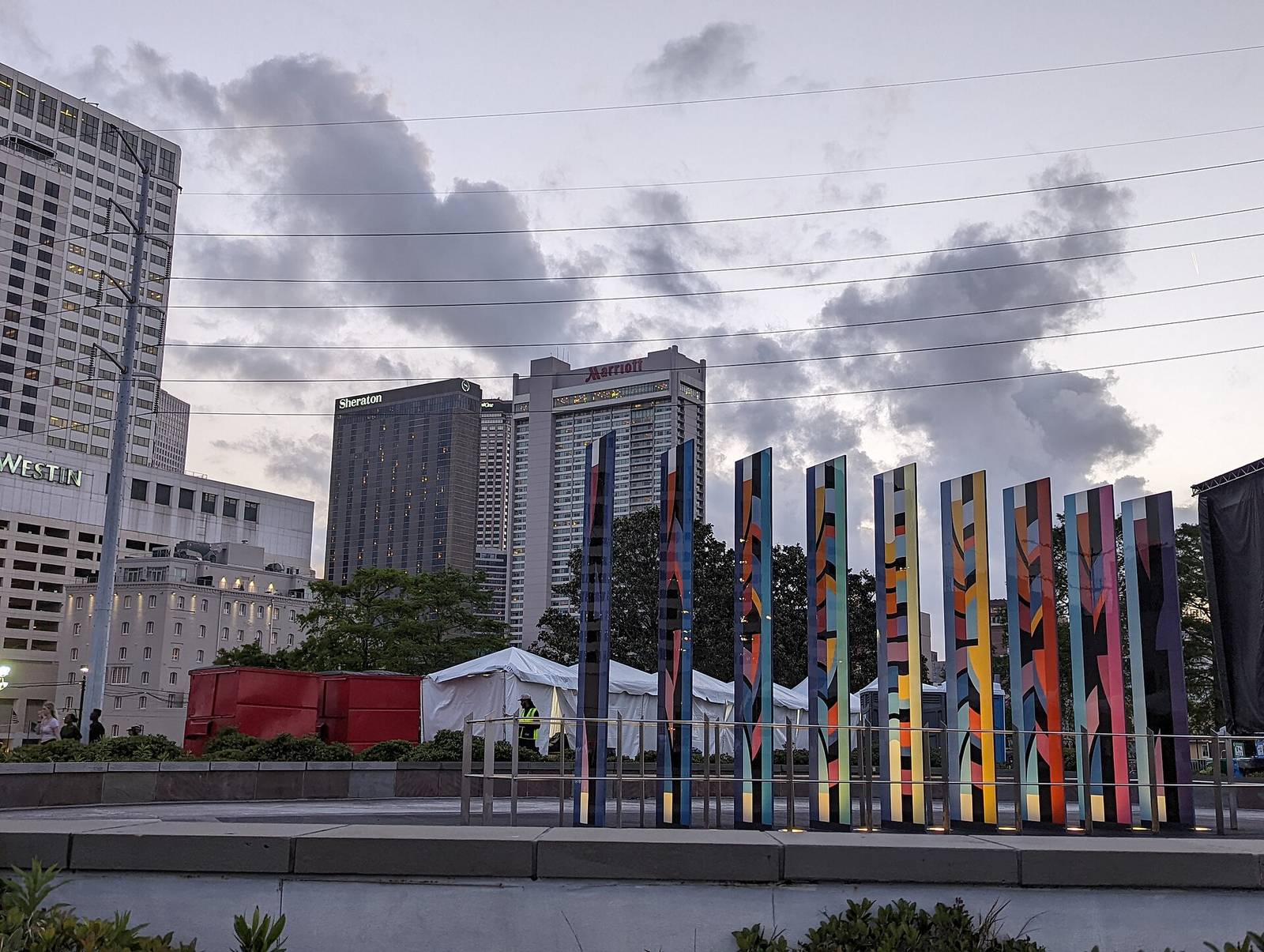
Most of New Orleans sits at or below sea level in a bend of the Mississippi River, and its oldest neighborhood, the French Quarter, has been continuously inhabited since 1718. The city of 383,997 people runs on live music, Creole and Cajun cooking, and a legal quirk that lets you carry your drink down the street in a plastic cup. Brass bands play for tips on Royal Street in the afternoon, and neighborhoods shift character block by block: the Quarter for history and tourists, the Marigny and Bywater for musicians and creatives, the Garden District for oak-shaded mansions, and the Central Business District for offices and hotels converted from cotton warehouses.
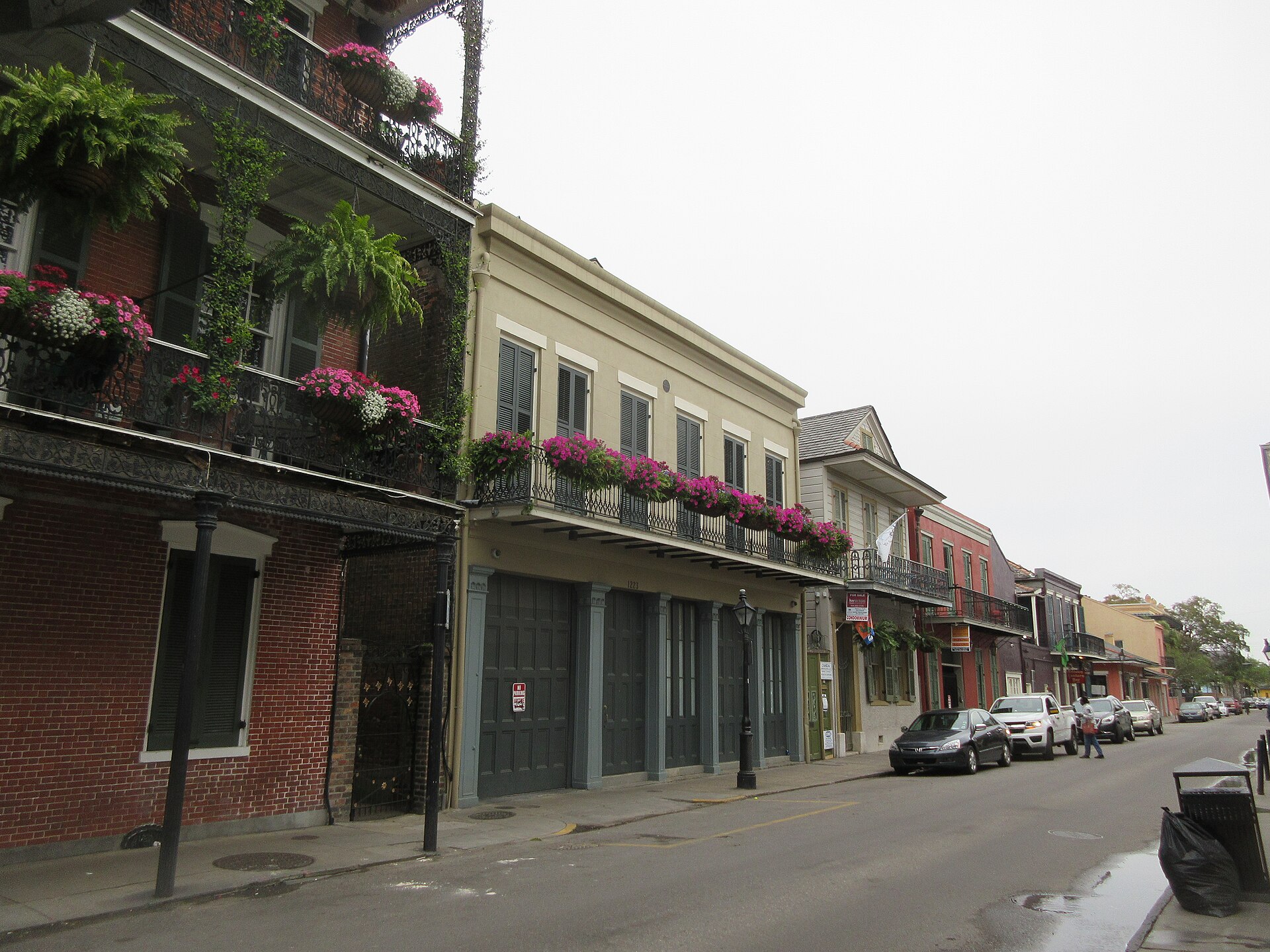
Expect humidity, slow walking, and strangers who talk to you. The pace is closer to the Caribbean than to the rest of the United States, which is exactly why remote workers either stay a month or sign a lease.
A Brief History
Jean-Baptiste Le Moyne de Bienville founded the city in 1718 and named it for Philippe II, Duke of Orleans. Spain governed from 1763 to 1803, and after fires in 1788 and 1794 leveled the original French town, the Quarter was rebuilt in the Spanish style you see today. The United States acquired the city in the 1803 Louisiana Purchase, and Hurricane Katrina flooded roughly 80 percent of it in August 2005, a disaster the city spent more than a decade rebuilding from. The full story is on Wikipedia.
Transportation
Louis Armstrong New Orleans International Airport (MSY) sits 11 miles west of downtown; a rideshare to the Quarter runs about $35 to $40. In town, the RTA streetcar costs $1.25 per ride and a Jazzy Pass gives unlimited rides for $3 a day. The St. Charles line has run since 1835, which makes it the oldest continuously operating street railway in the world.
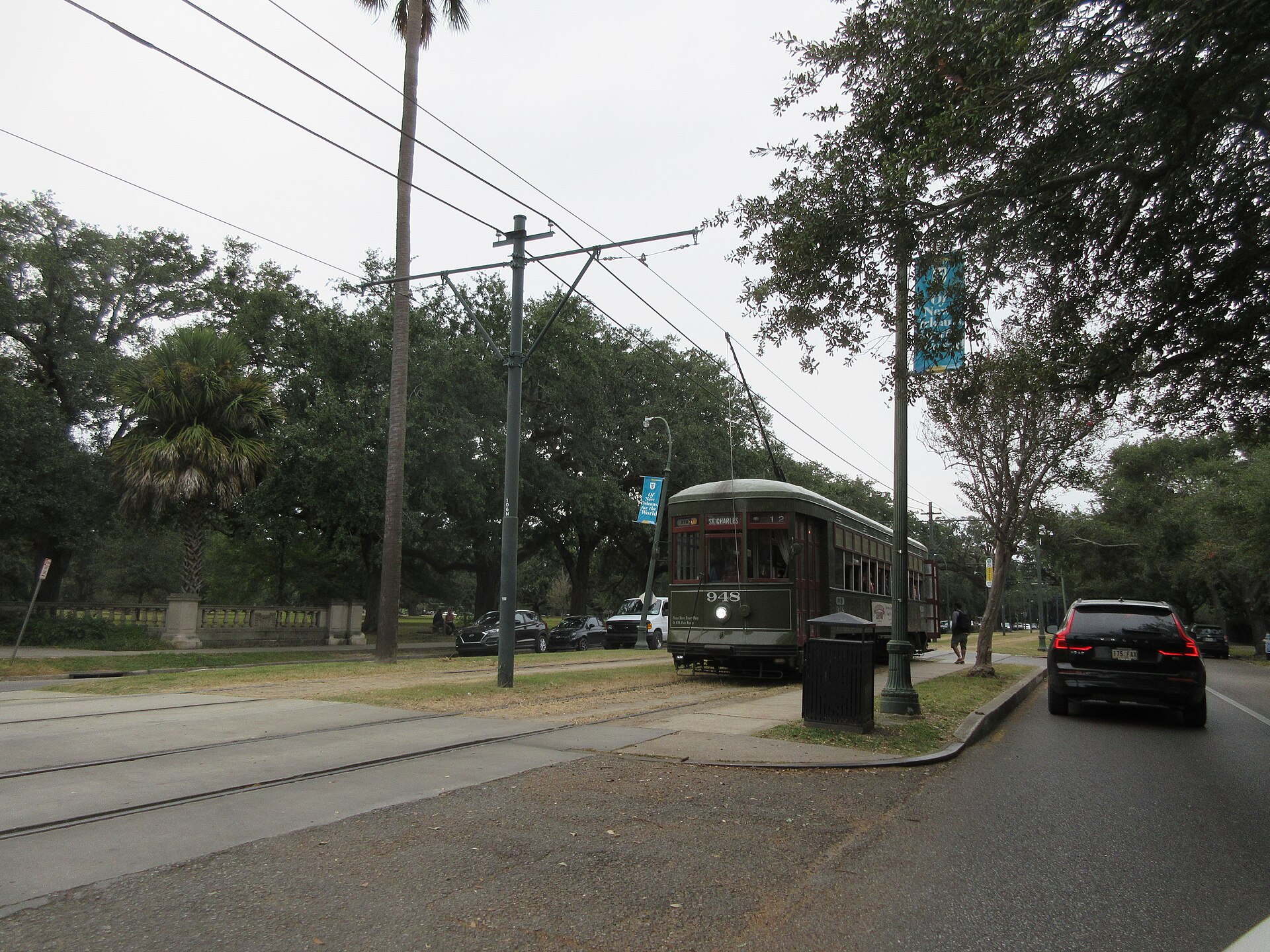
The Quarter, Marigny, and CBD are walkable, and Uber and Lyft cover everything else. Driving is on the right, a foreign license works for rentals, and you should skip having a car unless you plan swamp tours or Gulf Coast trips. Potholes here are a running local joke; cyclists learn the smooth streets fast.
Load the Le Pass app for streetcar and bus fares. The $3 Jazzy Pass pays for itself on your second ride of the day.
Language, Customs & Etiquette
English is the language, with a local vocabulary worth learning: a median is the "neutral ground," a small bonus is "lagniappe," and "Where y'at?" means hello, not a request for coordinates. Louisiana is divided into parishes rather than counties. Tip 15 to 20 percent in restaurants and a dollar or two per drink at bars, and tip the brass bands if you stop to watch. If a second line parade passes, join behind the band rather than cutting through it. Locals are chatty by default; short small talk with cashiers and bartenders is normal, not an intrusion.
Safety & Security
Dial 911 for emergencies. The French Quarter, Garden District, and Warehouse District are heavily patrolled and fine on foot; the picture changes fast outside tourist corridors, so use a rideshare after dark instead of walking unfamiliar blocks. Phone snatching and car break-ins are the common property crimes. The classic scam is a bet that someone "knows where you got them shoes" (the answer is on your feet, and it costs you $20 to hear it). Solo female travelers generally do fine on Frenchmen Street and in the Quarter at night because crowds are constant. The city is one of the most LGBTQ+ friendly in the South, with a gay bar cluster on the lower Quarter and the Southern Decadence festival every Labor Day weekend.
Weather & Climate
The climate is humid subtropical: mild winters, long brutal summers, and afternoon thunderstorms from June through September. Hurricane season runs June 1 to November 30, with peak risk in August and September.
| Month | High / Low (F) | Rain |
|---|---|---|
| January | 62 / 47 | 5.2 in |
| March | 72 / 56 | 4.6 in |
| May | 85 / 70 | 4.7 in |
| July | 91 / 77 | 6.6 in |
| September | 87 / 73 | 5.7 in |
| November | 71 / 55 | 4.5 in |
October, November, and the stretch from February through April are the sweet spots. Pack light breathable clothing, a rain shell, and one warm layer for winter cold snaps.
Booking June through November? Buy trip insurance that covers named storms, and book refundable rooms.
Logistics & Practical Info
Plugs are US Type A and B at 120V. The city is on Central Time (UTC-6, UTC-5 in summer). Tap water is safe to drink. Free WiFi is standard in cafes, hotels, and the public library branches. Prepaid SIMs from AT&T, T-Mobile, and Verizon start around $30 to $50 a month, and there is no internet censorship to plan around.
Attractions & Activities
Start at Jackson Square, where St. Louis Cathedral, the oldest cathedral in continuous use in the United States, faces the river over a plaza of artists and tarot readers.
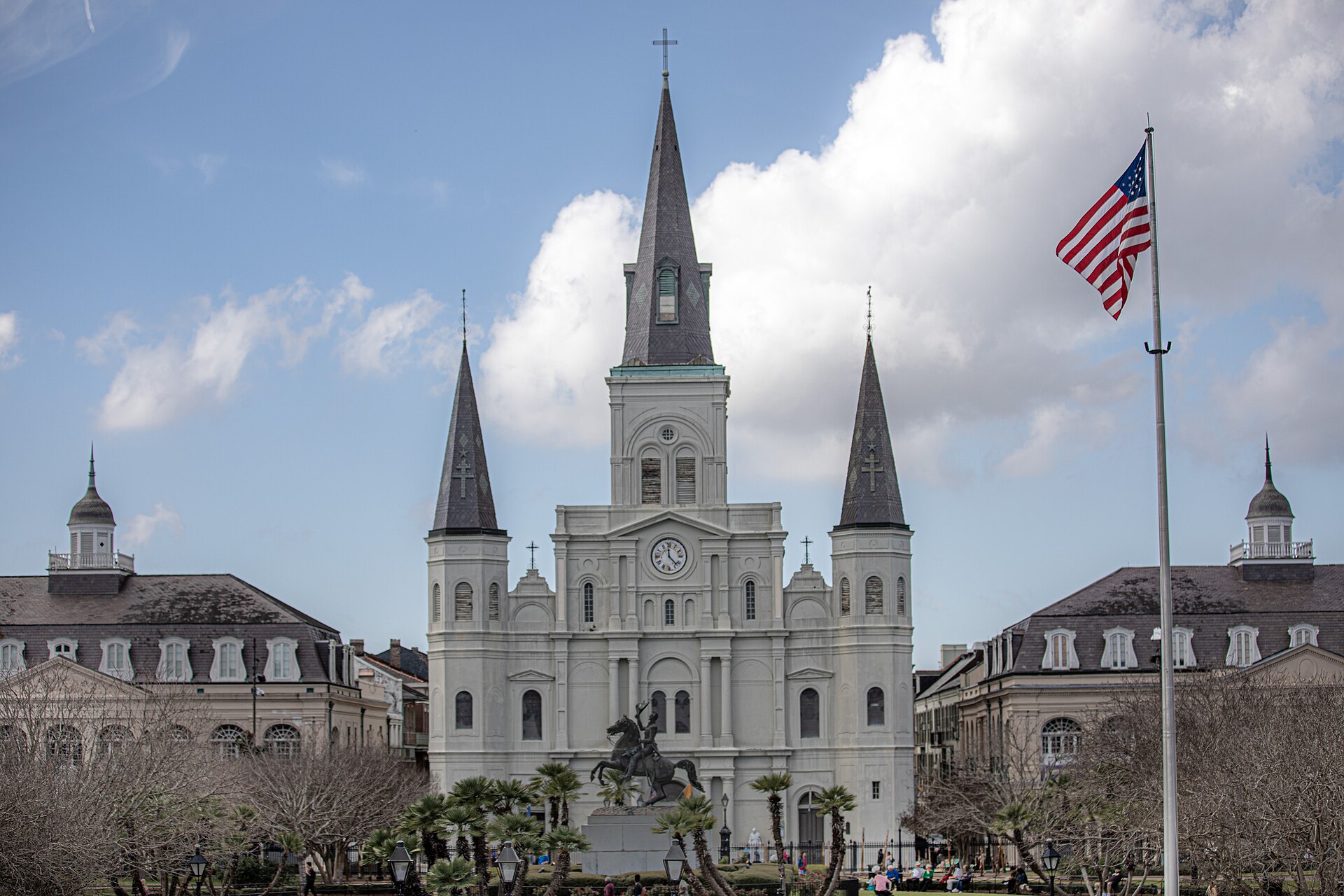
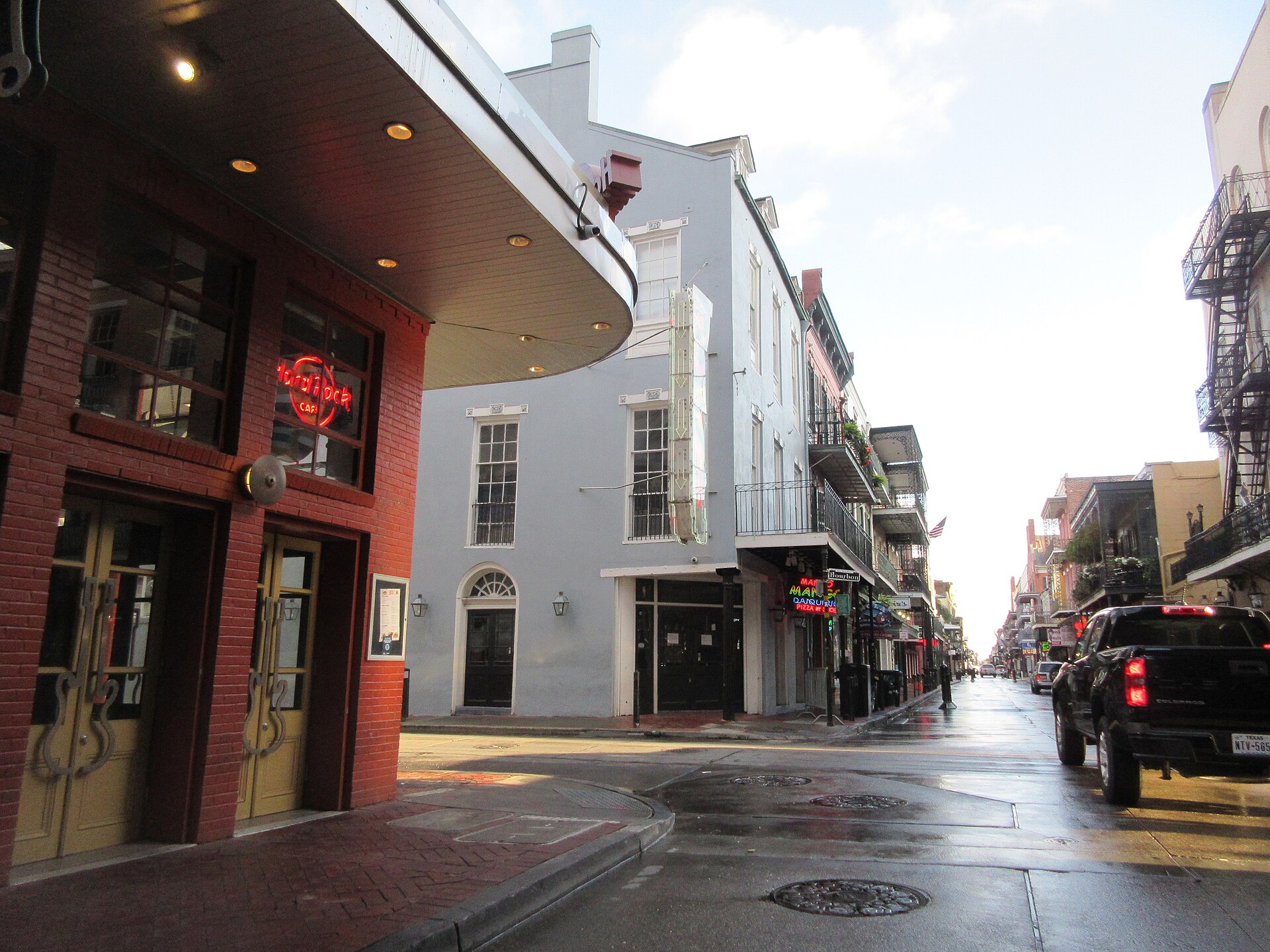
Bourbon Street is worth one loud evening; the better nightly music is on Frenchmen Street, where clubs like The Spotted Cat run sets from early evening, and at Preservation Hall, which stages intimate acoustic jazz shows nightly in a room from 1817.
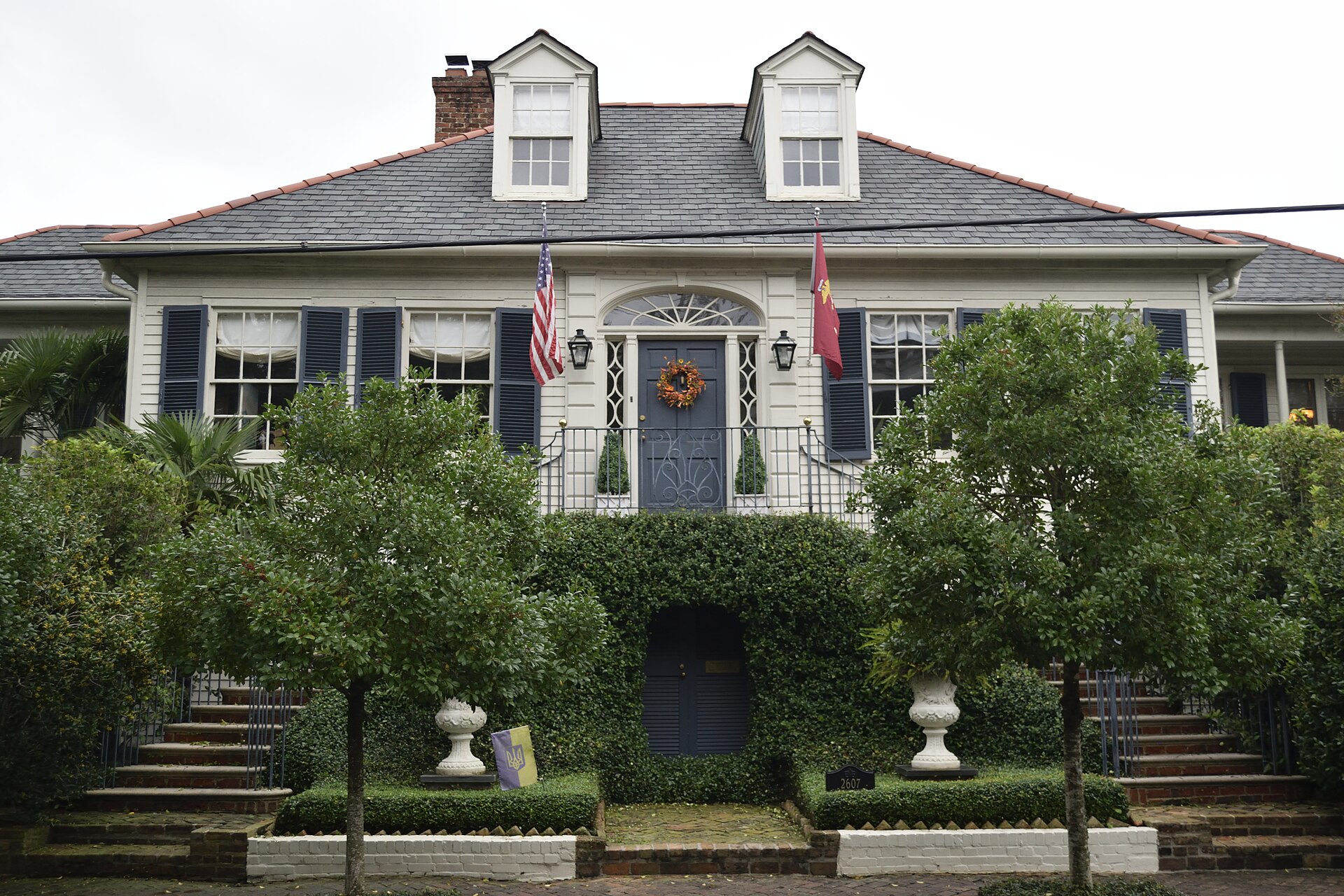
Ride the streetcar to the Garden District for antebellum mansions and Lafayette Cemetery No. 1, then spend a green afternoon in City Park, 1,300 acres of live oaks that outsizes Central Park. The National WWII Museum deserves a half day on its own.
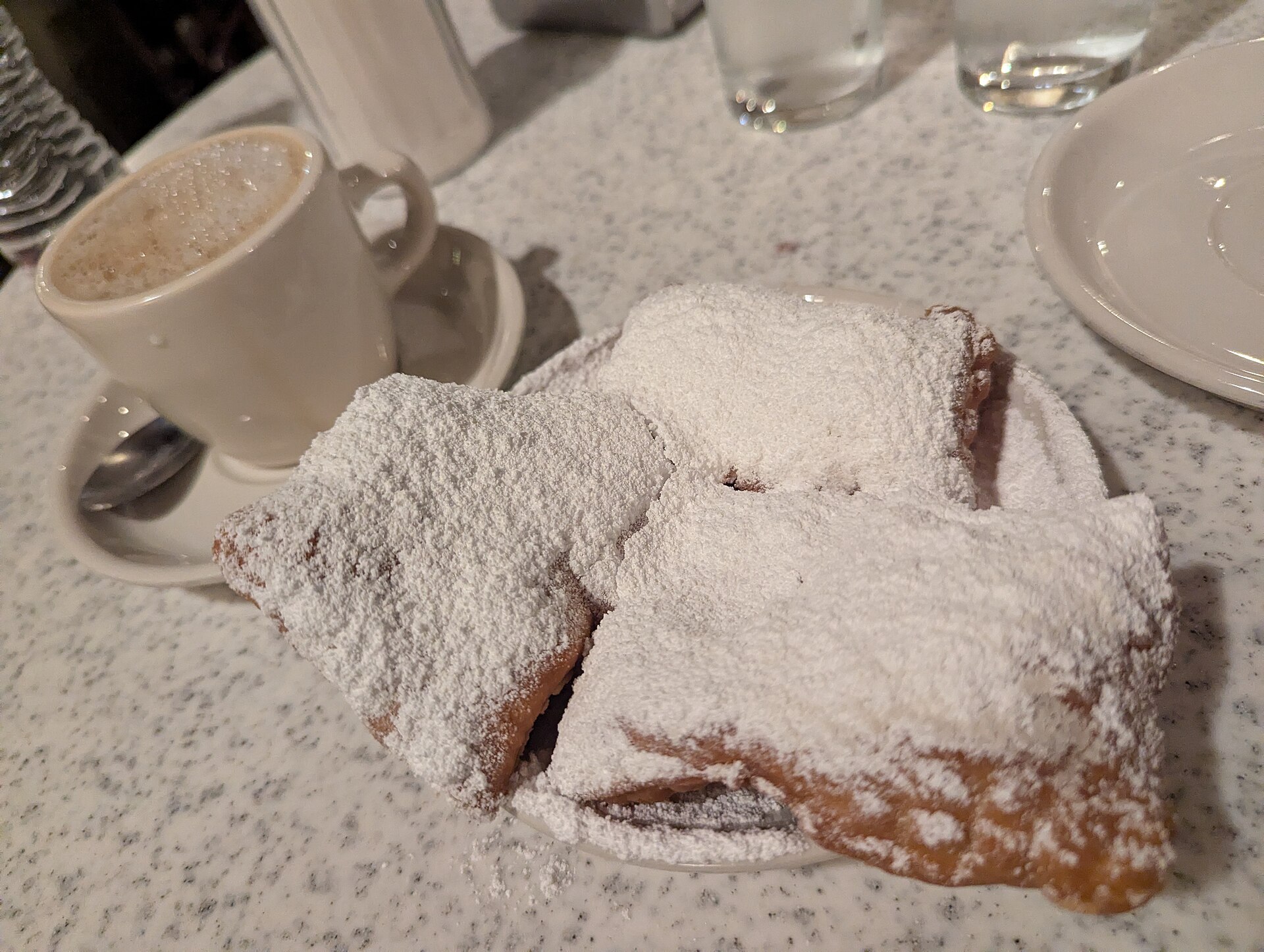
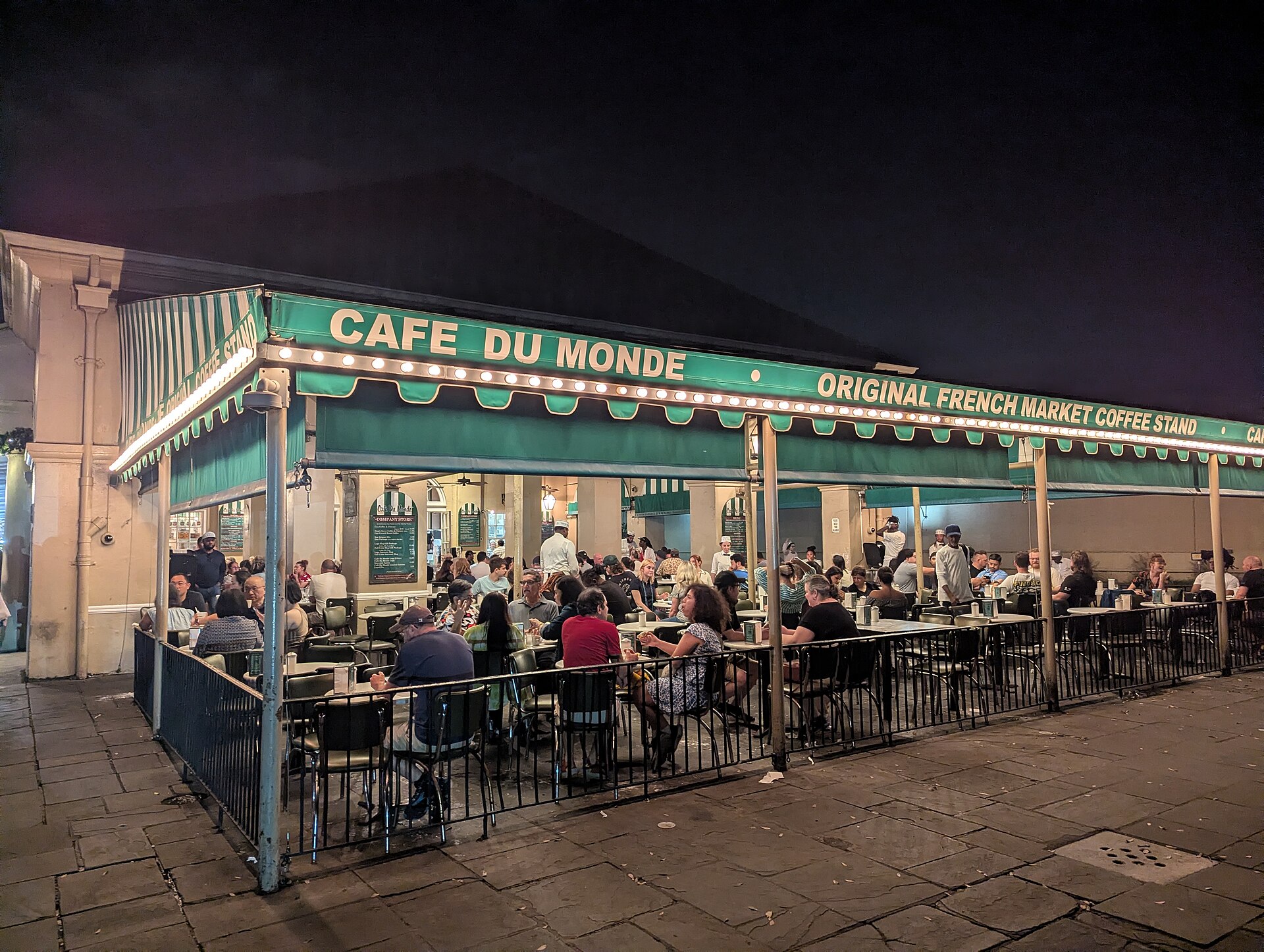
Eat with intent: beignets under powdered sugar at Cafe du Monde (open since 1862, three for about $4), a shrimp po'boy at Parkway Bakery, dark roux gumbo, and the muffuletta, invented at Central Grocery in 1906. Mardi Gras season runs from January 6 to Fat Tuesday, and Jazz Fest fills the last weekend of April and first weekend of May.
Health & Medical
University Medical Center and the Ochsner network provide big-city hospital care. US hospitals bill upfront, so carry travel insurance and expect to pay first and claim reimbursement after. CVS and Walgreens pharmacies are everywhere, but foreign prescriptions cannot be filled directly; bring enough medication in original packaging. Summer heat index values above 100F are routine, so hydrate deliberately, and use repellent since mosquitoes thrive here. Restaurant food safety is solid; raw Gulf oysters carry the standard warm-month caution. Vegetarians can eat well (red beans without the sausage is a menu ask, not a given), though menus lean hard on pork and seafood.
Demographics & Government
The city counted 383,997 residents in the 2020 census, with about one million in the metro area. It is a majority-Black city, roughly 59 percent, with a mayor-council government coextensive with Orleans Parish. Louisiana runs on civil law descended from French and Spanish codes, the only US state that does, and Catholic tradition shapes the calendar more than in the rest of the South.
Legal & Substances
The drinking age is 21. Open containers are legal in the French Quarter in plastic cups, so bars pour "go-cups" to walk with, an arrangement almost no other US city allows. Marijuana is medical-only in Louisiana, though New Orleans police issue summonses rather than make arrests for small amounts. Bars have no mandated closing time and some run 24 hours. Smoking has been banned inside bars and casinos citywide since 2015.
Customs & Shopping
Standard US customs rules apply on departure, with duty-free shopping at MSY. Souvenirs that actually get used: pralines from Leah's Pralines, chicory coffee, Louisiana hot sauce, and Mardi Gras posters from Royal Street galleries. The French Market covers six blocks along the river, flea stalls included. Sales tax in Orleans Parish runs about 9.45 percent, so factor it into bigger purchases.
Accessibility & Inclusion
ADA rules apply, but the French Quarter's brick sidewalks are uneven and curb cuts are inconsistent, so wheelchair users should plan routes along Decatur and Canal. The historic St. Charles streetcars are exempt from lift requirements; the Canal, Rampart, and Riverfront lines run accessible cars. RTA offers paratransit, newer hotels and museums are fully accessible, and many historic buildings have no elevator, so confirm before booking a walk-up.
Digital Nomad Corner
A one-bedroom in Mid-City or the Marigny rents for $1,200 to $1,600 a month, well under coastal-city rates. Cox and AT&T Fiber both sell gigabit plans, and Central Time makes East and West Coast meetings equally workable. For workspace, The Shop at the CAC in the Warehouse District sells day passes and monthly desks, Launch Pad anchors the startup crowd, and laptop-friendly cafes include French Truck Coffee on Magazine Street and Mammoth Espresso. The nomad scene is smaller than Austin's or Mexico City's, but the freelance creative community (musicians, film crews, writers) is deep, and a month here costs less than the party reputation suggests.
Keep planning: Acadia National Park Guide: Maine's Coastal Peaks, Aceh, Indonesia: A Practical Travel Guide and Acre: Brazil's Amazon Frontier.
Photos: Carnaval.com Studios (CC BY 2.0), Infrogmation of New Orleans (CC BY-SA 4.0), Britchi Mirela (CC0), Daniel Hartwig (CC BY 2.0), Jeremy Thompson (CC BY 4.0), via Wikimedia Commons.