Okinawa: Japan's Subtropical Islands
Nomad Toolkit
Overview & Vibe
Okinawa is Japan's southernmost prefecture: 160 islands spread across roughly 1,000 km of ocean, 49 of them inhabited, with about 1.47 million people. Most visitors base themselves on Okinawa Island, in the capital Naha, a dense city of around 317,000 people where the monorail runs from the airport straight to the shopping strip.
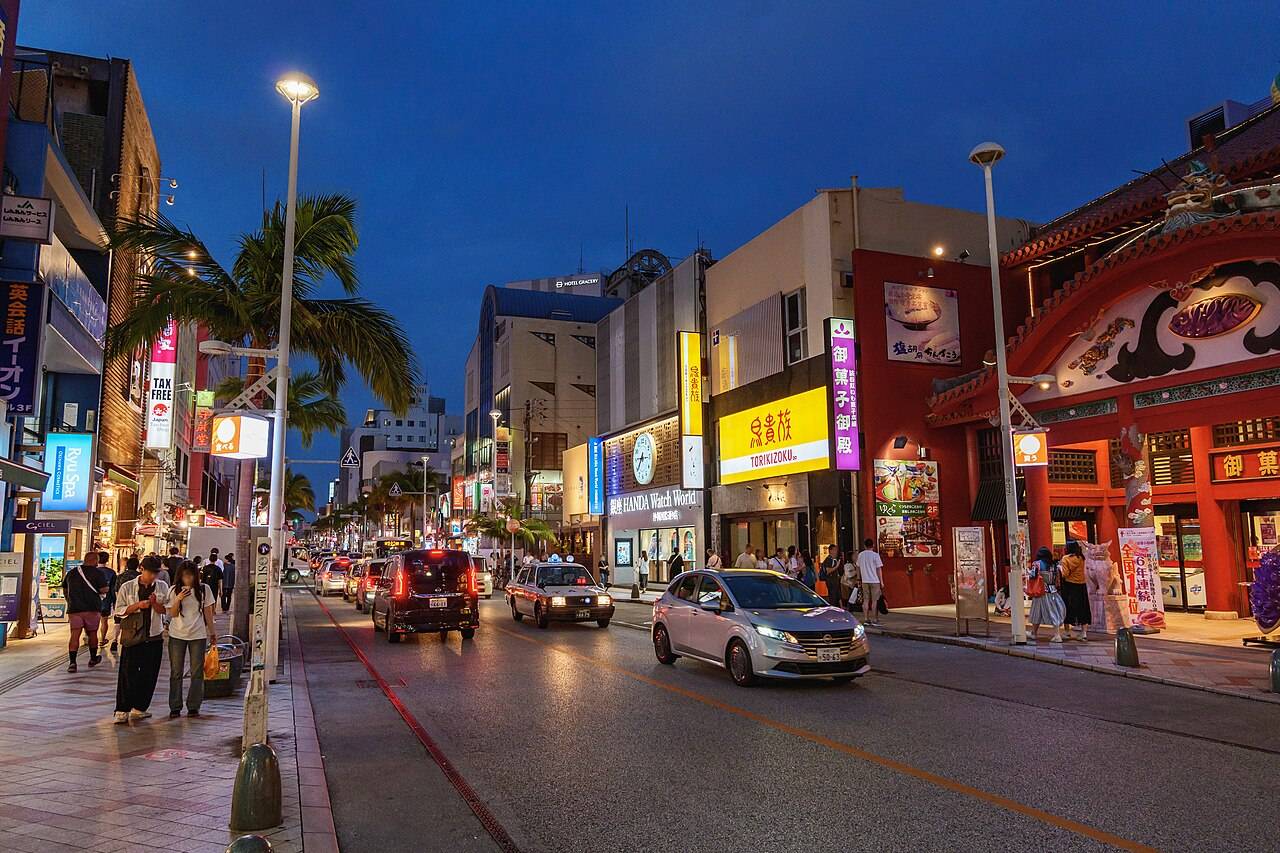
The draw is a mix you do not get elsewhere in Japan: coral reefs and a subtropical climate, a food culture built on pork and bitter melon, and the history of an independent kingdom. The main strip, Kokusai-dori, runs 1.6 km through central Naha with shops, restaurants and bars along its length.
A Brief History
Shō Hashi unified Okinawa Island in 1429, founding the Ryukyu Kingdom, a trading state that paid tribute to Ming China. The Shimazu clan of Satsuma invaded in 1609 and held the kingdom as a vassal, and Japan abolished it outright in March 1879 to create Okinawa Prefecture. The 1945 Battle of Okinawa killed roughly a third of the civilian population, and the islands stayed under US administration until May 15, 1972. More on Wikipedia.
Transportation
The Yui Rail monorail is the only rail line on the island. It runs from Naha Airport through the city center, touching Kokusai-dori at Asahibashi and Makishi stations, and on to Shuri. A 1-day pass costs ¥800 and a 2-day pass ¥1,400, and Suica and the local OKICA card both work. City buses charge a flat ¥240 or ¥260 per ride inside central Naha, and the Naha Bus Terminal sits next to Asahibashi Station.
North of Naha, a rental car makes life easier. The aquarium at Motobu is about two hours from the airport by car on the Okinawa Expressway and around three hours on the Yanbaru Express bus (routes 111 and 117).
Language, Customs & Etiquette
Japanese is the everyday language, and English is limited outside hotels and tourist shops, so a translation app helps. Six Ryukyuan languages survive, mostly in folk songs and festivals. Tipping is not part of the culture anywhere in Japan. Take your shoes off where you see a raised entryway or a shoe rack, and keep phone calls off the monorail. Okinawans are relaxed by Japanese standards, but queues, quiet trains and taking your trash home still apply. Many restaurants close between lunch and dinner, so plan meals around that.
Safety & Security
Crime is low and street safety is not the main concern. Weather is. Typhoons can cancel flights and ferries in late summer and early autumn, so leave slack in your travel dates and follow the Japan Meteorological Agency warnings. At beaches, swim inside netted areas in summer, when box jellyfish are around, and stay on trails in scrubby areas where habu snakes live.
Weather & Climate
Naha averages above 59°F even in its coldest month. May, June, August and September are the wettest. The mildest months for outdoor time are November, December, March and April, when highs sit in the 70s. The table shows long-term averages for Naha.
| Month | High °F | Low °F | Rain (in) |
|---|---|---|---|
| Jan | 68 | 59 | 4.0 |
| Feb | 68 | 59 | 4.5 |
| Mar | 71 | 62 | 5.6 |
| Apr | 76 | 66 | 6.3 |
| May | 81 | 72 | 9.7 |
| Jun | 86 | 77 | 11.2 |
| Jul | 89 | 81 | 7.4 |
| Aug | 89 | 80 | 9.4 |
| Sep | 87 | 78 | 10.8 |
| Oct | 83 | 74 | 7.1 |
| Nov | 77 | 69 | 4.7 |
| Dec | 71 | 62 | 4.3 |
Logistics & Practical Info
- Currency: Japanese yen. Cards work in most city shops, but carry cash for markets and small soba shops.
- Power: 100V, with the same flat two-pin plugs as the US.
- Entry: US passport holders get 90 days visa-free as tourists.
- Getting around: Yui Rail in Naha, a rental car for the north and the beaches.
Attractions & Activities
Shuri Castle (Wikipedia) was the Ryukyu royal palace from 1429 to 1879. Fire destroyed the main hall on October 31, 2019. The grounds stay open during the rebuild, the inner paid area costs ¥400, and the rebuilt Seiden main hall is scheduled to reopen on November 23, 2026 with timed 30-minute entry slots at ¥1,000 for adults, booked in advance.
Okinawa Churaumi Aquarium (Wikipedia) in Ocean Expo Park holds the Kuroshio Sea tank, which was the largest aquarium tank in the world until 2005. Adult admission at the gate is ¥2,180, off-season hours are 8:30 to 18:30, and parking is free.
Cape Manzamo in Onna Village is a limestone cliff shaped like an elephant's trunk, about an hour by car from the airport. Entry is ¥100 and parking is free.
Nakagusuku Castle (Wikipedia) is the best-preserved gusuku ruin on the island, six stone-walled courtyards on a ridge, and part of a UNESCO World Heritage listing since 2000.
In the south, the Okinawa Prefectural Peace Memorial Museum (Wikipedia) at Mabuni covers the 1945 battle. It costs ¥300 and opens 9:00 to 17:00.
Health & Medical
Japanese healthcare is high quality, but bring travel insurance, since clinics expect payment up front from visitors without national insurance. Pharmacies are easy to find in Naha. Sunburn and heat exhaustion are the usual problems May to October, so drink more water than you think you need. Reef cuts get infected easily in warm water, so pack reef shoes and clean any scrape the same day.
Demographics & Government
Okinawa Prefecture had 1,468,220 residents in October 2025 and is governed from Naha. It covers 0.6 percent of Japan's land but hosts about 74 percent of US military facilities in the country, which take up roughly 10 percent of prefecture land.
Legal & Substances
Japan's drug laws are strict and cannabis is illegal. Some common US medications, including stimulant ADHD drugs and certain decongestants, are restricted or banned, so check the Ministry of Health rules before you pack prescriptions. The drinking age is 20, and drink-driving penalties apply to passengers too.
Customs & Shopping
The Makishi Public Market reopened in a new building on March 19, 2023. Buy fish downstairs and a second-floor restaurant will cook it for you from about ¥550 per person, up to three items. Nearby, a bowl of Okinawa soba at Kinchichi Soba Mutsumi Shokudo costs ¥780, a plain bowl of wheat noodles in pork and bonito broth topped with stewed pork belly.
Accessibility & Inclusion
Central Naha is flat and the monorail covers the main sights in the city, which makes it the easiest part of Okinawa for limited mobility. Shuri Castle sits on a hill with steep stone paths and steps. Outside Naha, a car is close to essential, and many beaches have sand or rock access only. Ask hotels directly about step-free rooms, since older buildings in Naha often have small elevators or none.
Digital Nomad Corner
Coworking Space Mangrove is a 2-minute walk from Asahibashi Station, with a ¥1,980 day pass, drop-in rates of ¥440 per 30 minutes, and speeds tested at 130 Mbps. For longer stays, Japan's digital nomad visa allows up to six months for citizens of eligible countries earning at least ¥10 million a year.
Tip: base yourself near a monorail station in Naha for work weeks, then rent a car for two or three days to see the north.
Keep planning: Kyoto: Temples, Neighborhoods & Day Trips, Acadia National Park Guide: Maine's Coastal Peaks and Aceh, Indonesia: A Practical Travel Guide.
Photos: Wikimedia Commons, by TurnOnTheNight, 663highland, CEphoto/Uwe Aranas, そらみみ (CC BY/BY-SA); others CC0 or public domain.