Alborz, Iran: Your Complete Travel and Remote Work Guide
Nomad Toolkit
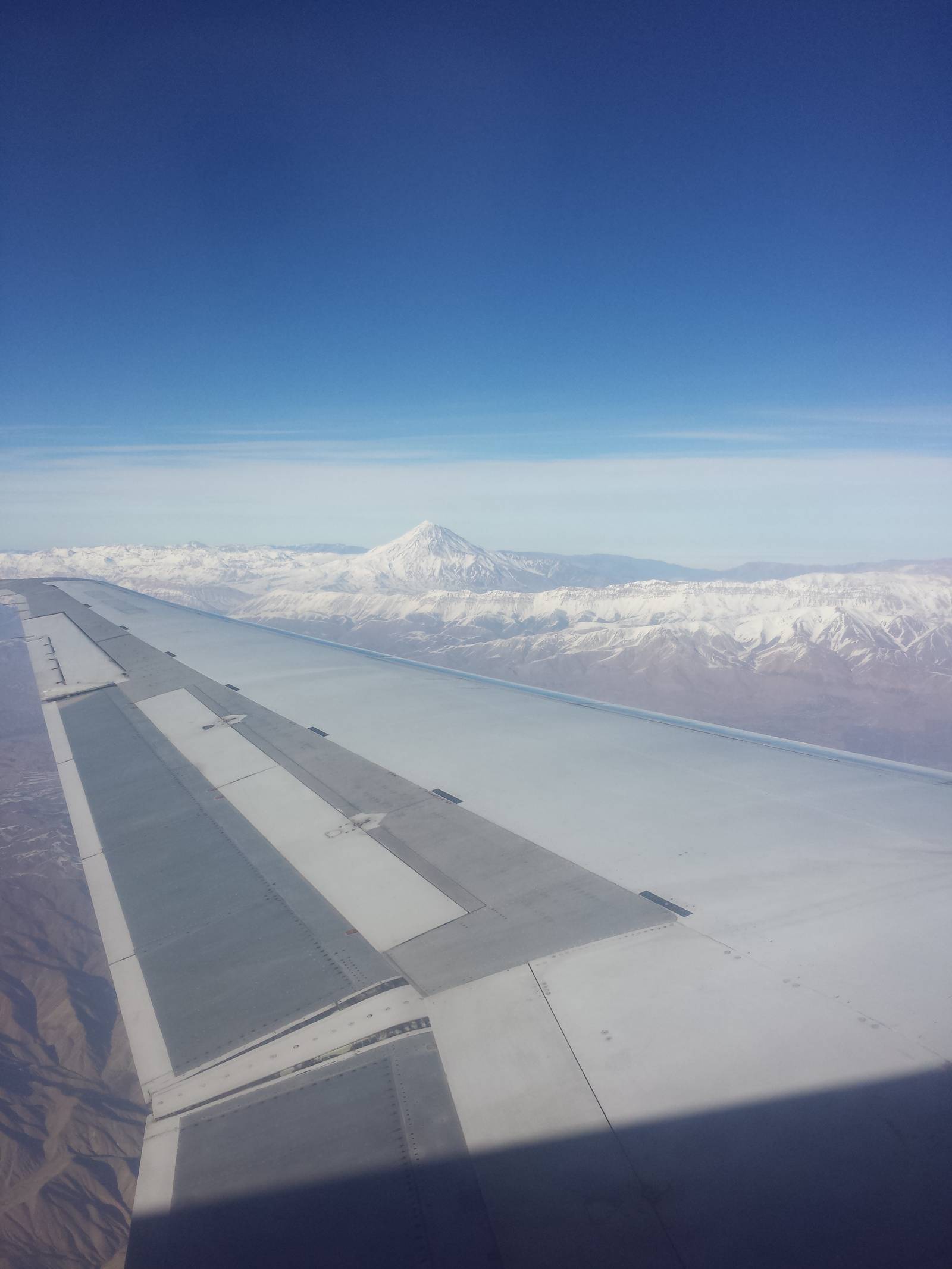
Alborz is Iran's gateway to the Alborz Mountain Range and sits just west of Tehran, offering digital nomads a rare mix of alpine terrain, Persian culture, and mountain adventure. The provincial capital Karaj anchors the region with nearly 2 million residents and strong ties to Iran's major metro hub. You get year-round hiking, ski resorts on Mount Damavand (Iran's highest peak at 5,610m), thermal mountain villages, and a dose of genuine Persian hospitality, all complicated by international sanctions that mean you must bring cash in USD or EUR and exchange it at unofficial rates. Alborz rewards patience and cultural sensitivity.
Demographics & Government
| Country | Iran |
| Population | ~2.7-2.9 million (Alborz), ~1.9-2.0 million (Karaj city) |
| Government | Islamic Republic; appointed governor reports to Interior Ministry, 15-member provincial council |
| Religious mix | ~95% Shia Muslim, small populations of Christians, Jews, and Zoroastrians |
| Time zone | IRST (UTC+3:30) year-round; no daylight saving time |
| Plug type | Type C and Type F (230V / 50Hz) |
| Drive side | Right |
| Tap water safe? | Meets Iranian standards; higher mineral content than Western water; bottled water recommended first 2 weeks |
| Free WiFi? | Limited; major malls and some cafés in Karaj, otherwise unreliable due to government restrictions |
| Best time to visit | April to May (spring, 15 to 25°C) or September to October (fall, 18 to 22°C); ski season December to March |
| Emergency numbers | 110 (police), 115 (ambulance), 125 (fire), 112 (unified hotline) |
| Currency | Iranian rial (IRR). Exchange ~690,000 rials per USD at unofficial rates; no Western credit cards work |
Overview & Vibe
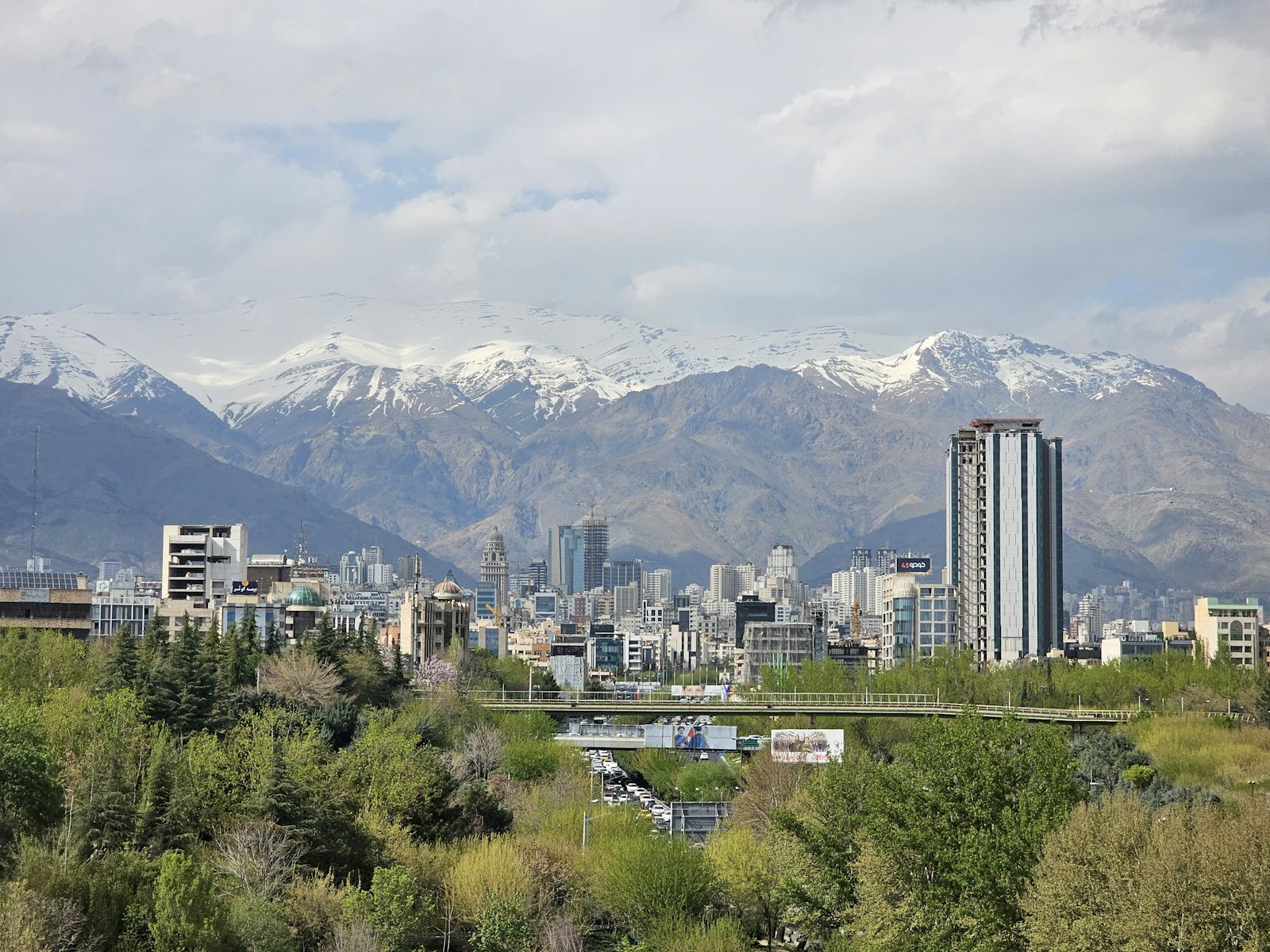
Karaj is the working hub, sprawling, practical, home to factories and commuters heading to Tehran. But venture 30km north or west into the Alborz peaks and you find ski towns, hiking villages, and mountain refuges where the air clears and the pace shifts. The province straddles urban Iran and alpine wilderness, making it appealing to nomads who want both city amenities and outdoor escape. Cultural etiquette is conservative, aligned with Tehran's standards. Public displays of affection, criticism of politics or religion, and casual dress for women are serious taboos. Remote work is feasible if you tolerate intermittent internet censorship and periodic VPN slowdowns. Expect bureaucratic friction but genuine warmth from locals who welcome foreign curiosity if handled with respect.
A Brief History
Alborz is Iran's newest and smallest province, created in June 2010 when parliament split Karaj, Nazarabad, and Savojbolagh counties away from Tehran Province. Karaj, the capital, sits 40 km west of Tehran at the foothills of the Alborz mountains and holds well over half the province's population. Growth since the split has been rapid: the counties that became Alborz counted about 2.05 million residents in 2006, and the 2016 census recorded 2.71 million.
Transportation
Alborz relies on the Tehran Metro (lines 5 and 7 extend into Karaj), ride-hailing apps, shared taxis (savaris), and BRT buses for intercity movement. Outside the cities, car rental becomes essential for mountain access.
- Drive on the right. Standard Iranian road rules.
- Metro and bus. Tehran-Karaj commuter rail carries 50,000 to 60,000 daily passengers. BRT lines and municipal buses in Karaj cost 50,000 to 100,000 rials per trip (less than $0.10 USD).
- Ride-hailing apps. Snapp and Tap30 dominate with Snapp holding 70%+ market share since 2016. Both require cash payment due to sanctions; fares run 30 to 50% cheaper than traditional taxis. Driver verification and in-app emergency contacts are standard.
- Shared taxis (savaris). Group taxis ply fixed routes between cities. Cheap but crowded and impersonal.
- Car rental. Requires International Driving Permit (IDP) valid 6 to 12 months, home country license, passport, valid visa, minimum age 21 to 23, and deposit 50 to 200 million rials (~$200 to 800 USD). Rates run 800,000 to 1,500,000 rials/day (~$1.15 to 2.17 USD). Essential for reaching Dizin and Shemshak ski resorts and northern hiking routes.
- Road conditions. Generally acceptable on major highways (Karaj-Tehran Freeway, Road 59). Mountain roads unpaved or rough; winter driving hazardous above 2,000m.
Language, Customs & Etiquette
Persian (Farsi) is the official language. English is rare outside Tehran and major hotels. A few phrases unlock doors.
- Greetings. Salam (hello), Khosh amadid (welcome), Dorood (formal), Salam aleikum (respect-formal). Handshakes are standard between same genders; close friends and family exchange three cheek kisses.
- Dining. Always accept tea (chai) when offered; refusal is impolite. Use your right hand for eating and passing dishes; the left is considered unclean. Remove shoes when entering homes. Wait for the eldest to start eating before you begin.
- Dress code. Women must wear hijab covering hair completely, loose-fitting clothing concealing body shape. Men cannot wear shorts or sleeveless shirts. Bright colors and tight garments are prohibited in public and mandatory in religious sites.
- Bargaining. Expected in bazaars. Initial prices are typically 20 to 50% higher than final amounts. Show patience and respect; tea sharing during negotiation is common. Walking away often prompts better prices. Cash strengthens your position.
- Photography. Restricted at military installations, government buildings, airports, and border areas. Women and religious sites require permission. Unauthorized photos may result in detention or equipment confiscation.
- Offensive gestures. Showing the sole of your shoe, thumbs-up, and the OK hand sign are disrespectful. Touching someone's head, public displays of affection, and using the left hand for eating or giving objects are insulting. Direct eye contact with elders or opposite gender can be inappropriate in traditional contexts.
- Public affection. Strictly prohibited by law and cultural norms. Hand-holding between unmarried couples can attract police attention. Married couples may hold hands discreetly in urban areas, but enforcement mirrors Tehran's conservative standards.
- Safe conversation topics. Persian poetry, family, food, nature. Avoid politics, religion, Israel-Palestine relations, the 1979 Revolution, women's rights restrictions, and gender-related policies since 2022 protests. Criticizing Islam or government directly violates cultural norms and can have legal consequences.
Safety & Security
Alborz province is generally safe for travel with low violent crime rates. Petty theft occurs in crowded bazaars and ski resorts. Road accidents are the primary concern; Iran's traffic fatality rate is around 20 per 100,000 population.
- Petty theft and pickpocketing. Watch crowded areas in Karaj bazaars and near Dizin/Shemshak ski resorts. Vehicle break-ins occur in parking areas at popular hiking trailheads.
- Tourist scams. Overcharging taxi drivers (2 to 3x normal rates) prey on tourists unfamiliar with fares. Fake tour guides near Tochal ski resort and Dizin demand inflated fees (500,000 to 1,000,000 rials vs. legitimate 200,000 to 300,000 rials). Negotiate prices beforehand and use official services.
- Solo female travelers. Mandatory hijab and loose clothing in public. Generally safe with low violent crime, but avoid traveling alone after dark. Use authorized taxis or Snapp/Tap30 ride-sharing. Heightened awareness required in crowded bazaars where verbal harassment occasionally occurs.
- Ethnic and racial attitudes. Diverse population coexists with minimal tension, though Afghan refugees face discrimination. Ethnic Azeris, Kurds, and other Iranian groups speak Persian with varying ease; Persian-speakers experience smoother formal interactions.
- LGBTQ+. Iran criminalizes same-sex relations with penalties including flogging and death sentences. No legal protections exist. Public expression of LGBTQ+ identity is extremely dangerous. This destination is not safe for LGBTQ+ travelers.
Weather & Climate
Alborz has a semi-arid climate with hot, dry summers and cold, snowy winters. Spring and autumn offer the most pleasant conditions.
| Month | Avg High | Avg Low | Notes |
|---|---|---|---|
| January | 5 to 8°C / 41 to 46°F | -2 to 2°C / 28 to 36°F | Cold, snowy in mountains, ski season peak |
| February | 7 to 10°C / 45 to 50°F | 0 to 3°C / 32 to 37°F | Late winter; still ski-able above 2,600m |
| March | 13 to 16°C / 55 to 61°F | 4 to 7°C / 39 to 45°F | Spring arrives; Nowruz (Persian New Year) celebrated |
| April | 18 to 22°C / 64 to 72°F | 8 to 12°C / 46 to 54°F | Ideal; wildflowers, temperate hiking |
| May | 24 to 28°C / 75 to 82°F | 12 to 16°C / 54 to 61°F | Warm and bright; peak hiking season |
| June | 30 to 33°C / 86 to 91°F | 16 to 19°C / 61 to 66°F | Hot, little rainfall, mountains still accessible |
| July | 32 to 35°C / 90 to 95°F | 20 to 22°C / 68 to 72°F | Peak summer heat; lowland cities uncomfortable |
| August | 31 to 34°C / 88 to 93°F | 19 to 21°C / 66 to 70°F | Hot and dry; mountain refuges preferred |
| September | 27 to 29°C / 81 to 84°F | 14 to 17°C / 57 to 63°F | Cooling; excellent for trekking |
| October | 21 to 24°C / 70 to 75°F | 8 to 12°C / 46 to 54°F | Fall colors; crisp, perfect for outdoor work |
| November | 13 to 16°C / 55 to 61°F | 3 to 6°C / 37 to 43°F | Rain increases; early snow at altitude |
| December | 7 to 10°C / 45 to 50°F | -1 to 2°C / 30 to 36°F | Winter begins; ski resorts opening |
What to pack. Lightweight, breathable clothing for summer (30 to 35°C heat). Warm layers, jackets, and waterproof gear for winter. Spring and autumn require layering for 15 to 25°C swings. Hijab for women (compulsory). Sunscreen and hat for high-altitude sun exposure. Sturdy hiking boots for mountain terrain.
Logistics & Practical Info
- Currency and cash. Bring USD or EUR and exchange at unofficial rates (better than official). No Western credit cards work due to sanctions. ATMs rarely function for foreign cards. Expect ~690,000 rials per USD at street rates. Keep receipts if exchanging large sums.
- SIM cards and mobile. MTN Irancell, Rightel, and Hamrah-e Aval sell tourist SIM cards at Tehran IKA Airport and Alborz retailers for 500,000 to 1,500,000 rials (~$1 to 3 USD). Data packages run 1 to 20GB monthly for 200,000 to 2,000,000 rials. Passport required for registration; activation within hours. Internet is heavily censored; VPNs work intermittently and government authorities periodically crack down.
- Tap water. Higher mineral content than Western water. Most travelers experience mild digestive issues in the first 3 to 5 days. Locals and expats recommend bottled water for the first two weeks (~10,000 to 20,000 rials per 1.5L bottle).
- Free WiFi. Limited. Major shopping malls, some cafés, and restaurants in Karaj offer spotty service. Coverage unreliable due to government restrictions. Most nomads rely on mobile data or hotel WiFi.
- Internet censorship. Iran maintains one of the world's most restrictive regimes, blocking Facebook, Twitter, YouTube, Telegram, VPNs, news sites, and thousands of other domains. Many residents use VPNs to circumvent filters, though authorities periodically crack down. Remote work connectivity can be unpredictable.
- Electrical. Type C and Type F plugs (230V / 50Hz). Bring a universal adapter if your device uses different connectors.
- Time zone. IRST (UTC+3:30) year-round. No daylight saving time observed since 2023.
Attractions & Activities
Alborz is a nature destination first. Mount Damavand dominates the skyline; ski resorts dot the northern slopes; hiking trails crisscross the range. Cultural sites include the Saadabad Palace complex near Tehran and the ancient Alamut Castle ruins.
- Mount Tochal (Wikipedia), 3,933m peak with year-round ski resort and Tehran's only cable car system reaching 3,740m. Toboggan runs and alpine hiking.
- Mount Damavand (Wikipedia), Iran's highest peak (5,610m) accessible via 2 to 3 day guided trek from Karaj. Snow-capped year-round, sacred in Persian mythology.
- Dizin Ski Resort (Wikipedia), 2,650 to 3,600m elevation, 40+ slopes, operates December to April. Best skiing in the Middle East.
- Shemshak Ski Resort, Smaller, more accessible than Dizin, good for learning. 2,500 to 3,200m elevation.
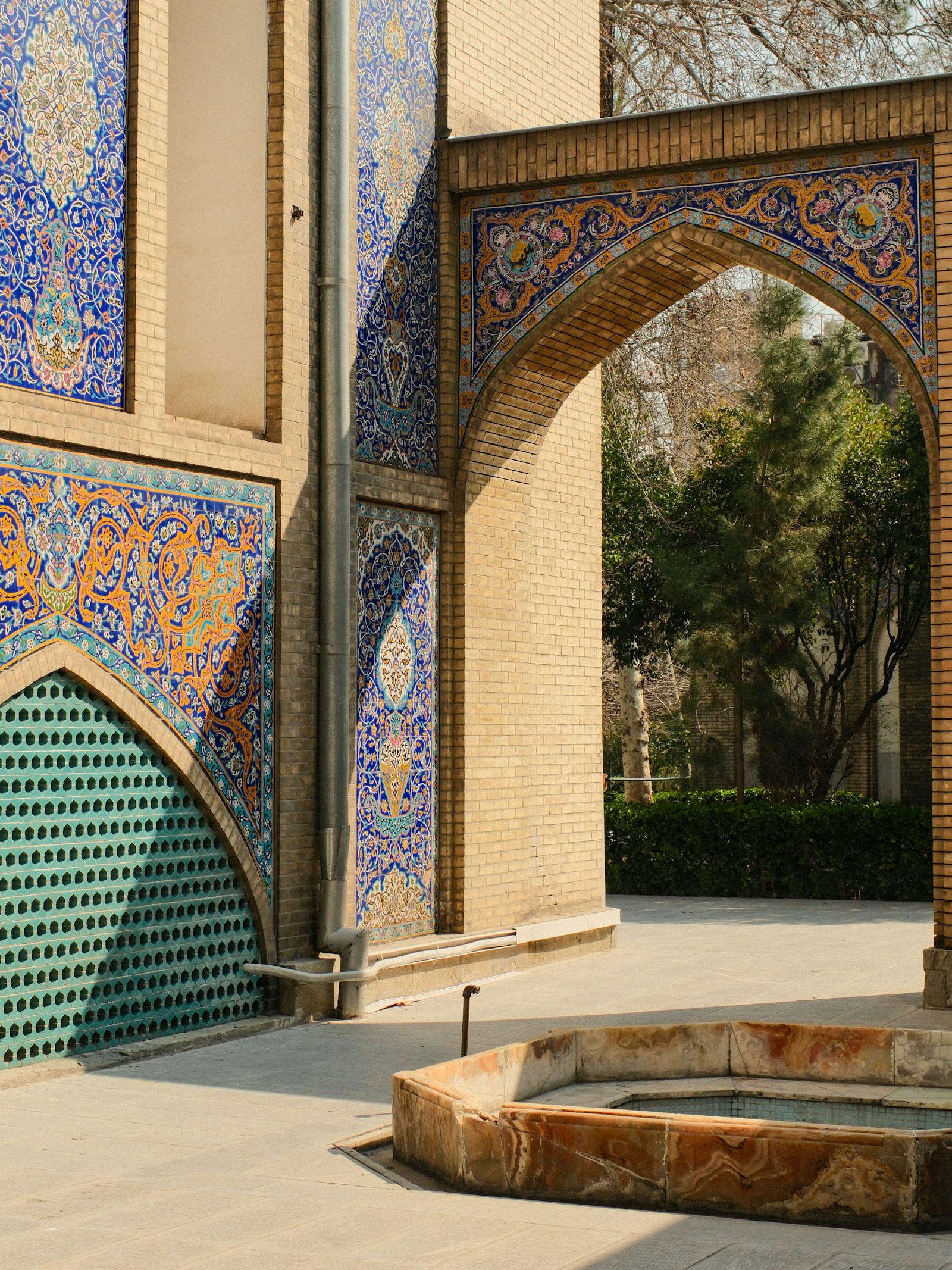
- Saadabad Palace Complex (Wikipedia), 18 museums across 110 hectares, former royal residences with Persian and contemporary art.
- Alamut Castle Ruins (Wikipedia), 11th, 13th century fortress overlooking the Alborz range, legendary seat of the Assassins. Challenging 2-hour hike.
- Darband Hiking Trail, Short, popular trek departing north of Tehran via Karaj, leads to teahouses in the mountains.
- Karaj Dam and Lake, Recreational boating and picnicking; accessible by car or public transit.
- Taleqan Valley, Mountain resort village with hiking, camping, and traditional Persian hospitality; 1.5-hour drive from Karaj.
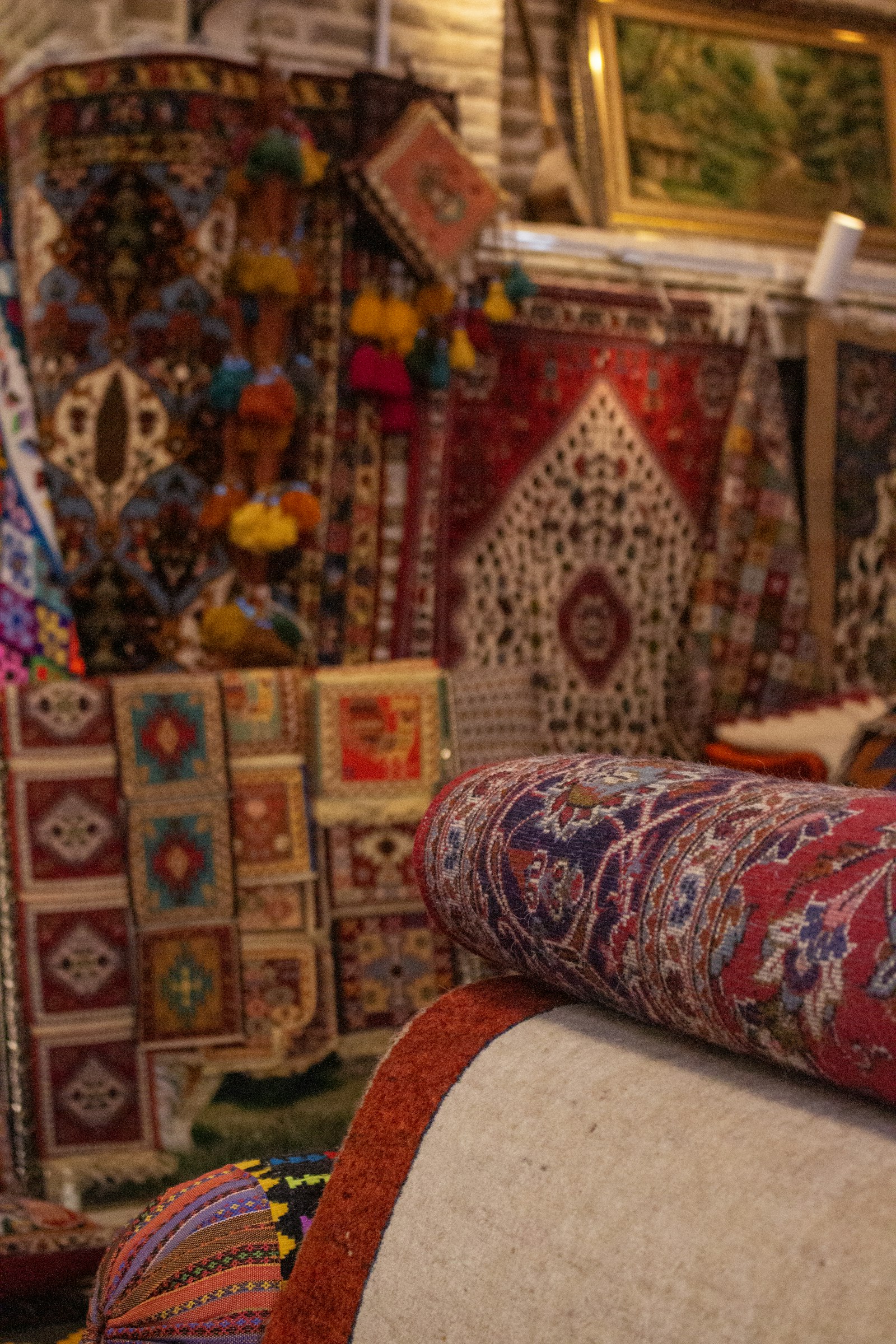
- Bazaar of Karaj, Handwoven kilims, carpets (Naqshbandi designs), dried fruits, saffron, and rose water from regional valleys.
Festivals and major events
| Event | When |
|---|---|
| Nowruz (Persian New Year) | March 20 to 21, 13-day festivities |
| Chaharshanbe Suri (fire festival) | March (last Wednesday before Nowruz) |
| Yalda Night (winter solstice) | December 21, pomegranate-eating vigil |
| Eid al-Fitr and Eid al-Adha | Islamic calendar-dependent; major public holidays |
| Ashura (mourning month) | Islamic calendar; avoid large gatherings if uncomfortable |
Must-try local dishes
Persian cuisine relies on rice, herbs, grilled meats, and slow-simmered stews. Alborz's mountain pastures supply fresh dairy.
- Dizi (Dizi Abgusht), Lamb and chickpea stew dating back centuries, traditionally served in pottery bowls with bread and yogurt.
- Kebab Kubideh, Grilled ground lamb or beef kebab on skewers, served with rice and tomato; Iran's national dish.
- Ash-e Reshteh, Thick noodle soup with herbs, beans, and lentils; comfort food year-round.
- Tahdig, Crispy rice layer at the bottom of the rice pot; highly prized.
- Kashke Bademjan, Eggplant puree topped with kashk (whey) and pomegranate molasses.
- Fresh dairy and yogurt, Mountain-pastured cheese and yogurt; some villages sell directly from homes.
Souvenirs that aren't junk
- Kilims and carpets, Karaj and surrounding villages produce handwoven Naqshbandi designs dating to the Safavid period. Prices negotiate sharply; quality varies widely.
- Dried fruits and nuts, Mountain valleys grow walnuts, almonds, apricots, and mulberries. Bulk purchases at bazaars are cheap.
- Saffron and rose water, From regional producers; buy in sealed containers to ensure authenticity.
- Pottery and ceramics, Traditional local workshops produce utilitarian and decorative pieces.
- Miniature paintings, Reflecting Persian 16th, 17th century Safavid artistic heritage; authentic work costs $50 to 300+ USD.
Health & Medical
Alborz province has modern hospitals and clinics comparable to Tehran, with private facilities offering good-quality care at 50 to 70% lower costs than Western countries. Doctors speak limited English; major hospitals may have interpreters.
- Travel insurance essential. Most hospitals do not directly accept foreign travel insurance. Patients must pay upfront and submit claims for reimbursement. Cashless treatment is generally unavailable.
- Foreign prescriptions not accepted. You must obtain a new prescription from an Iranian-licensed physician, who will prescribe domestically-available alternatives or locally-registered imported drugs.
- Vaccinations recommended. Ensure routine vaccines are current; hepatitis A/B and typhoid recommended due to foodborne/waterborne disease prevalence.
- Endemic diseases. Low endemic disease risk. Crimean-Congo hemorrhagic fever occurs sporadically nationwide. Malaria transmission occurs in southern regions only (not Alborz).
- Dietary considerations. Lactose intolerance affects 70 to 80% of adults in Iran. Gluten sensitivity and nut allergies increasingly recognized. Traditional Persian cuisine naturally accommodates restrictions through rice-based dishes and dairy-free options like ash-e reshteh.
- Vegetarian/vegan options readily available. Persian cuisine's emphasis on rice, herb-based stews (khoresh), and grilled vegetables. Vegan options require modification since dairy and eggs are common; most restaurants accommodate upon request.
- Street food safety varies. Popular tourist areas like Karaj have established vendors with reasonable hygiene standards. Stick to freshly cooked items from busy stalls; avoid raw vegetables and unpeeled fruits. Carry anti-diarrheal medication; 20 to 30% of visitors experience mild gastrointestinal issues.
Legal & Substances
- Marijuana is illegal. Possession, cultivation, and trafficking carry severe penalties including imprisonment (5 to 20 years or more) and potentially death for large-scale trafficking. Iran enforces strict anti-drug policies nationwide.
- All narcotics and recreational drugs are banned. Only prescription medications approved by the Ministry of Health are legal. Strict penalties for possession.
- Alcohol is completely illegal. Public and private consumption both prohibited under Islamic law. Violations result in 80 lashes for Muslims under Sharia-based penalties. Complete ban since 1979 Islamic Revolution.
- Smoking. Banned in all enclosed public spaces, government buildings, educational institutions, and public transportation since 2007. Outdoor smoking permitted except near schools and hospitals. Violators face fines 500,000 to 2 million rials.
- Homosexuality. Criminalizes same-sex relations with death penalty as possible sentence. No legal protections.
Customs & Shopping
- Export restrictions. Carpets and handicrafts up to certain values export without special permits; generally carpets under 12 square meters and valued below ~$1,000 USD. Antiques over 30 years old need Cultural Heritage Organization approval. Caviar exports heavily restricted to licensed dealers.
- Cash declarations. Amounts over €10,000 leaving Iran (or entering, by some interpretations) should be declared.
- Photography and equipment. Cameras and electronics may be subject to declaration or duty upon entry/exit; keep receipts.
Accessibility & Inclusion
Alborz province, centered on Karaj, has limited accessibility infrastructure for travelers with disabilities. Newer Tehran-Karaj metro stations (opened 2019) include some elevators and ramps, but most tourist sites, hotels, and public spaces lack wheelchair access, tactile paving, or accessible restrooms. Sidewalks are frequently uneven with significant obstacles.
Digital Nomad Corner
Alborz is a niche remote-work base. Internet censorship, currency restrictions, and visa complexity deter most digital nomads, but the region offers low cost of living and mountain escapes unavailable elsewhere.
- Internet. Mobile data is more reliable than hotel/café WiFi. Government censorship blocks thousands of websites; VPNs work intermittently. Expect slowdowns during peak hours and periodic outages.
- Cost of living. A nomad in Karaj can operate on $400 to 700/month including rental (modest apartment 3 to 5 million rials long-term), local food, transit, and SIM card. About 70 to 80% cheaper than Western cities.
- Visa requirements. US citizens and most Westerners require sponsorship from Iranian tour operators to obtain visas. Tourist visas (30 days, extendable) cost $100 to 200 USD. Digital nomad visas not available; Iran does not offer long-stay work visas.
- Banking and money. No Western credit cards function due to sanctions. You must bring cash (USD/EUR) and exchange at street rates. Cryptocurrency exchanges exist but are unreliable and legally grey. No international wire transfer options for most nomads.
- Coworking spaces. Limited. Larger hotels in Karaj may offer business centers; dedicated coworking is minimal. Most nomads work from private rental apartments or cafés.
- Long-term stay. Extending visa beyond initial 30 days requires bureaucratic effort through the Interior Ministry or visa agencies. Plan 6 to 8 weeks for a single renewal.
Alborz demands respect for cultural and legal boundaries, but rewards nomads willing to navigate complexity. The Alborz range, Mount Damavand, and skiing culture offer experiences unavailable in most digital nomad hubs. Come with humility, cash, patience, and an interest in Persian culture.
Keep planning: Atlanta: Southern Culture, Food & Remote Work, European Train Travel for Digital Nomads and Porto, Portugal: Ribeira, Port Cellars and Coworking.