Alicante: The Costa Blanca Capital
Nomad Toolkit
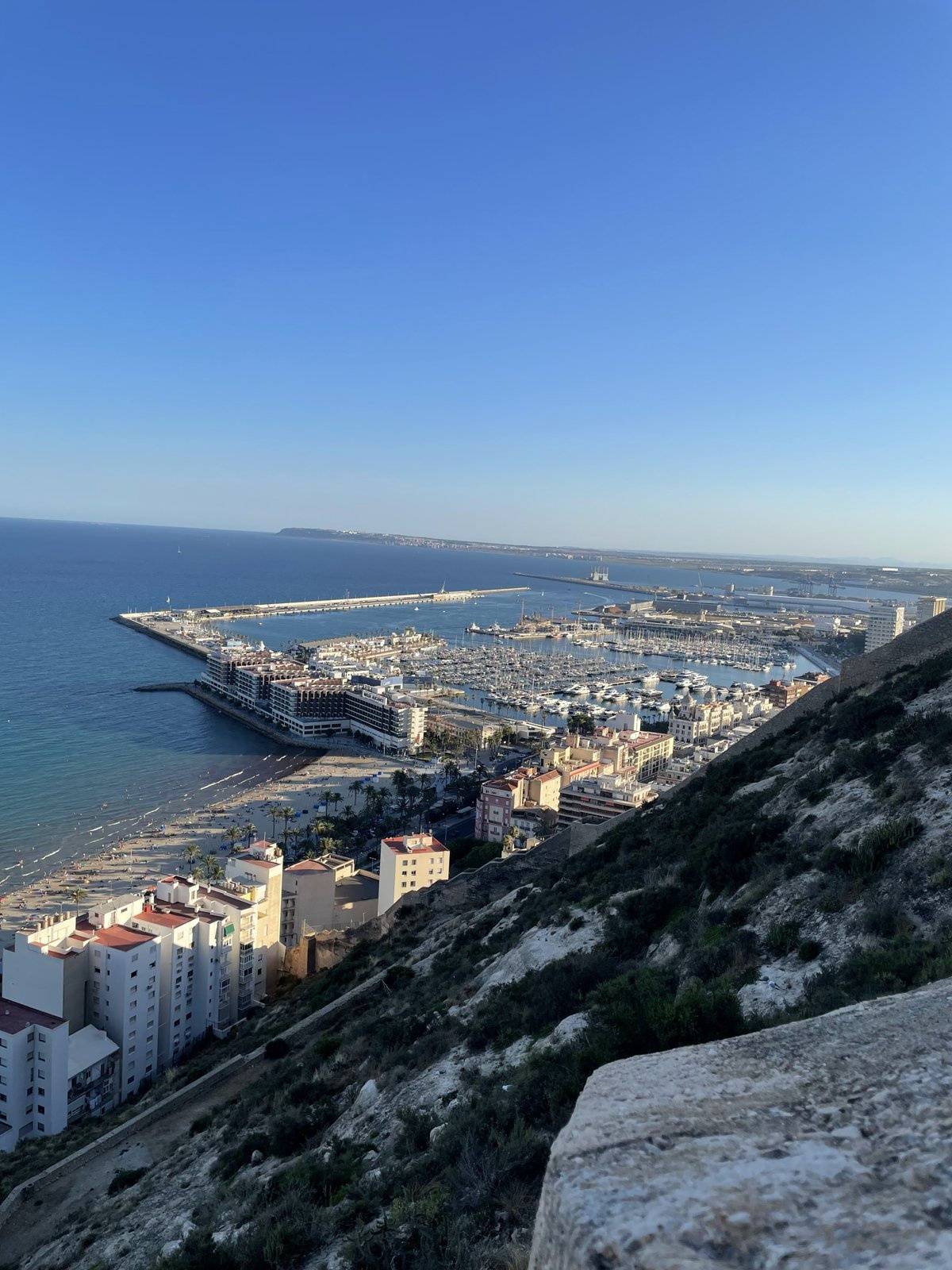
Alicante is one of southern Spain's most underrated bases for remote work. The Costa Blanca capital sits on the Mediterranean with a historic old town, low cost of living, excellent public transport, and reliable sun. You get a tighter, walkable city than Barcelona or Madrid, a thriving food scene built on seafood and paella, and a growing community of digital nomads who've quietly discovered the beaches, the castle views, and the fact that €1,200 a month buys a comfortable studio apartment. Local Valencian dialect appears on signs alongside Castilian Spanish. Spring and fall are perfect.
Demographics & Government
| Country | Spain |
| Population | ~340,000 (Alicante), ~8 million (Spain) |
| Government | Parliamentary monarchy; EU member since 1986 |
| Religious mix | ~60% Catholic, ~35% non-religious, mostly secular in practice |
| Time zone | CET (UTC+1) winter, CEST (UTC+2) summer; DST observed |
| Plug type | Type C and Type F (230V / 50Hz) |
| Drive side | Right |
| Tap water safe? | Yes, safe but hard limestone content. Locals prefer bottled for taste |
| Free WiFi? | Widely available in cafés, hotels, beaches, and most plazas |
| Best time to visit | April to June or September to October (18–28°C, fewer crowds) |
| Emergency numbers | 112 (general / EU-wide), 091 (police), 092 (local police) |
| Currency | Euro (EUR). Cards widely accepted; cash still useful in markets |
Overview & Vibe
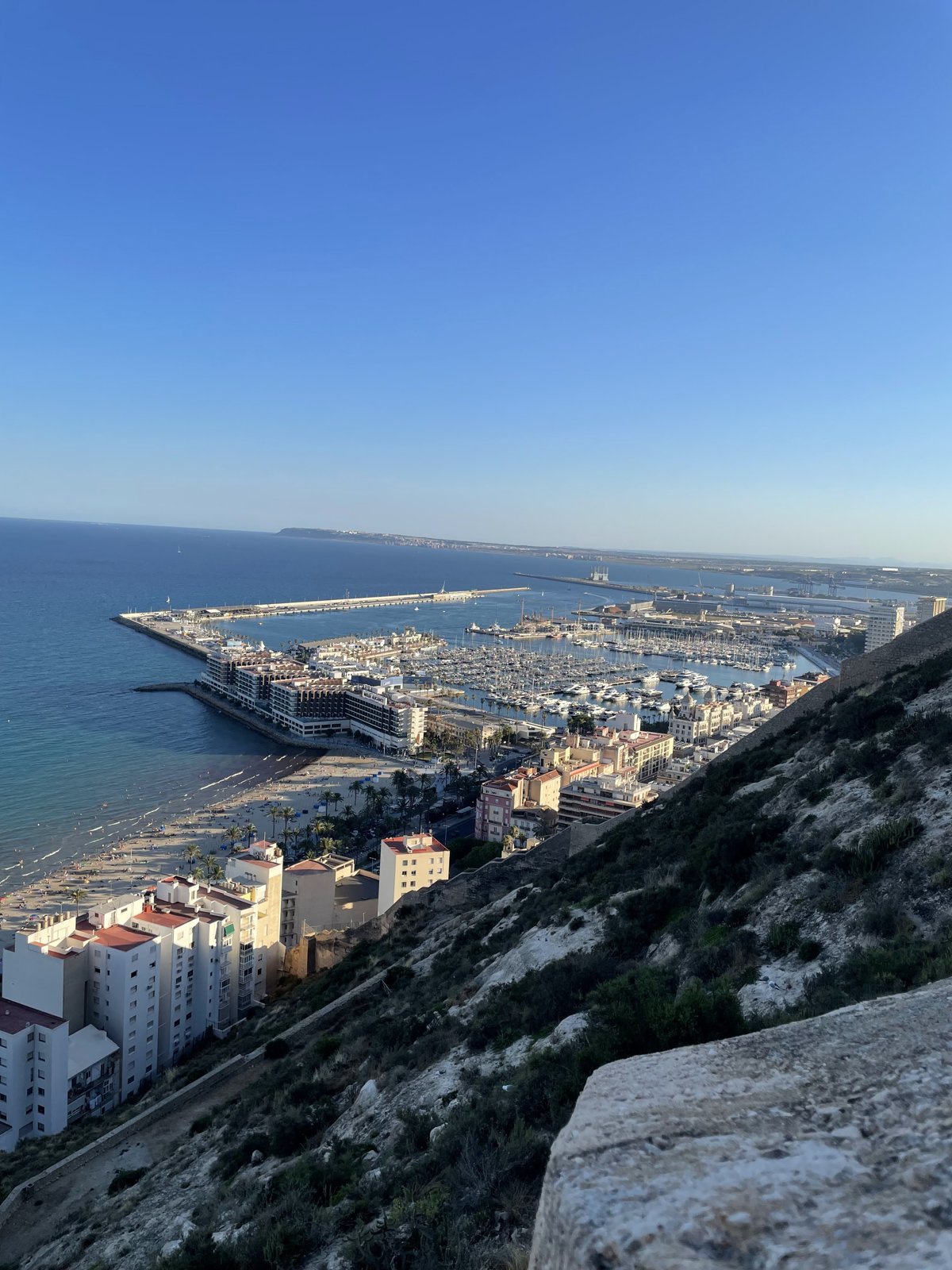
Alicante is a compact Mediterranean city that unfolds across several distinct neighborhoods. Centro and the Old Town (El Barrio Santa Cruz) comprise the historic heart, a maze of narrow streets climbing uphill toward Santa Barbara Castle. The Esplanada de España runs along the seafront, lined with palms and cafés. South of there, Playa del Postiguet is the central urban beach, busy and social. Further north, the Albufereta and San Juan beach areas are quieter residential zones popular with nomads hunting affordable apartments. San Blas inland offers working-class authenticity without the tourism. The city feels lived-in without feeling aggressive about tourism. Summer is hot and crowded; spring and autumn are the nomad sweet spots. Good for people who want Mediterranean charm on a budget, reliable sun, walkable scale, and a food culture that doesn't apologize.
A Brief History
The Carthaginian general Hamilcar Barca founded a fortified settlement called Akra Leuke here in the 230s BC, and the Romans later called the town Lucentum; the modern name descends from the Arabic Medina Laqant. Castilian forces took the city for Alfonso X in 1247, and it passed to the Crown of Aragon under James II in 1296, gaining a seat in the medieval Valencian parliament. The port made Alicante a serious Mediterranean trading city, exporting rice, wine, olive oil, and oranges. During the Civil War, Italian aircraft bombed the Mercado Central on May 25, 1938, killing more than 300 civilians, and Alicante was the last Republican-held city in Spain when Franco's troops entered on April 1, 1939.
Transportation
Alicante is compact and walkable, but efficient public transit extends your range and costs almost nothing. The city's transit system is reliable and nomad-friendly.
- Drive on the right. Standard EU driving rules.
- TRAM Alicante connects the city to Benidorm and Denia along the coast. Day tickets around €8; monthly passes available. Great for beach excursions.
- TAM city buses cover Alicante and surrounding areas. Single tickets €1.45; 10-ticket carnet €12.80. They run frequent routes to all neighborhoods and beaches.
- The Old Town is walkable. All the historic sights are within 15 minutes on foot.
- Airport to city. Alicante-Elche (ALC) is 15 minutes south. Bus C-6 runs directly to the city center for €3.40. Cabify and Uber also available for €12–18.
- Cabify and Uber operate locally, though Cabify is more reliable. Cross-town rides €8–15.
- Ferry service to Tabarca Island (boats leave from the marina, 45 minutes, €18 return). Ferries also run occasionally to Algiers, Algeria.
- Bike share (ALAbici) covers central areas with affordable day passes. Flat terrain around the Esplanada and beaches; Old Town has cobblestones and hills.
Language, Customs & Etiquette
Spanish (Castilian) is the primary language, but Valencian dialect appears on street signs and in local usage. Most service staff and younger people speak functional English, especially in tourist zones. A few words of Spanish go a long way.
- Greetings. Hola (hi), Buenos días (good morning), Gracias (thank you), Salud (cheers), De nada (you're welcome).
- Tipping. 5 to 10% at restaurants is polite but not obligatory. Round up for taxis. Check the bill; some places add a service charge.
- Paella territory. This is paella country. Arroz a banda and fideuà (noodle paella) are local specialties. Rice dishes are treated seriously.
- Late dining. Dinner starts at 9 PM or later. Restaurants don't get busy until 9:30 PM. Adjust your stomach accordingly.
- Reserved until warm. Spaniards can read as formal on first contact, particularly with strangers. Warmth arrives once a conversation develops.
- Photography. Allowed in most public spaces; check signs in museums. Don't photograph people without permission.
- Bargaining. Not customary. Fixed prices everywhere except some street markets.
- Siesta culture. Afternoon closing (2 to 4 PM) is common in shops and smaller businesses, though modern chains stay open.
Safety & Security
Alicante is very safe by European standards. Violent crime against tourists is rare. The main petty-crime risk is pickpocketing in crowded areas.
- Postiguet Beach and the Esplanada see occasional pickpockets in summer months when crowds peak. Use zipped bags and front pockets only. Keep valuables in your accommodation.
- Late summer crowding. August brings Spanish vacation crowds and short-term tourism spikes. Beaches and Old Town get packed; prices rise.
- ATM scams. Avoid unmarked ATMs in tourist areas. Stick to bank branches and ATMs in major supermarkets. Some machines have skimming devices; shield the keypad when entering your PIN.
- Solo travelers generally do very well. Standard urban precautions apply, particularly late at night away from main tourist zones.
- LGBTQ+. Spain is legally progressive and socially accepting in cities. Alicante has a visible, welcoming LGBTQ+ scene. Discretion is wise in rural areas.
- Racial visibility. Spain is homogeneous. Visible minorities sometimes report stares or unwelcoming attitudes outside the city. Alicante itself is fairly cosmopolitan.
Weather & Climate
Mediterranean climate with hot, dry summers and mild winters. Over 320 sunny days per year. Spring and fall are the optimal windows.
| Month | Avg High | Avg Low | Notes |
|---|---|---|---|
| January | 17°C / 63°F | 8°C / 46°F | Cool but sunny, rarely rainy |
| February | 18°C / 64°F | 8°C / 46°F | Cold snaps occasional; generally mild |
| March | 20°C / 68°F | 10°C / 50°F | Spring arriving; variable |
| April | 22°C / 72°F | 12°C / 54°F | Warm, blossoms, ideal for nomads |
| May | 26°C / 79°F | 15°C / 59°F | Long days, warm, perfect |
| June | 31°C / 88°F | 19°C / 66°F | Hot, tourist season begins, festivals start |
| July | 34°C / 93°F | 21°C / 70°F | Peak heat, peak crowds, beach essential |
| August | 34°C / 93°F | 21°C / 70°F | Brutally hot, many shops close, tourists everywhere |
| September | 29°C / 84°F | 17°C / 63°F | Still warm, crowds ease, excellent for arrivals |
| October | 24°C / 75°F | 14°C / 57°F | Crisp, golden, beach still swimmable |
| November | 20°C / 68°F | 11°C / 52°F | Cooling, occasional rain |
| December | 17°C / 63°F | 9°C / 48°F | Cool, festive, sunny |
What to pack. Layers for April to October. Lightweight, breathable clothing for summer. A light jacket for cooler evenings year-round. Sunscreen and a hat are non-negotiable (UV index is high). Waterproof shoes for the occasional November rainfall.
Logistics & Practical Info
- Currency. Euro (EUR). Cards widely accepted in central areas. Keep cash for markets, beach vendors, and small restaurants.
- ATMs. Use bank ATMs and supermarket machines. Avoid standalone tourist-area machines prone to skimming.
- Tap water. Safe to drink but hard (high mineral content). Most locals prefer bottled for taste. Refillable bottles sold everywhere.
- Free WiFi. Widespread in cafés, hotels, the Esplanada, and most beaches. Usually no login required.
- SIM cards. Movistar, Vodafone, and Orange sell prepaid plans with 50 to 100 GB of data for €25 to 45/month. Passport required. Many coworking spaces and cafés offer stable, fast WiFi alternatives.
- Money apps. Revolut and Wise both handle EUR cleanly, no conversion fees. Local bank accounts doable for long-term stays.
- DST. Yes. Last Sunday in March (forward) and last Sunday in October (back).
- Internet censorship. Minimal. Standard EU rules apply.
Attractions & Activities
Alicante delivers history, beaches, food, and day trips that keep weeks interesting. The castle alone can occupy a full afternoon, and the beaches provide ongoing summer entertainment.
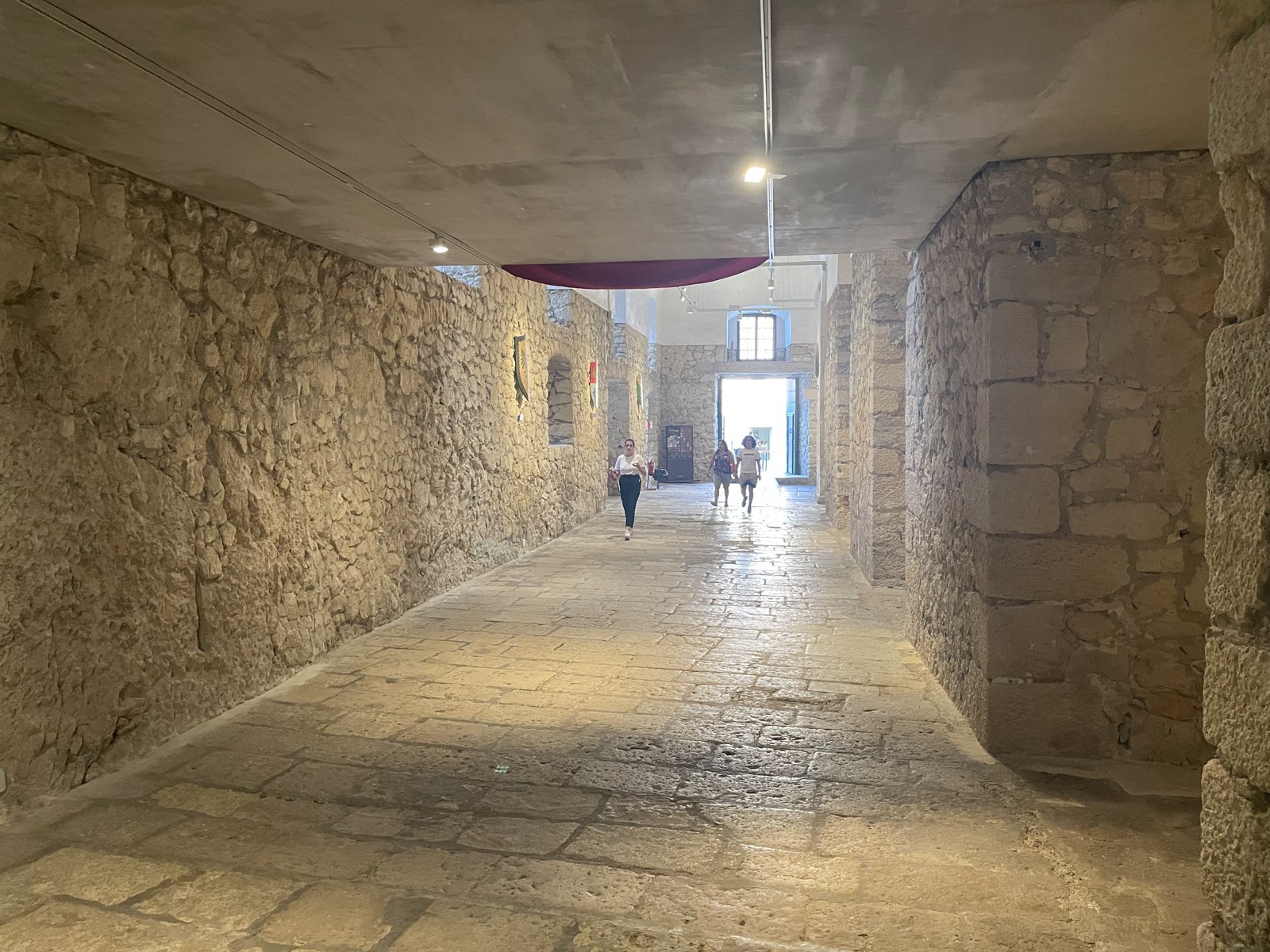
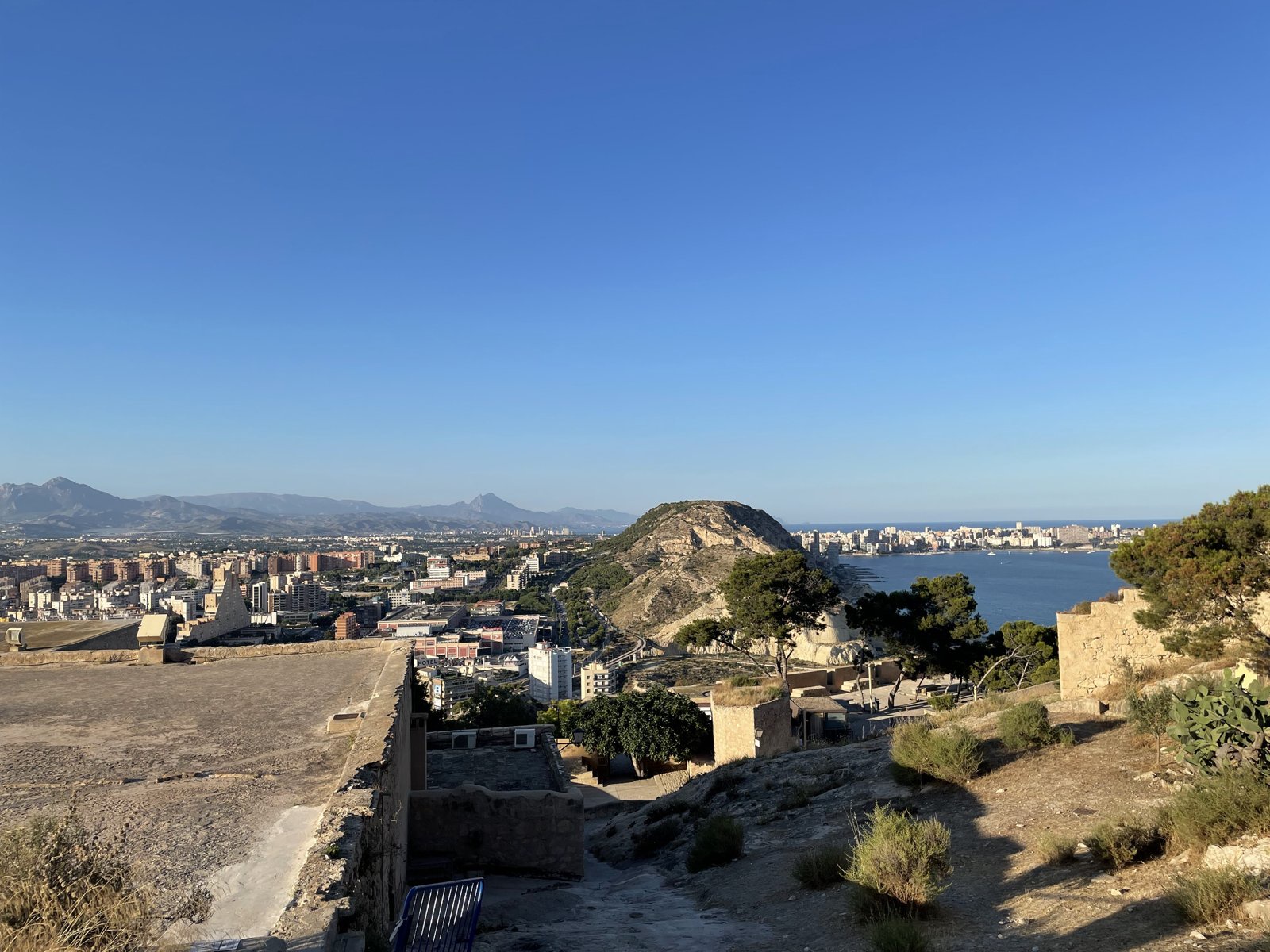
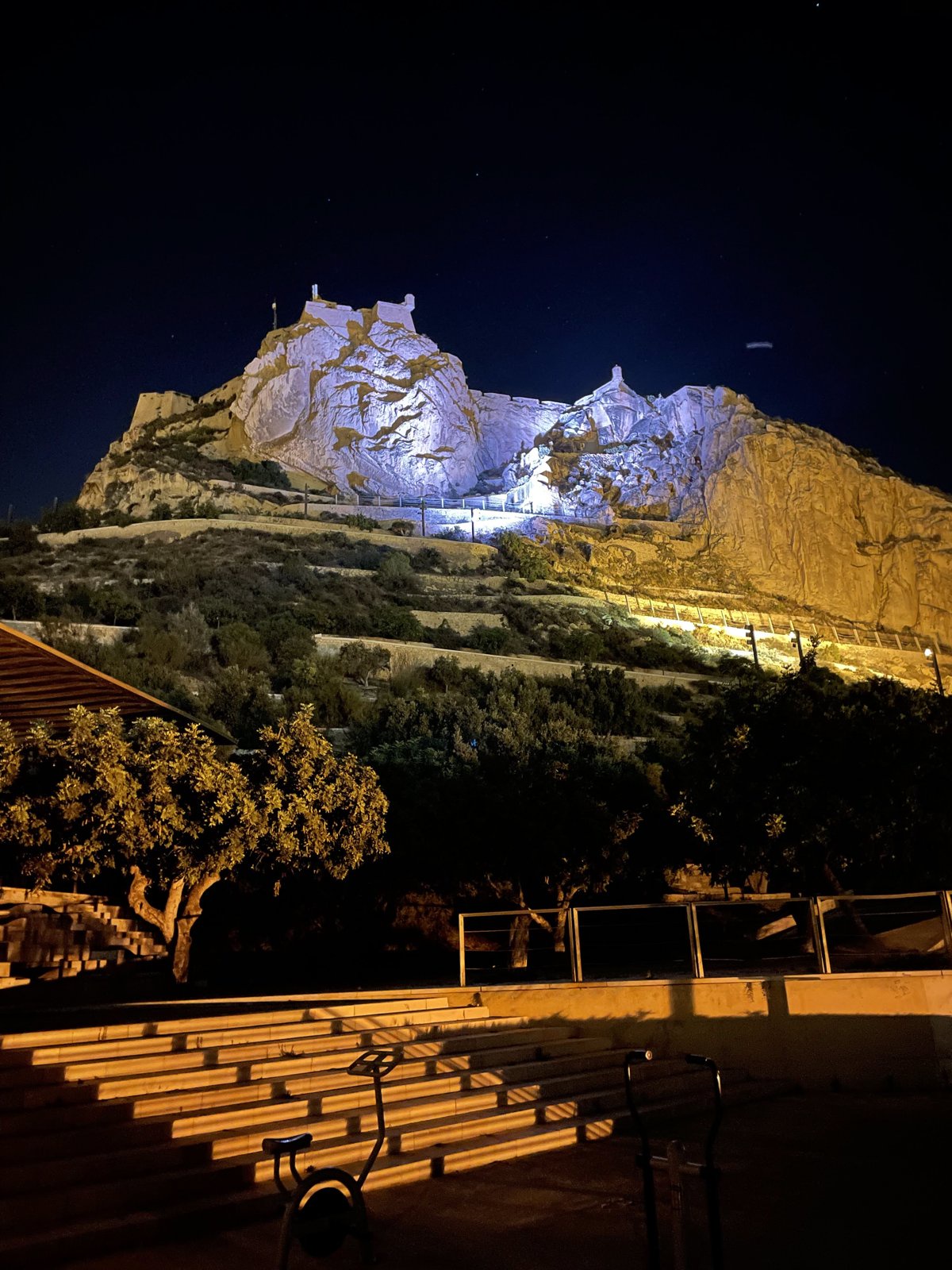
- Santa Barbara Castle (Castillo de Santa Bárbara) (Wikipedia), the 16th-century fortress perched above the city with views to the coast and mountains. Lift access available; walking path is scenic but steep. €3 entry.
- Esplanada de España, the iconic palm-lined seafront promenade. Perfect for morning coffee, evening walks, sunset tapas.
- MARQ (Museo de Arqueología) (Wikipedia), excellent archaeology museum covering Roman, Iberian, and medieval Alicante. €3 entry.
- Mercado Central, the vast 1920s market building. Food, souvenirs, bustle. Go early to avoid crowds.
- Tabarca Island day trip (Wikipedia), a 45-minute ferry ride to a car-free Mediterranean island with beaches, snorkeling, and fresh seafood restaurants.
- Playa del Postiguet, the central urban beach. Swimming, sunbathing, chiringuitos (beach bars). Busy in summer; quiet in shoulder seasons.
- Playa San Juan, a long, quieter beach north of the city. Fewer tourists; better for extended beach days.
- Lonja de Pescadores, the 1920s fishing exchange building, now a cultural space with seasonal exhibitions and market stalls.
- Volvo Ocean Race Museum, housed in a former warehouse, tracks the famous sailing race with interactive exhibits.
- Guadalest mountain village (Wikipedia), a fortified 1,000-year-old hilltop village 50 minutes inland. Narrow cobblestones, castle ruins, stunning views. Popular weekend destination.
Festivals and major events
| Event | When |
|---|---|
| Hogueras de San Juan (bonfire festival) | June 20 to 24 |
| Moros y Cristianos (Moors and Christians parades) | Various dates throughout year (largest in Alcoy and Villena nearby) |
| La Tomatina (tomato-throwing festival) | Last Wednesday of August (in nearby Buñol) |
| Christmas markets and holiday lights | Late November through early January |
| Three Kings Parade (Cabalgata de Reyes) | January 5 |
Must-try local dishes
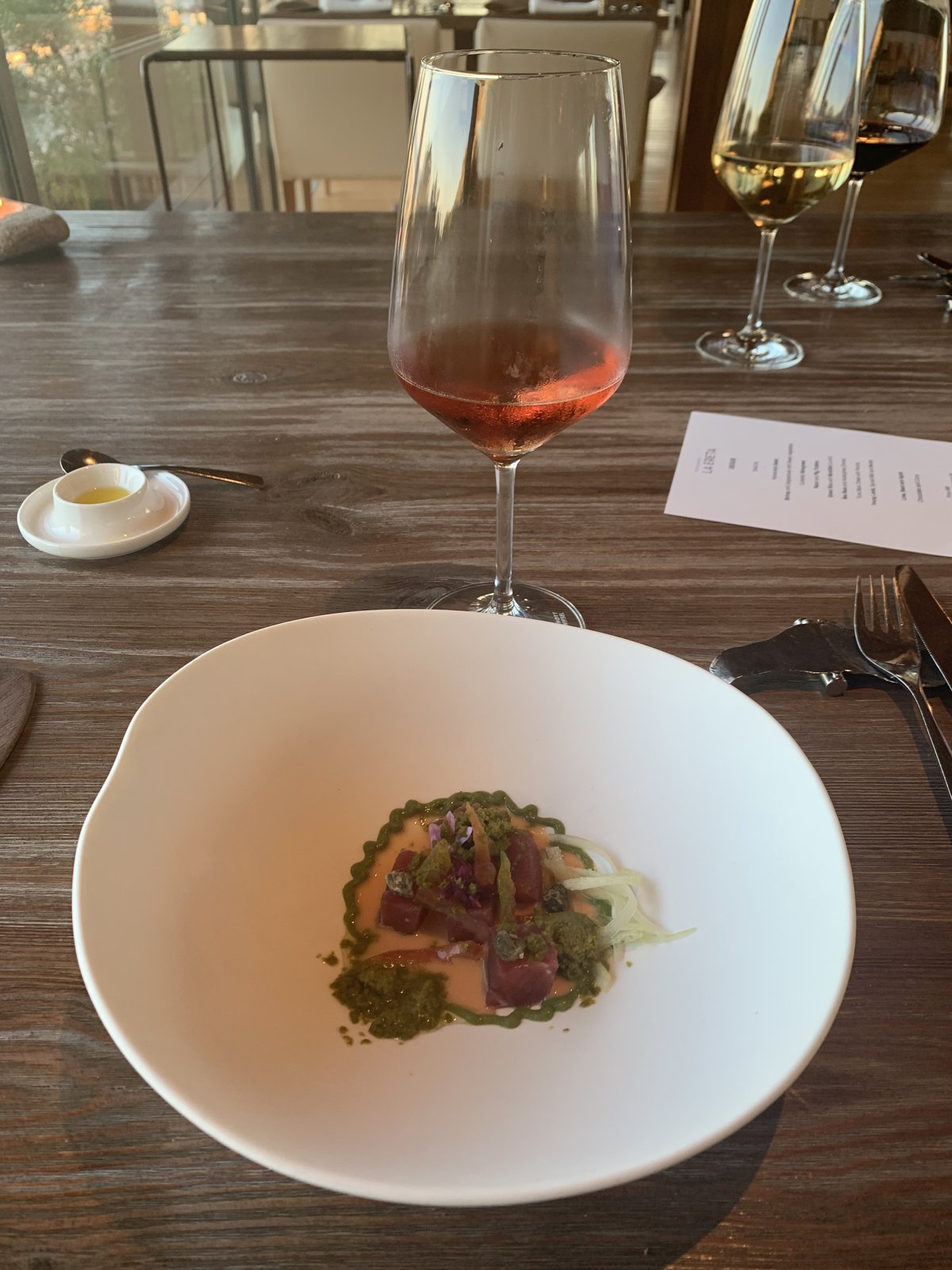
The Costa Blanca is paella and arroz country. Fresh fish is central to the food identity. Turron (nougat) is the iconic sweet. This is serious eating. One caution: skip Restaurant La Ereta on the hillside below the castle; the setting draws bookings, but a recent meal there ended in food poisoning.
- Arroz a banda, rice cooked in fish broth, served with monkfish, shrimp, and a garlicky alioli. The signature dish.
- Paella valenciana, the original paella with rabbit, beans, and local herbs. Different from seafood versions served elsewhere.
- Fideuà, noodles instead of rice, cooked paella-style with seafood. Alicante's other rice-like staple.
- Turron de Jijona and Turron de Alicante, two types of nougat. Jijona is soft and crumbly; Alicante is hard and brittle. Both made locally for centuries.
- Horchata with fartons, tiger-nut milk drink served with sweet pastries. A traditional Valencia-region breakfast.
- Pulpo a la gallega, Galician-style octopus with paprika, olive oil, and bread.
- Ensaladilla rusa, "Russian salad," potatoes, vegetables, and mayo. Everywhere and delicious.
- Alicante DOC wines, local white and rosé wines that pair perfectly with seafood.
Souvenirs that aren't junk
- Turron from Jijona, buy the authentic local versions from a reputable maker, not tourist-zone knockoffs.
- Espadrilles and alpargatas, hand-woven Spanish canvas shoes, traditionally made in this region.
- Spanish wines and vermut, bottles from local bodegas or vermut from Reus. Carry-on friendly in smaller sizes.
- Ceramic tiles and pottery, Valencian azulejos (painted tiles) with traditional patterns, or fired pottery from local craftspeople.
Health & Medical
Spain's healthcare system is solid, and Alicante has good options for routine care and emergencies. EU residents with EHIC cards get public healthcare; others should carry travel insurance.
- Hospital General Universitario, the main public hospital. ER open 24/7. Free for EU residents with EHIC; others billed afterward.
- Private clinics, Vithas Medimar, Quirónsalud, and others offer same-day appointments in English. Consultations €50 to 100. Walk-in clinics common in the center.
- Pharmacies (farmacias), abundant, with a green cross sign. Staff speak some English and can advise on over-the-counter remedies.
- Vegetarian and vegan options, expanding rapidly. Most restaurants accommodate dietary restrictions if asked. Central Alicante has dedicated plant-based spots.
- Tap water, safe but hard. Bottled water everywhere for €0.50 to 2.
- No endemic tropical diseases. Standard European vaccinations sufficient.
- Foreign prescriptions, not automatically accepted. Bring enough medication or get a Spanish doctor's prescription for extended stays.
Legal & Substances
- Cannabis. Spain has decriminalized personal possession for private use, but public consumption carries fines. Grow your own for personal use is technically legal; selling, trafficking, and public smoking are not.
- Alcohol. Legal drinking age is 18. Public alcohol consumption is generally tolerated; "botellón" (large group drinking in parks) can trigger fines.
- Smoking. Banned indoors in restaurants, bars, and public transit since 2011. Outdoor terraces usually permit it.
- Drugs. Cocaine, heroin, MDMA, and other hard drugs carry serious criminal penalties. Don't.
Customs & Shopping
- VAT. Value-added tax is 21% on most goods. Included in marked prices.
- Tax-free shopping for non-EU residents. Stores with Tax-Free shopping logos can issue refund forms. Claim VAT at the airport on departure for purchases over €175.
- Cash declarations. Anything over €10,000 leaving the EU must be declared.
- Restricted exports. Cultural items over 50 years old need Ministry of Culture authorization to export. Food, wine, souvenirs, and artisan goods are fine.
Accessibility & Inclusion
Alicante is partially accessible. The Esplanada and seafront are fully step-free and wheelchair-friendly. Playa del Postiguet has beach access and accessible facilities. Santa Barbara Castle has a shuttle lift for most of the climb. The Old Town is historic, with narrow streets, cobblestones, and stairs as the only way to many buildings. Many restaurants and museums predate modern accessibility standards. The newer sections of the city are more accommodating. Call ahead to specific sites if accessibility is critical.
Digital Nomad Corner
Alicante is exploding as a digital nomad base. Fiber internet, affordable housing, walkable neighborhoods, and a growing co-working ecosystem make it a serious contender against Barcelona or Valencia.
- Internet. Fiber is standard in most central apartments. 600+ Mbps connections common for €30 to 50/month. Cafés have solid WiFi. Spanish providers: Movistar, Vodafone, Orange.
- Coworking spaces. Wayco Alicante, Talent Garden, and Cocowork are the main players. Day passes €15 to 25; monthly memberships €150 to 300. Many have community events and networking.
- Digital nomad visa. Spain launched a digital nomad visa in 2023. Valid for 1 year and renewable. ~€2,000/month minimum income requirement. No Spanish-source work allowed. Apply via immigration authority.
- Cost of living. A comfortable nomad lifestyle in central Alicante runs €1,200 to 1,700/month including rent (one-bedroom apartments €500 to 800 long-term; studio €400 to 600), groceries, restaurants, coworking, and transit. About 40 to 50% cheaper than northern European cities for the same comfort level.
Alicante is still affordable when you find your rhythm. Pick a café by a beach plaza, grab a laptop seat, order a café con leche, and disappear into work. The castle looms above. The Mediterranean gleams. Work gets done. Rent is paid. By month two, you've found better restaurants. By month three, you've stopped checking flights home.
Keep planning: Andalusia: Seville, Granada & the Costa del Sol, Barcelona & Catalonia: Spain's Creative Capital and Madrid: Europe's Highest Capital City.