Madrid: Europe's Highest Capital City
Nomad Toolkit
Overview & Vibe
Madrid sits at 667 meters above sea level, making it the highest capital city in the EU. The municipality holds 3.4 million residents; the metro area 6.7 million. Three of the world's top art museums stand within one kilometer of each other along the Paseo del Prado.
Neighborhoods each have a distinct character. Malasaña (Tribunal Metro) is the nomad hub with dense coworking options and €1.50 cortados. Chueca is openly LGBTQ-welcoming with bars open past midnight. La Latina anchors the Sunday tapas tradition. Salamanca is upscale and corporate. For long stays, Malasaña and Chueca offer the best combination of affordability and infrastructure.
A Brief History
Madrid began as a 9th-century fortress that Emir Muhammad I of Cordoba built above the Manzanares river to shield Toledo from Christian raids. Alfonso VI of Leon and Castile took the town in 1083, but the decisive year was 1561, when Philip II installed his royal court here; the population jumped from about 18,000 to 80,000 by 1598. On May 2, 1808 the city rose up against Napoleon's occupying troops, an uprising that spread into a national war against the French. Madrid later spent most of the Civil War under siege as a Republican stronghold, falling to Franco's army in March 1939.
Transportation
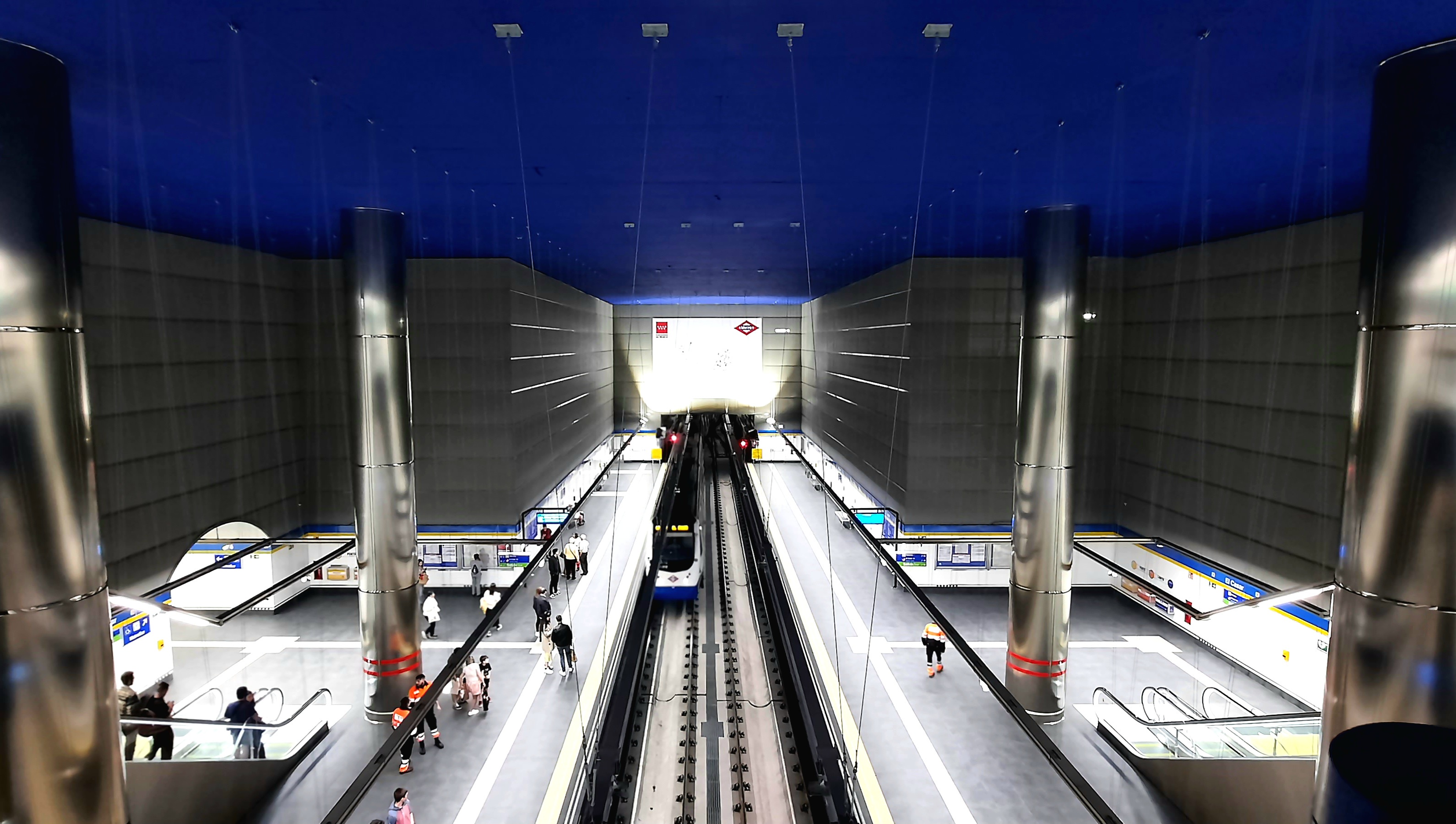
Madrid's metro has 13 lines and 302 stations. A 10-trip Metrobus card for Zone A costs €12.20; single rides are €1.50-2.00. EMT city buses run 24/7, with night buses (búhos) covering main routes midnight to 6 AM. From Barajas Airport (MAD), Metro Line 8 reaches Nuevos Ministerios in 30 minutes with a €3 airport supplement (total ~€5); taxis charge a flat €30-35 to city center. Uber, Cabify, and Bolt operate legally. Renfe AVE trains run to Barcelona (2h30m), Seville (2h30m), and Valencia (1h40m).
Language, Customs & Etiquette
Castilian Spanish is the only official language in Madrid. Greetings: two kisses on the cheeks (right first) between acquaintances; handshakes for first meetings. Meals run late: lunch 2-3 PM, dinner from 9 PM. Many shops close 2-5 PM. Churches and cathedrals require covered shoulders and knees. Photography is restricted inside most museums. Regional independence debates (Catalonia, Basque Country) are sensitive topics.
Safety & Security
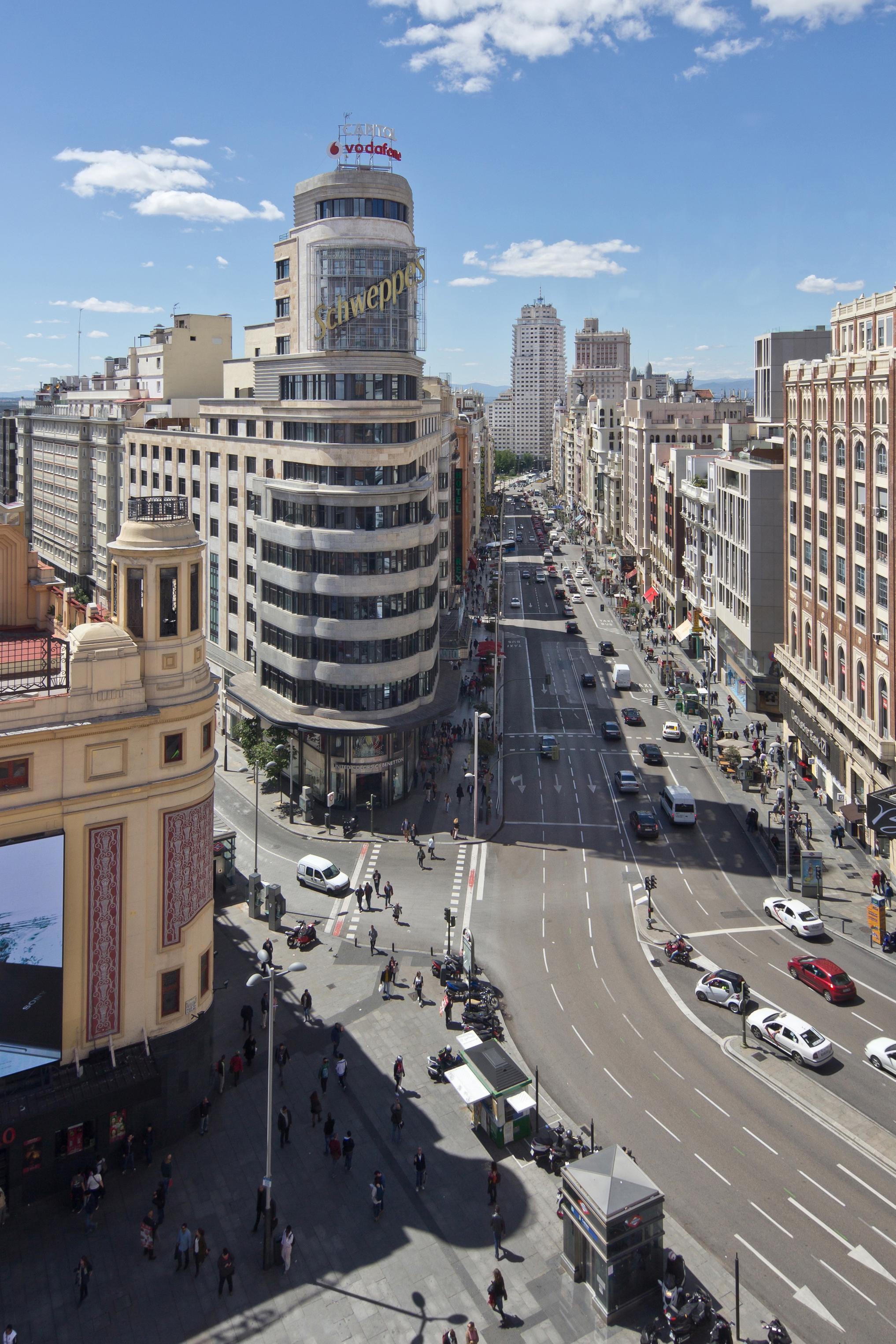
Violent crime rates are low. Pickpocketing is the primary risk, concentrated around Puerta del Sol, Gran Vía, and Sol Metro. Watch bags on crowded metro cars; staged distraction tactics are common. Emergency: 112. National Police: 091. Solo female travel is generally safe with standard precautions. LGBTQ+ travelers: Chueca neighborhood is Spain's most prominent gay district with strong legal protections; Spain legalized same-sex marriage in 2005.
Weather & Climate
Continental climate with 300+ sunshine days per year. Summers are dry and very hot; winters are cold and dry. Best months: May-June and September-October. July-August regularly reaches 38-40°C.
| Month | Low °C | High °C | Rain Days |
|---|---|---|---|
| January | 3 | 10 | 6 |
| April | 8 | 18 | 9 |
| July | 17 | 33 | 2 |
| October | 10 | 20 | 8 |
| December | 3 | 9 | 7 |
Logistics & Practical Info
Plugs: Type C and F, 230V/50Hz. North American travelers need a plug adapter; most modern devices handle 230V. Time zone: CET (UTC+1) in winter, CEST (UTC+2) in summer. Tap water is safe. SIM cards: Movistar, Vodafone, Orange, and Lebara offer prepaid tourist SIMs for €10-20 covering 20-50GB over 30 days (passport required). Free WiFi at metro stations and plazas via WiFi4EU. No internet censorship; VPN use is unrestricted.
Attractions & Activities
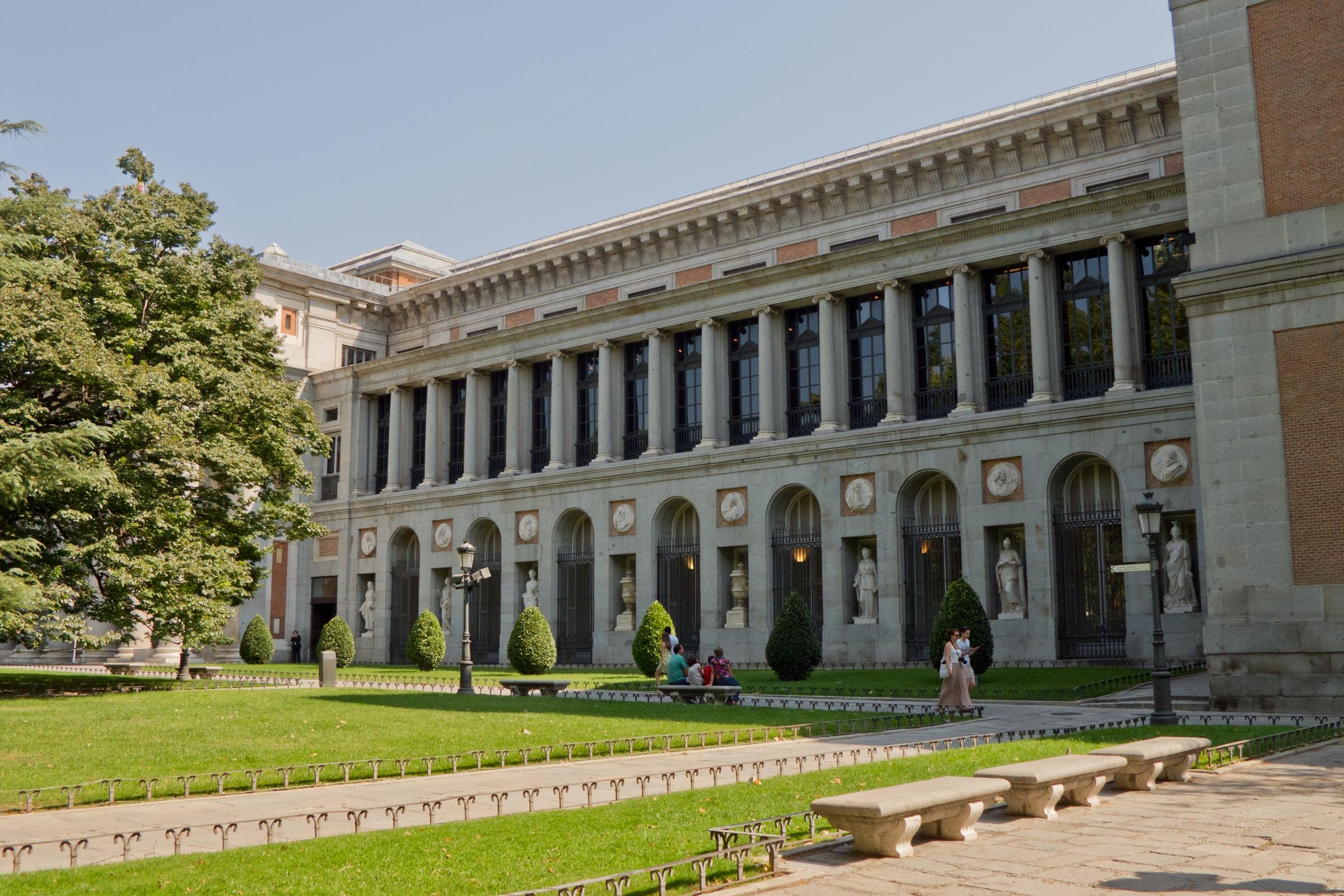
The three flagship art museums cluster along Paseo del Prado. The Prado (€15, free Mon-Sat 6-8 PM, Sun 5-7 PM; Wikipedia) holds Velázquez's Las Meninas and Goya's Saturn. The Thyssen-Bornemisza (€13; Wikipedia) spans Gothic altarpieces to Pop Art. Reina Sofía (€12, free Sat afternoon; Wikipedia) houses Picasso's Guernica. Parque del Retiro (Wikipedia) covers 350 free acres with a lake (rowboat €6/45 min) and the glass Crystal Palace. The Royal Palace (€14, free for EU residents Tue-Thu afternoons; Wikipedia) has 3,418 rooms. In the Salamanca district, the National Museum of Archaeology (Wikipedia) on Calle de Serrano holds the Lady of Elche and covers Iberia from prehistory through the medieval kingdoms.
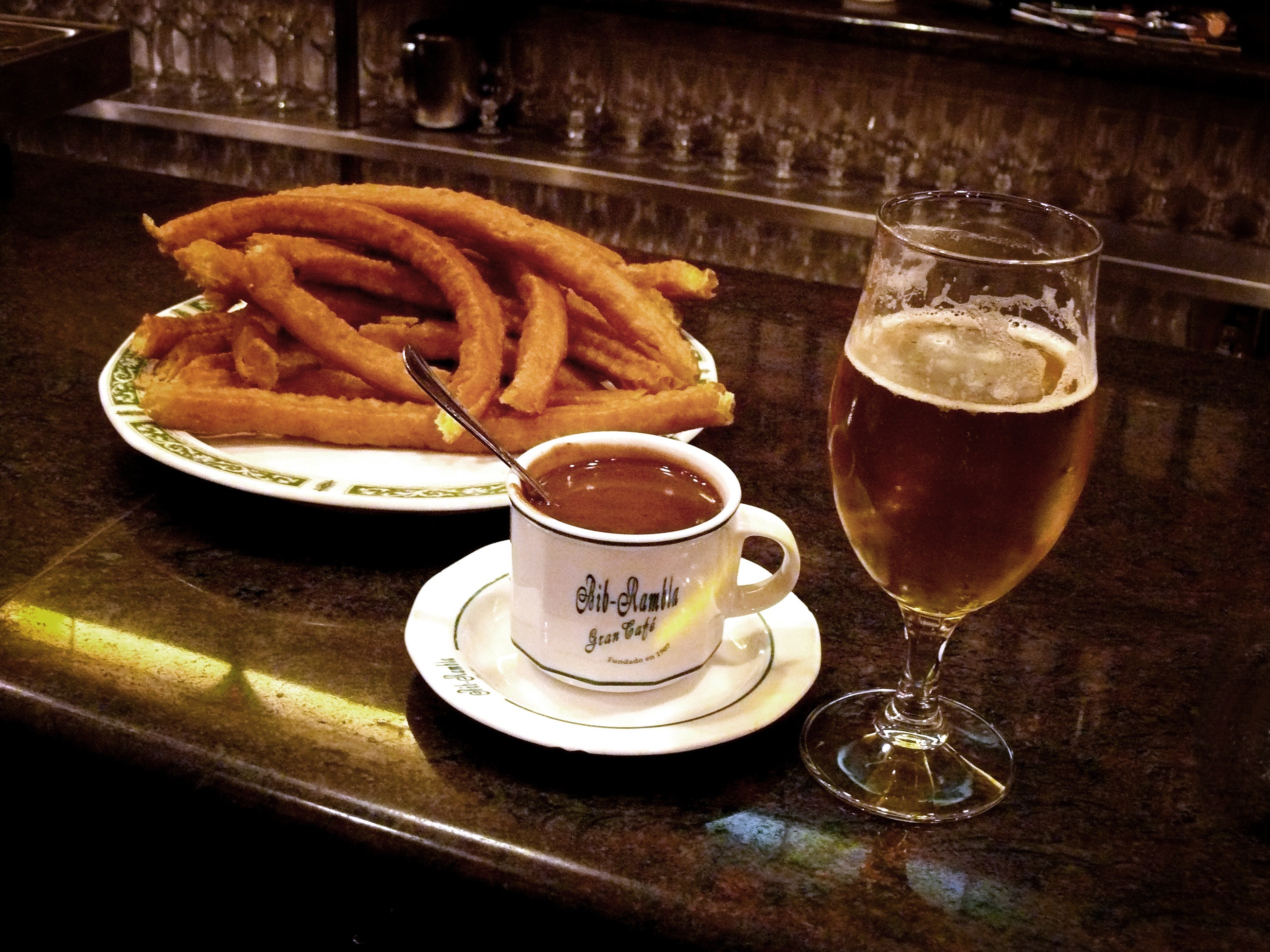
Food stops: bocadillo de calamares (€3.50) at Bar La Campana on Plaza Mayor; cocido madrileño (€28) at La Bola Taberna, open since 1870; churros con chocolate (€5) at Chocolatería San Ginés, open 24 hours since 1894. For a proper sit-down dinner, El Barril de las Letras on Calle de Cervantes and Restaurante Ferreiro on Paseo de la Florida are both dependable picks. El Rastro flea market covers La Latina every Sunday 9 AM to 3 PM.
Health & Medical
Spain has excellent healthcare. Public hospitals (Gregorio Marañón, La Paz, 12 de Octubre) provide emergency care to all visitors. EU citizens with an EHIC card receive free public treatment; non-EU visitors pay upfront and claim through travel insurance. Private clinics HM Hospitales and Quirónsalud offer English-speaking staff. No endemic diseases. Pharmacies (green cross) are dense and dispense many medications without prescriptions. Vegetarian and vegan options concentrate in Malasaña and Chueca.
Demographics & Government
Spain population: approximately 48 million; Madrid municipality: 3.4 million; metro area: 6.7 million. Spain is a parliamentary constitutional monarchy; King Felipe VI is head of state. Seventeen autonomous communities hold significant regional powers. Approximately 58% of Spaniards identify as Catholic with active practice well below 20%. Large immigrant communities from Venezuela, Colombia, Romania, and Morocco contribute to the city's cultural landscape.
Legal & Substances
Cannabis: personal private use is decriminalized; public possession carries fines of €601-30,000. Alcohol: legal at 18+. Public drinking on Madrid streets is banned (fines €100-600); same applies on public transit. Smoking banned in all enclosed public spaces since 2011; outdoor terraces generally permit it.
Customs & Shopping
Duty-free for non-EU destinations: 200 cigarettes, 1 liter spirits over 22%, goods up to €430/person. Exporting antiques over 100 years old requires permits. Cash over €10,000 must be declared. Non-EU visitors can reclaim 21% VAT on receipts over €90.54 via the DIVA scheme at airport kiosks. Main shopping: Gran Vía for major fashion flagships; Calle Serrano for luxury; Mercado de Fuencarral for independent labels; El Rastro Sundays for vintage and antiques.
Accessibility & Inclusion
Most metro stations built after 1995 have elevators; older Line 1 and Line 2 stations remain partially inaccessible. ATENDO provides free mobility assistance (book 24 hours ahead). EMT buses are fully wheelchair accessible. The Prado, Reina Sofía, and Thyssen all have adapted entrances and audio guides. Retiro Park has paved paths throughout most of its 350 acres. Chueca is one of Europe's most LGBTQ-welcoming neighborhoods with strong legal protections.
Digital Nomad Corner
Cost of living is lower than Paris, Amsterdam, or Zurich. Shared flat room in Malasaña or Chueca: €500-800/month. One-bedroom apartment: €900-1,500/month in those neighborhoods, €1,200-2,000/month in Salamanca. Coffee: €1.50-2.50. Three-course menú del día with wine: €12-15. Monthly groceries: €150-250.
Coworking: Impact Hub Madrid from €149/month; Utopicus from €199/month; Cloudworks Gran Vía from €175/month; WeWork Gran Vía from ~€300/month. Cafés Federal Café (Embajadores) and Toma Café (Malasaña) welcome laptops. Fiber at 600 Mbps-1 Gbps is standard in most central apartments (plans from €35-50/month).
Spain's Digital Nomad Visa (Ley de Startups, February 2023) requires income at 200% of Spain's minimum wage (~€2,646/month as of 2024), contracts with non-Spanish clients, a clean criminal record, and private health insurance. Application fee: ~€400. Grants one year of residency, renewable for two-year periods up to five years. Holders may apply for the Beckham Law flat 24% tax rate on Spanish income for six years.
Keep planning: Alicante: The Costa Blanca Capital, Andalusia: Seville, Granada & the Costa del Sol and Barcelona & Catalonia: Spain's Creative Capital.
Madrid guide compiled from 2024-2026 data. Entry requirements, costs, and visa rules change; verify figures before travel.