Arches National Park Guide: Delicate Arch & Top Trails
Nomad Toolkit
Overview & Vibe
Arches National Park holds over 2,000 natural sandstone arches within 76,679 acres of high desert in eastern Utah, the densest concentration of natural arches on Earth. The park sits at 4,085 to 5,653 feet elevation, five miles north of Moab on US-191. About 1.8 million visitors arrive annually, peaking during spring and fall when temperatures permit full-day hiking without heat risk.
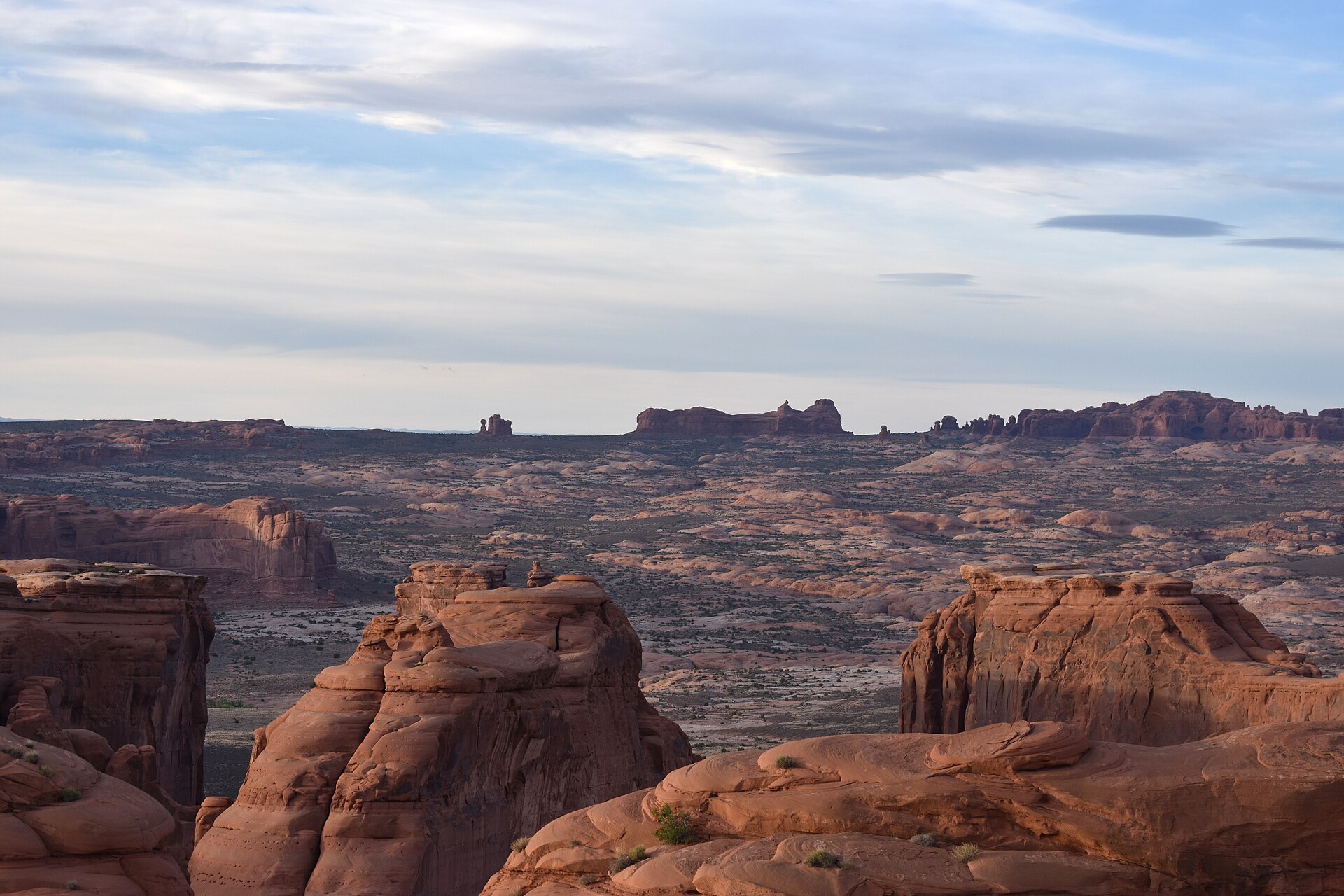
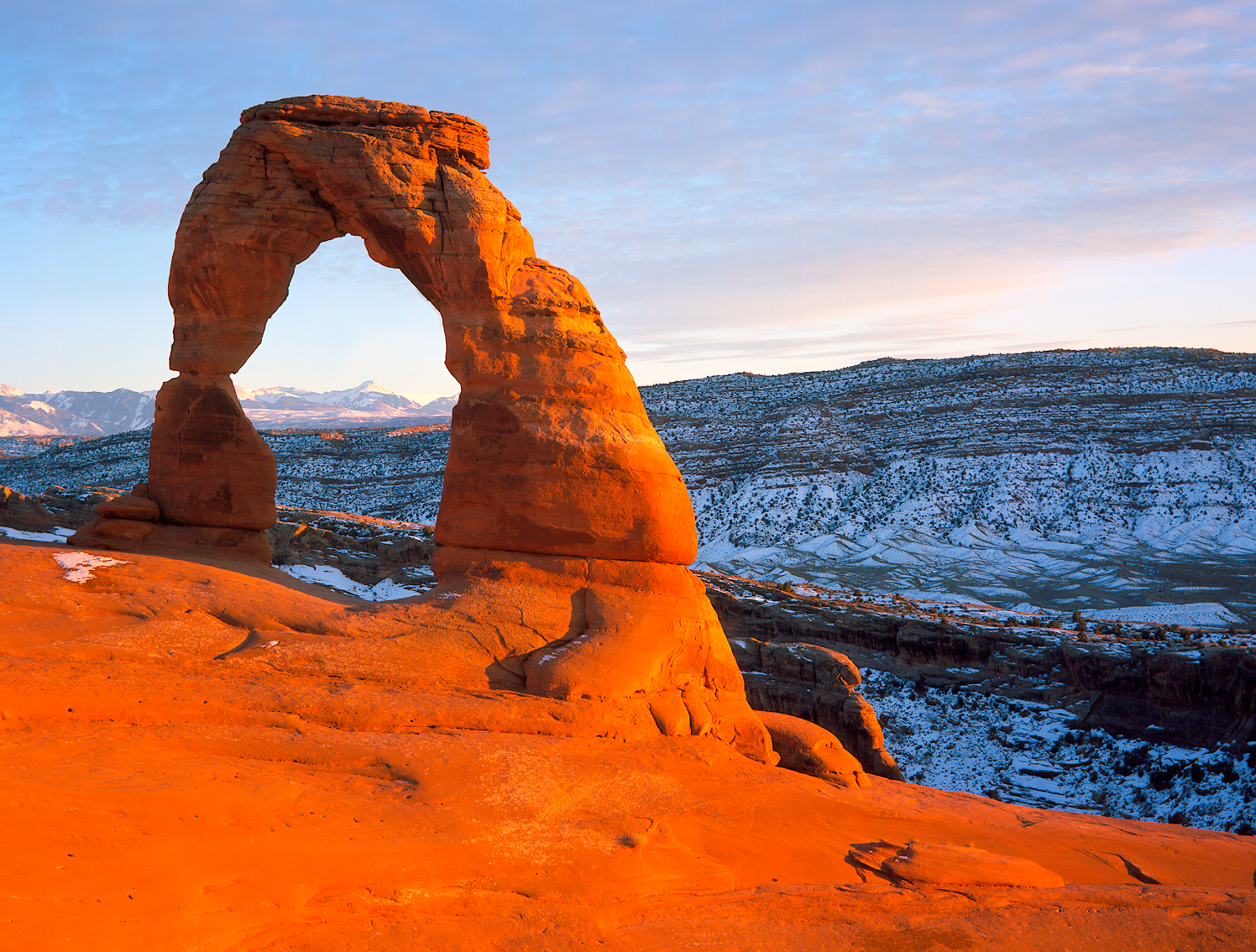
Red-orange Entrada Sandstone defines the terrain: fins, balanced rocks, spires, and windows eroded over 300 million years. Delicate Arch (Wikipedia), at 52 feet tall, appears on Utah's state license plate and draws the largest share of park foot traffic. Summer highs regularly reach 105°F, making March through May and mid-September through November the practical visiting windows for most visitors.
A Brief History
Alexander Ringhoffer, a Hungarian-born prospector living in Salt Valley, wrote to railroad officials in 1923 to pitch the rock formations as a tourist draw, starting the campaign for federal protection. President Herbert Hoover signed the proclamation creating Arches National Monument on April 12, 1929, and Congress redesignated it Arches National Park on November 12, 1971. Writer Edward Abbey spent two seasons as a ranger here in the 1950s and turned his journals into Desert Solitaire, published in 1968.
Transportation
No public transit serves the park. A rental car or rideshare from Moab is the only option. From April through October, a timed entry reservation is required during peak hours (6 AM to 5 PM). Reservations cost $2 per vehicle and open 6 weeks ahead at recreation.gov. Entry is denied without one during peak windows.
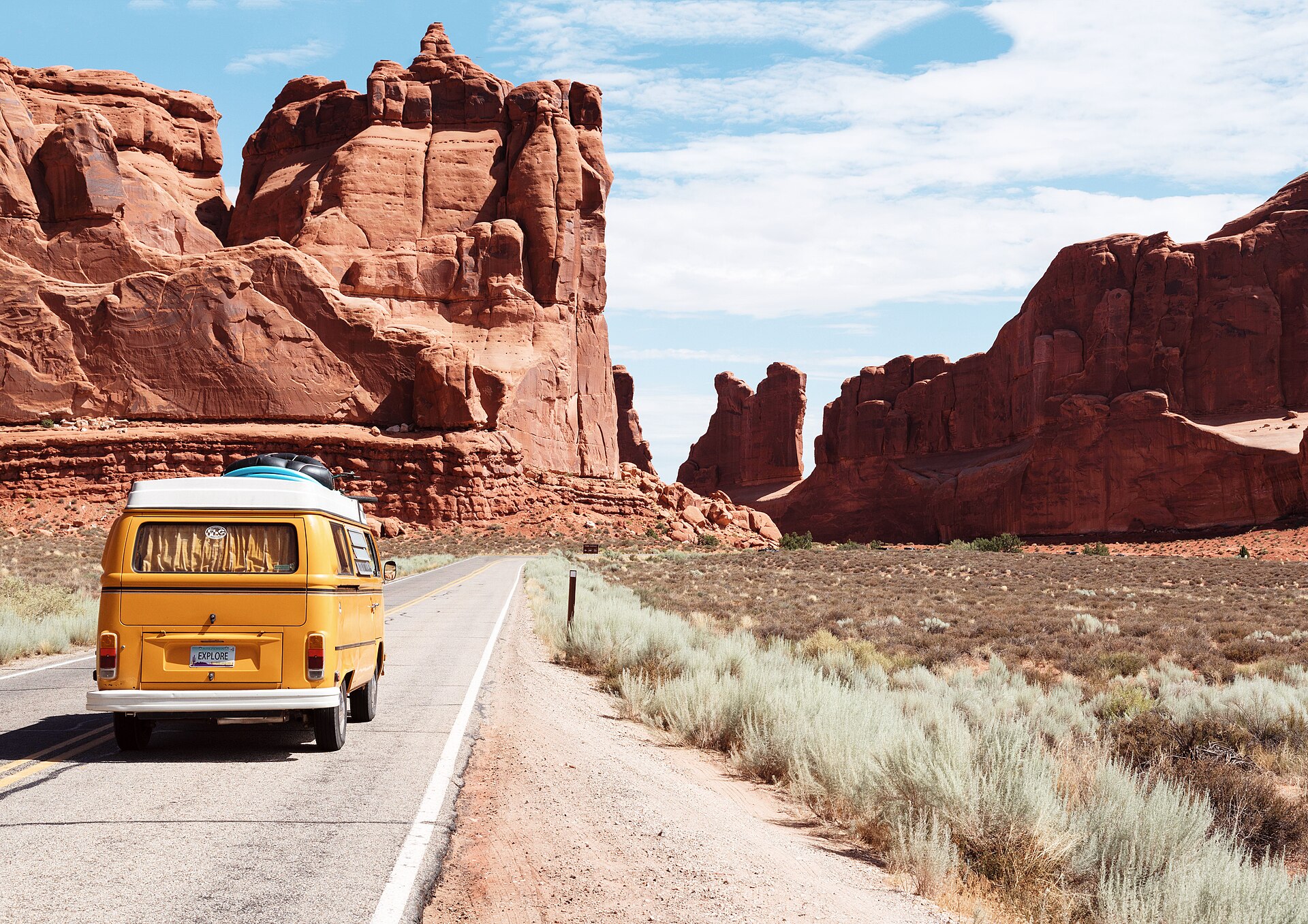
Inside the park, an 18-mile paved scenic drive links all major trailheads. Parking at popular areas fills by 7 AM on spring weekends. Arriving before 6 AM or after 3 PM reduces wait times significantly.
Language, Customs & Etiquette
English is the primary language in the park and Moab. Leave No Trace principles are strictly enforced. A single footstep off-trail destroys cryptobiotic soil crust that takes 50-100 years to regenerate; fines reach $5,000. Drones require a special use permit from the NPS. During July through September monsoon season, flash floods can occur without warning; exit canyon areas immediately on ranger instruction.
Safety & Security
Heat is the primary risk from June through August. Carry at least 1 liter of water per hour of hiking and avoid exposed trails between 10 AM and 4 PM. Cell coverage is absent throughout most of the park; download offline maps (AllTrails or Gaia GPS) before entering. The Delicate Arch trail's final half-mile has no shade and no fencing near the arch rim. Emergency number: 911 (park dispatch patches to Grand County Search and Rescue). Nearest emergency care: Moab Regional Hospital (809 W 100 N), 9 miles south of the entrance.
Weather & Climate
| Month | High (°F) | Low (°F) | Rain (in) |
|---|---|---|---|
| Jan | 43 | 20 | 0.7 |
| Apr | 68 | 38 | 0.8 |
| Jul | 101 | 68 | 0.9 |
| Oct | 70 | 40 | 0.9 |
Spring and fall visits need a jacket for early morning starts: temperatures drop below 40°F before 7 AM in shoulder seasons. Pack layered clothing, a sun hat, SPF 50+, and a wind layer for exposed ridgelines. Winter visits are uncrowded and photogenic after snowfall, but ice on exposed slickrock routes requires microspikes or traction devices.
Logistics & Practical Info
Entrance fee: $35/vehicle, valid 7 days. The America the Beautiful Annual Pass ($80) covers all US national parks. The visitor center sells maps and hosts ranger programs; it has the park's only flush toilets. No food service inside park boundaries; stock up in Moab. Plug type: A/B (120V, 60Hz). Time zone: Mountain Time (UTC-6, DST applies). No cellular or WiFi service in the park.
Attractions & Activities
Delicate Arch Trail (3.0 mi RT, 480 ft gain): The park's primary route starts at Wolfe Ranch, crosses open slickrock marked with cairns, and finishes at a sandstone bowl framing the arch. Allow 2-3 hours. Start before 8 AM from June through August.
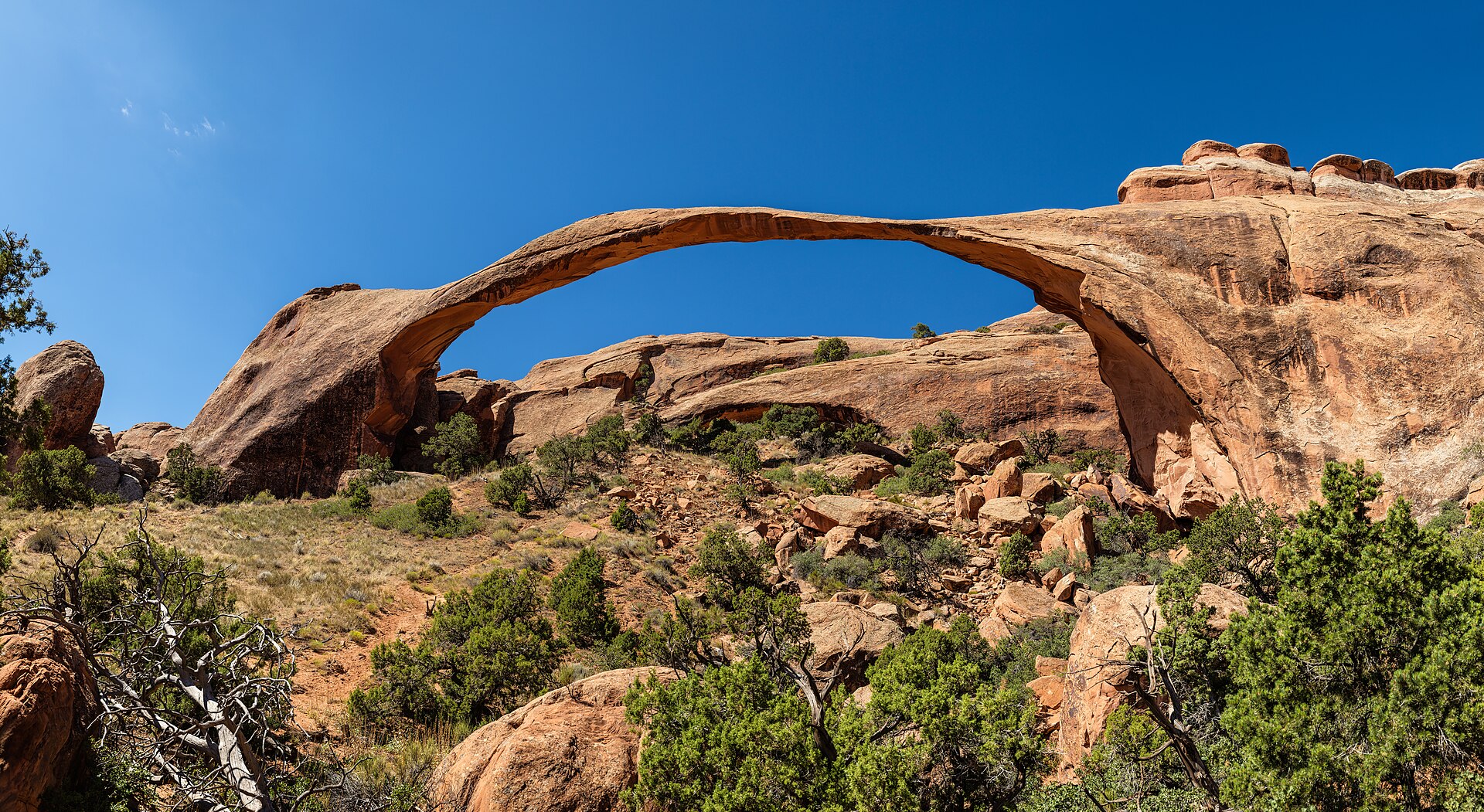
Landscape Arch Trail (Wikipedia) (1.9 mi RT, flat): Located in Devil's Garden, this route leads to the world's longest natural arch at 306 feet span. The full Devil's Garden Primitive Loop (7.9 mi) extends to Double O Arch across fin ridges that require scrambling.
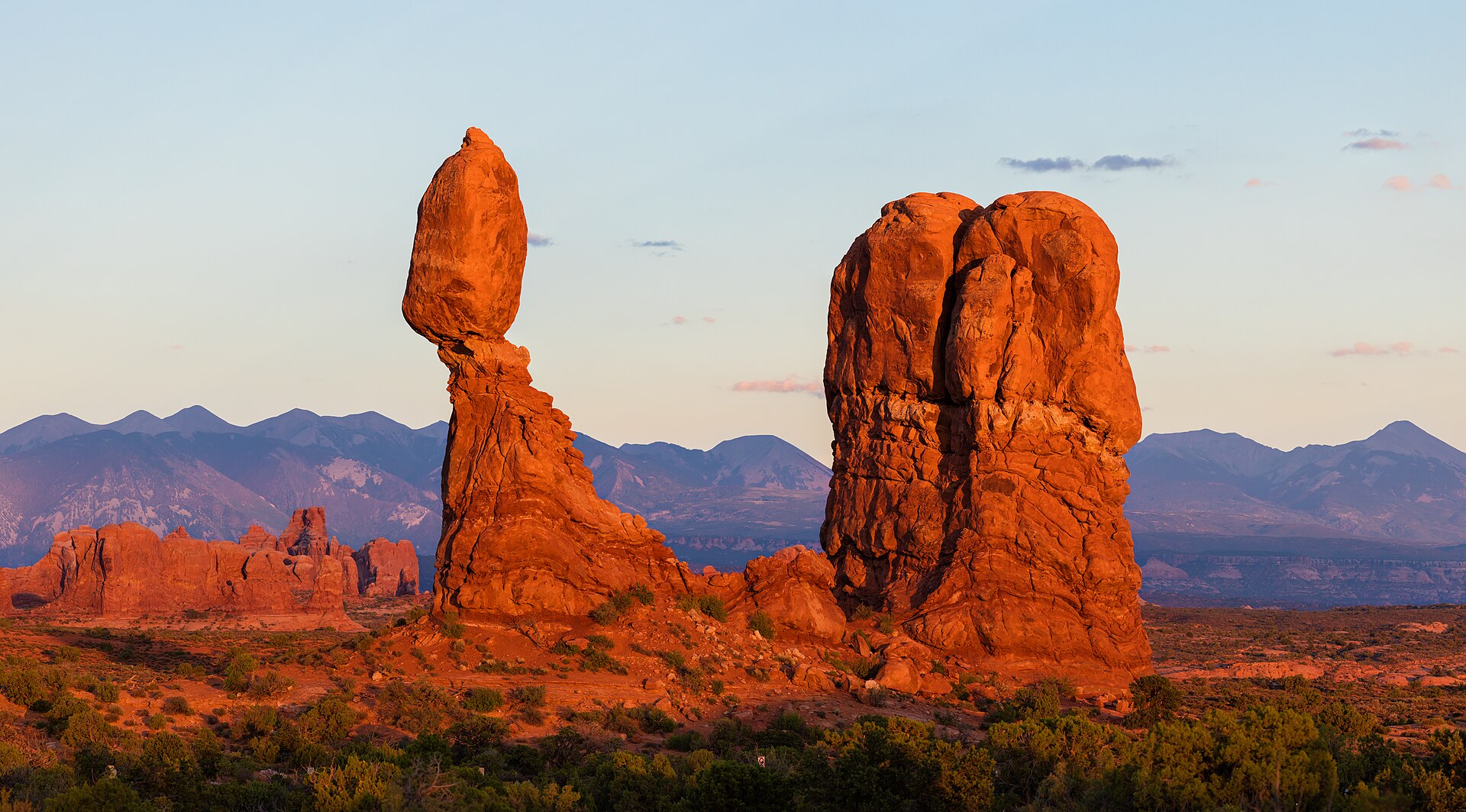
Balanced Rock (0.3 mi loop): A 3,600-ton boulder balanced on an eroding pedestal. Suitable for all fitness levels; completable in under 30 minutes from the roadside parking area.
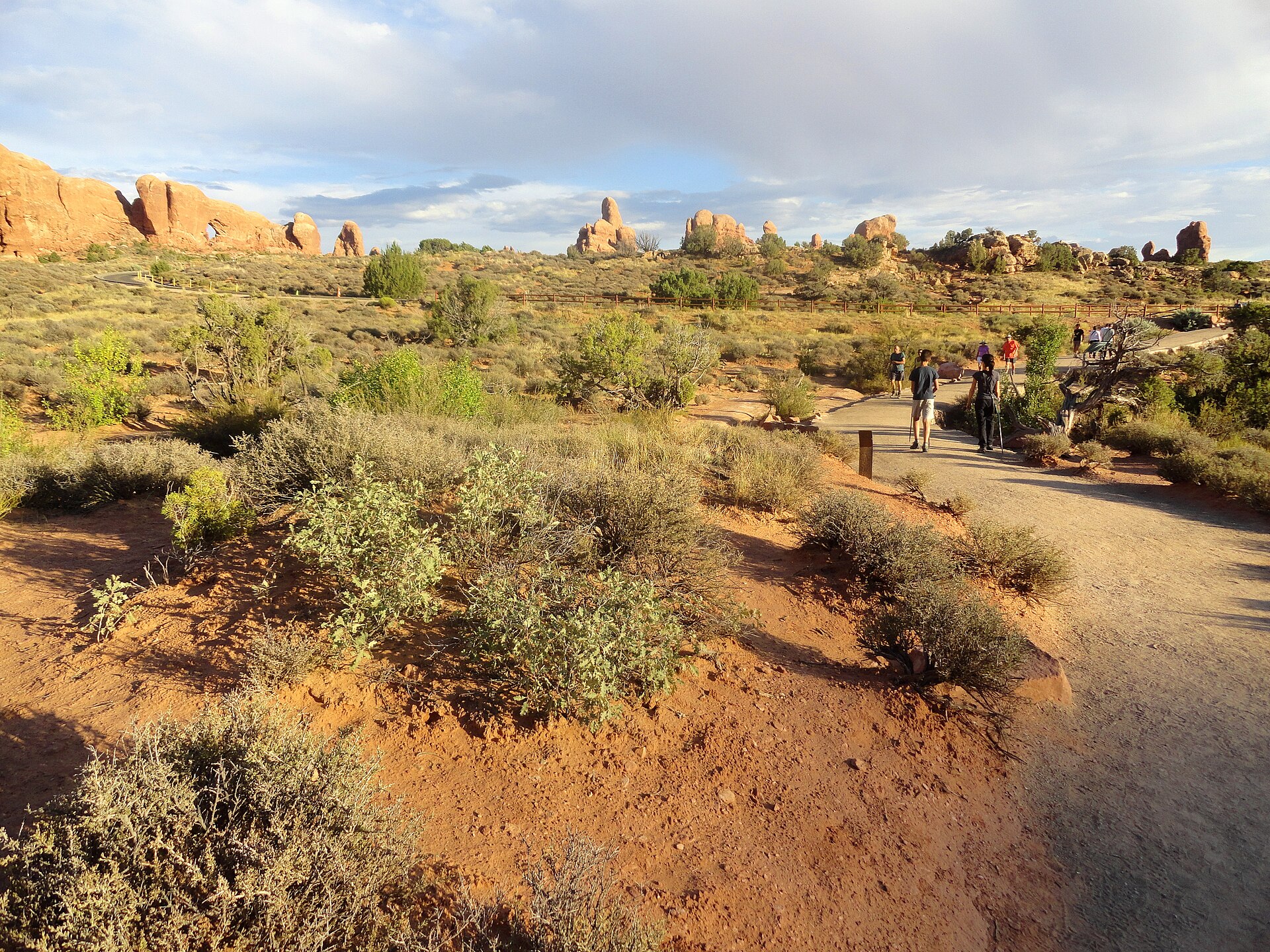
The Windows Section: North Window (93 ft wide) and South Window (105 ft wide) sit within a 1.0-mile loop from the paved parking area. At sunset they frame the La Sal Mountains. Fiery Furnace requires either a self-guided permit ($8/person) or a ranger-led walk ($16/person), which books out 2-3 days in advance at the visitor center.
Health & Medical
Moab Regional Hospital (809 W 100 N) provides emergency care 9 miles south. The nearest Level I trauma center is University of Utah Hospital in Salt Lake City, 236 miles north. Reapply SPF 50+ every 90 minutes on exposed slickrock. Carry all water in; no potable water is available on trails. Hantavirus risk: avoid disturbing rodent nests near shelters and caves. Travel insurance is strongly recommended; emergency airlift to Salt Lake City costs $30,000-$50,000.
Demographics & Government
Arches is administered by the US National Park Service (NPS), established as a national monument in 1929 and elevated to national park status in 1971. Grand County (population 10,000) surrounds the park; Moab (5,200) serves as county seat, with tourism comprising over 50% of local employment. The US is a federal constitutional republic; Utah state law governs Moab while NPS jurisdiction applies inside park boundaries.
Legal & Substances
Recreational marijuana is legal in Utah for adults 21+ at licensed Moab dispensaries, but possession inside the park is a federal offense. Alcohol is prohibited on trails and at trailheads. Smoking is limited to vehicles or designated areas. Collecting rocks, plants, or artifacts is illegal under the Antiquities Act. Rock climbing is permitted on most formations but requires visitor center registration for Fiery Furnace routes.
Customs & Shopping
The visitor center sells maps, field guides, and NPS merchandise. Moab has gear outfitters along Main Street including Gear Heads (473 S Main) and REI. Grocery resupply at City Market (425 S Main). Sales tax in Grand County totals approximately 7.5%.
Accessibility & Inclusion
ADA-accessible: Windows Section (paved viewpoint path), Balanced Rock (0.3-mile paved loop), Broken Arch (2-mile gravel trail), and the visitor center. Delicate Arch trail is not accessible due to open slickrock. Accessible camping: Devils Garden Campground Sites 1, 2, 35, and 36. Service animals are permitted throughout.
Digital Nomad Corner
Moab (population 5,200) functions as the practical base camp for remote workers visiting Arches. The town has fiber-backed internet in most downtown buildings, a reliable power grid, and full grocery and gear infrastructure. Most visitors stay 3-7 days, which works well for a work-trip hybrid: morning hikes before 8 AM, work sessions from a downtown cafe or coworking space from 10 AM to 4 PM.
Coworking: Arches Collective Coworking (25 N Main St) charges $20/day or $150/month and provides dedicated desks and meeting rooms. Reliable WiFi alternatives include Love Muffin Cafe (139 N Main) and Moab Garage Co (78 N Main), both with 50+ Mbps fiber connections.
Costs: Hotel rooms run $90-150/night in shoulder season, rising to $200-300/night during peak spring weekends. Monthly Airbnb averages $1,800-2,500. Sit-down restaurant meals average $15-25. Groceries cost 10-20% above the US national average due to Moab's remote supply chain.
Visa notes: International visitors on a B-2 tourist visa (up to 6 months) or ESTA Visa Waiver (up to 90 days) may stay freely. Remote work for a non-US employer on a tourist entry sits in a legal gray area; the US does not offer a dedicated digital nomad visa. Cellular service and WiFi are completely unavailable inside the park; plan all calls and uploads from your Moab base.
Keep planning: Amicalola Falls State Park Guide, Badlands National Park Guide: Loop Road and Wildlife and Canyonlands National Park Guide: Island in the Sky.