Capitol Reef National Park Guide: Hikes and Scenic Drive
Nomad Toolkit
Overview & Vibe
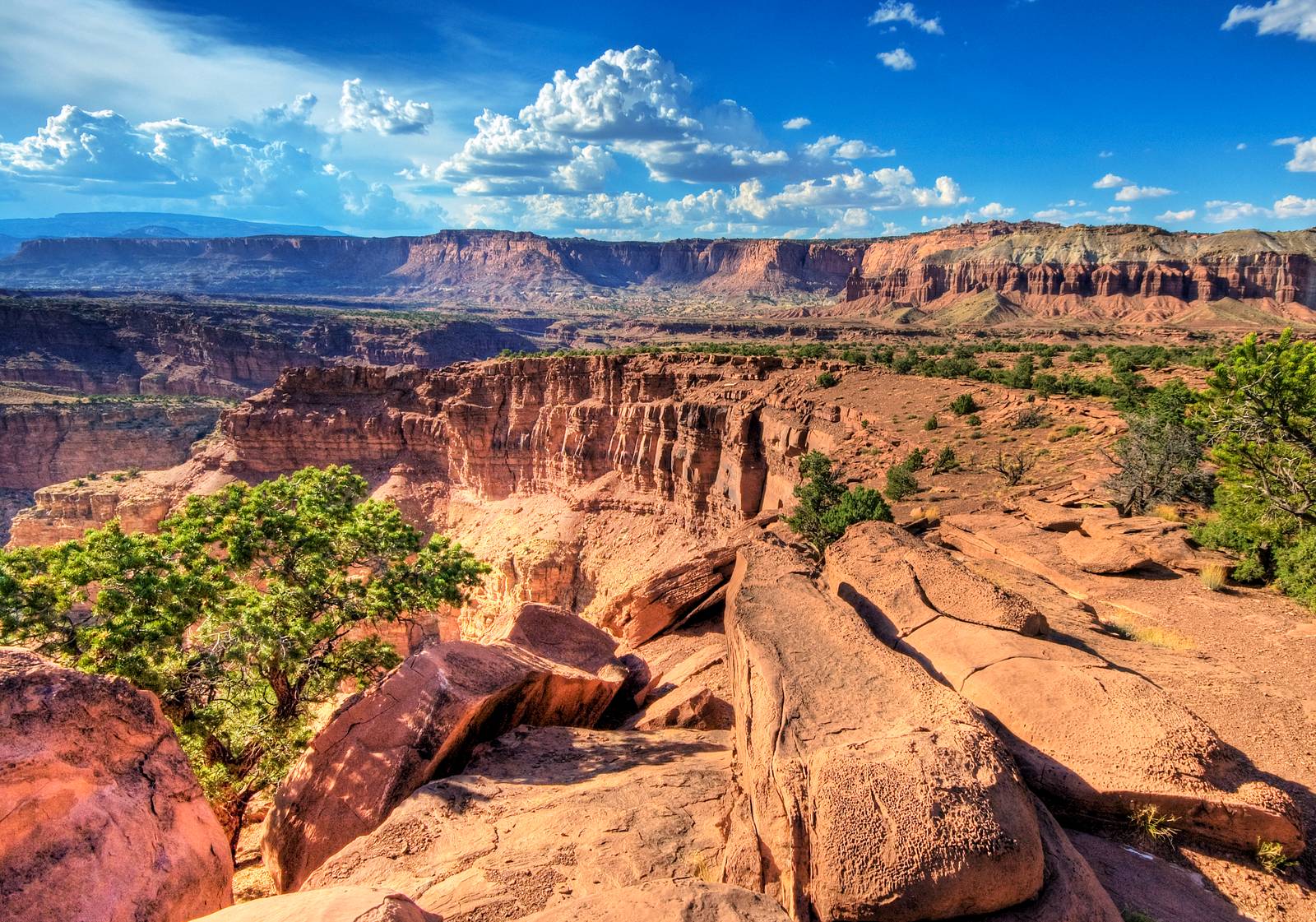
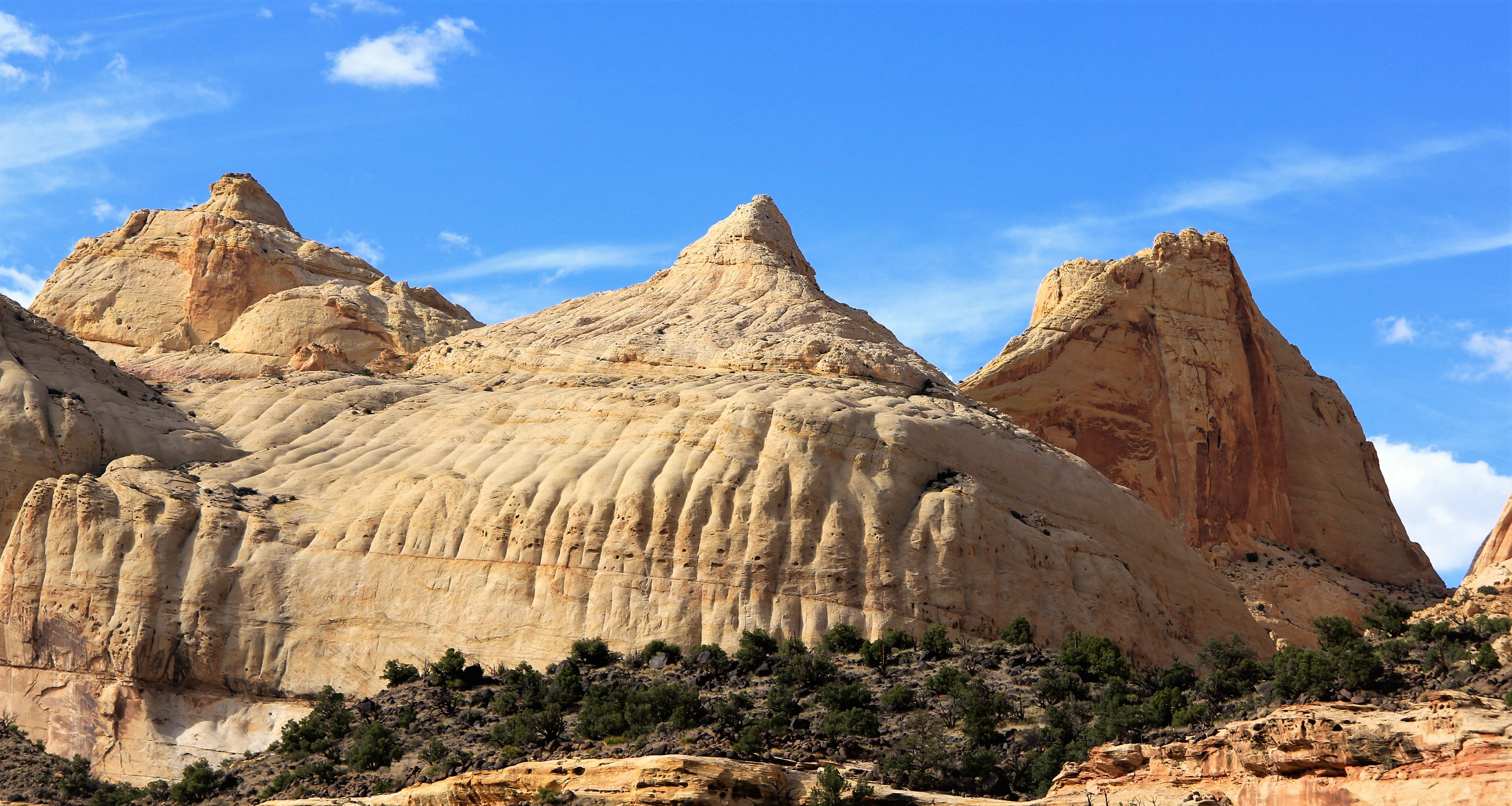
Capitol Reef National Park protects 241,904 acres of south-central Utah's canyon country, centered on the Waterpocket Fold, a 100-mile-long warp in the earth's crust formed 65 million years ago. The name comes from white Navajo sandstone domes resembling the U.S. Capitol, and canyon systems that blocked wagon travel like a reef. About 1.2 million visitors enter annually, roughly one-third the crowds at Zion and Bryce Canyon.
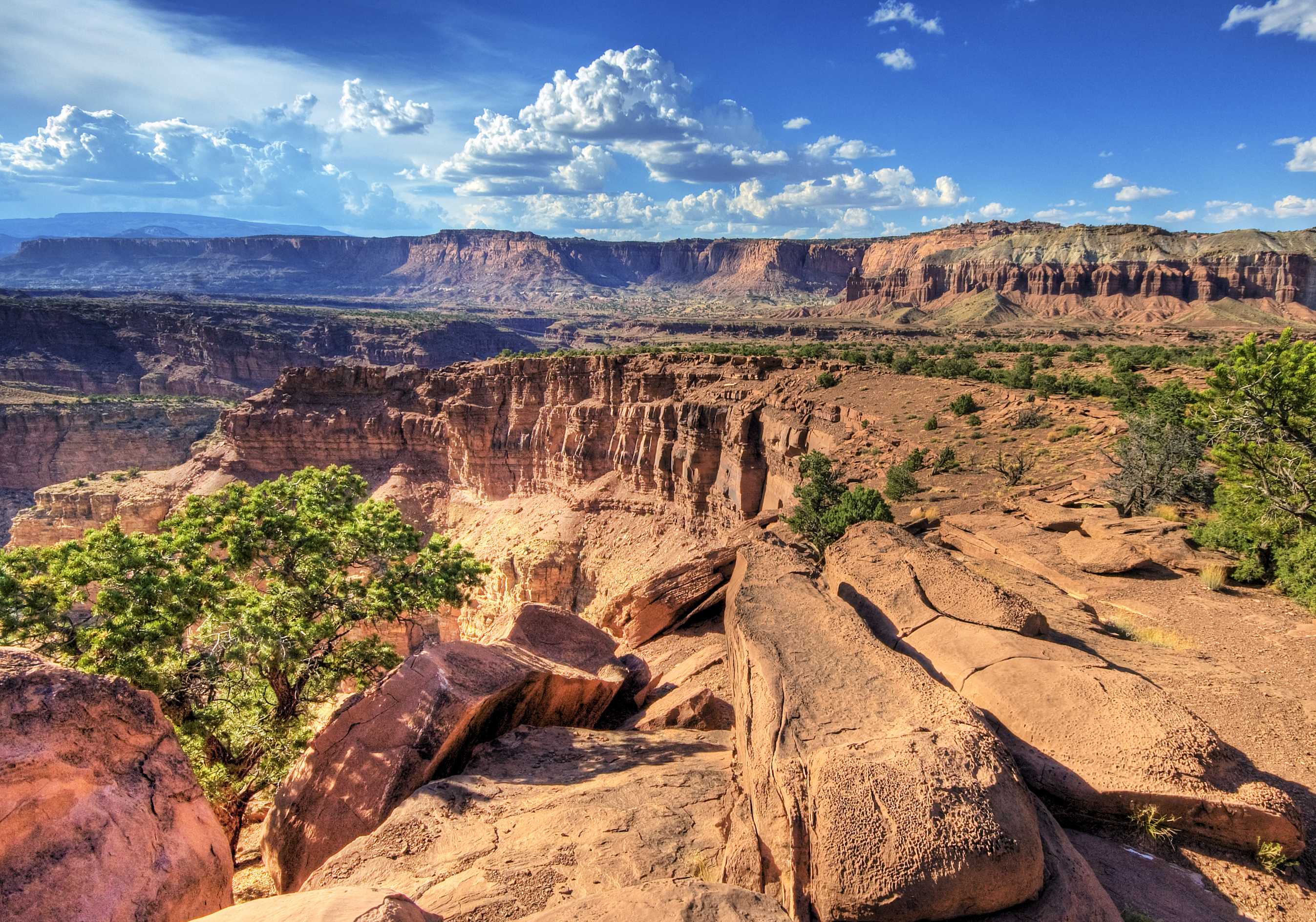
Three zones define the park: the Fruita area (paved roads, orchards, campground), Cathedral Valley in the north (remote, high-clearance 4WD required), and the southern Waterpocket Fold (backcountry only). The historic Fruita settlement left 2,700 fruit trees still maintained by the NPS; visitors may pick cherries, peaches, and apples in season for $2.00/lb, free to eat on-site.
A Brief History
Fremont culture farmers irrigated maize and squash along the Fremont River around the year 1000 and stored grain in stone granaries built partly from the black basalt boulders that litter the area. Mormon settlers arrived in the 1880s and founded Junction, later renamed Fruita, planting the orchards the park still maintains. President Franklin D. Roosevelt proclaimed Capitol Reef National Monument on August 2, 1937, after local boosters spent years promoting the area as "Wayne Wonderland." President Richard Nixon signed the act establishing Capitol Reef National Park on December 18, 1971.
Transportation
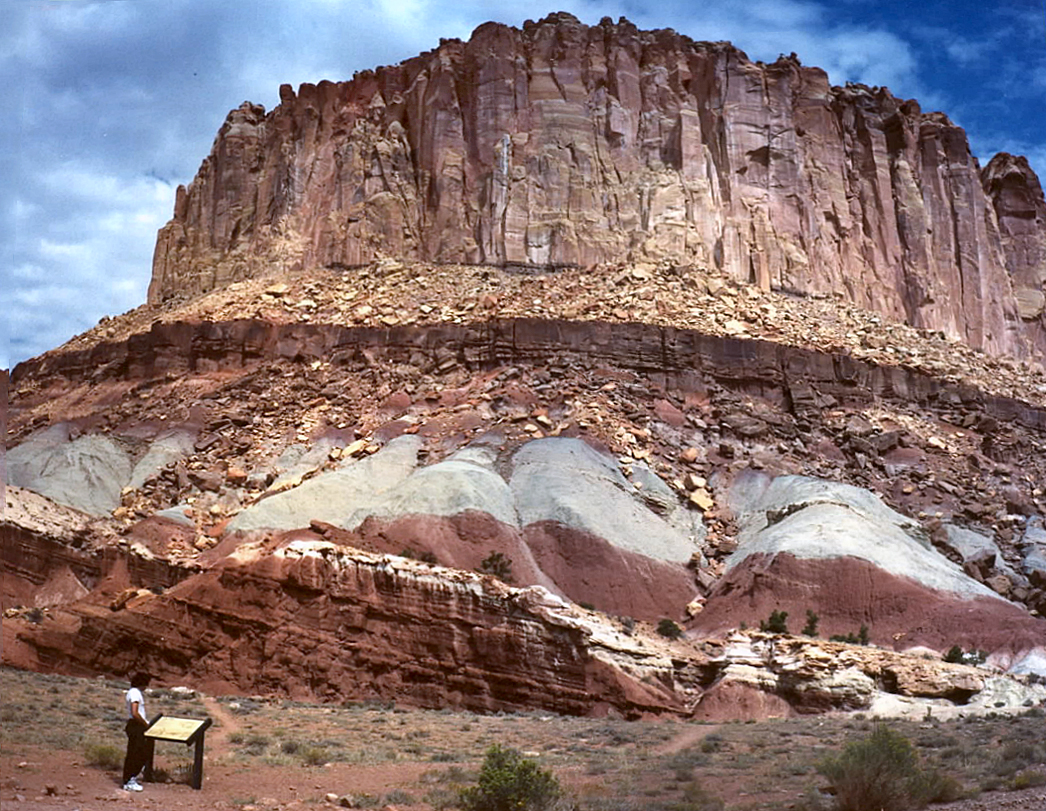
Capitol Reef is drive-only with no shuttle. From Salt Lake City (215 miles), take I-15 south to US-50 east to UT-24 west, about 3.5 hours. From Las Vegas (310 miles), take I-15 north to UT-20 to US-89 north to UT-24. Nearest commercial airport: St. George, 165 miles southwest. Rental cars are available in Richfield (70 miles north). The paved Scenic Drive (8 miles one-way) covers main attractions; the $35 vehicle entrance fee covers 7 days. Cathedral Valley loop (58 miles) requires high-clearance 4WD and a river ford; check daily conditions at the Visitor Center. No gas inside the park; nearest fuel is in Torrey (11 miles west).
Language, Customs & Etiquette
English is the working language. Leave No Trace rules apply: stay on established trails, pack out all waste, and do not remove rocks or soil. Fremont Culture petroglyphs near the Visitor Center are federally protected; no touching or flash photography. Orchard rules: hand-picking only, no ladders, no dogs in the orchard. Campfires are allowed only in Fruita Campground fire rings and prohibited in Cathedral Valley and the backcountry.
Safety & Security
Heat, flash floods, and remoteness are the main hazards. Canyon floor temperatures regularly exceed 100°F in summer; carry 1 liter of water per hour of hiking. Flash floods move through Grand Wash, Chimney Rock Canyon, and Capitol Gorge without warning; avoid slot canyons within 24 hours of any upstream rainfall. No cell service inside the park except marginal Verizon signal along UT-24 near the Visitor Center. Emergency: dial 911 or go to the Visitor Center. Nearest ER: Sevier Valley Hospital, Richfield, 70 miles north. Download AllTrails or Gaia GPS offline maps before arrival; you cannot download them once inside the park.
Weather & Climate
| Month | High °F | Low °F | Precip (in) |
|---|---|---|---|
| Jan | 42 | 20 | 0.6 |
| Apr | 65 | 36 | 0.7 |
| Jul | 97 | 63 | 0.8 |
| Oct | 68 | 38 | 0.8 |
Fruita sits at 5,500 feet elevation, with surrounding mesas reaching 8,800 feet. Spring (April to May) and fall (September to October) offer the best hiking with highs in the 60-70°F range and minimal crowds. Monsoon season runs July through mid-September, triggering afternoon flash floods. Cathedral Valley roads are impassable when wet. Winter access on UT-24 stays open year-round.
Logistics & Practical Info
The park is open 24 hours year-round. Visitor Center hours: 8 AM to 4:30 PM daily, extended to 8 PM in summer. Entrance fee: $35/vehicle (7-day pass); America the Beautiful Annual Pass ($80) covers all national parks. No gas, ATM, or grocery inside the park. Torrey (11 miles west) has fuel, motels, and a small grocery. Cell service is effectively absent inside the park. Time zone: Mountain (UTC-7, DST applies). Plug type: Type A/B, 120V. Tap water at Fruita Campground is safe to drink.
Attractions & Activities
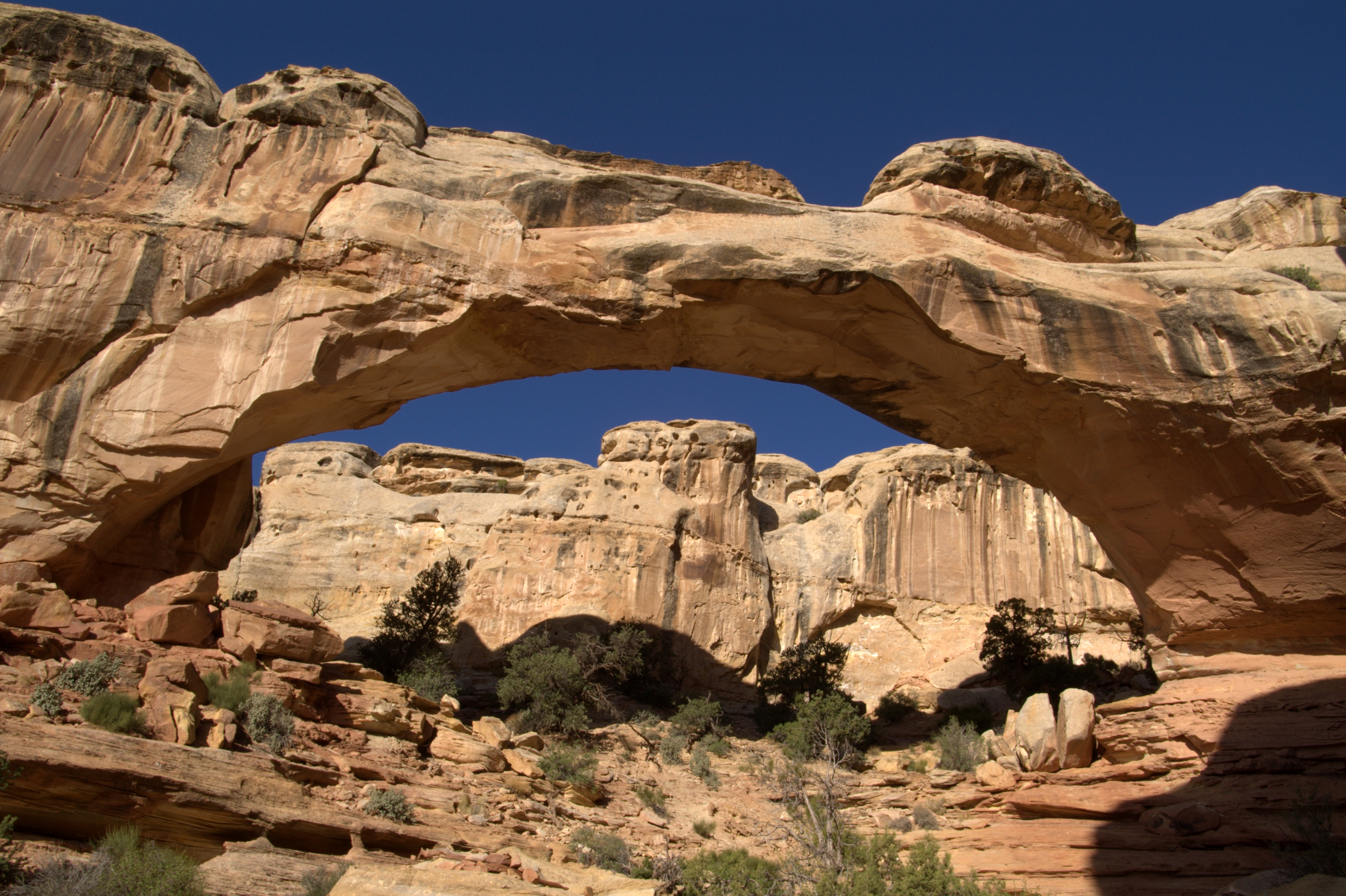
Hickman Bridge Trail (Wikipedia): 1.8 miles roundtrip, 400-foot gain. Leads to a 133-foot natural sandstone arch. Moderate; no shade after the first quarter-mile. Best before 9 AM in summer. Trailhead at UT-24 Mile Marker 99.
Grand Wash: 2.2 miles one-way, flat. Narrows to 20 feet wide in the canyon. Accessible from UT-24 (Mile Marker 97.4) or the Scenic Drive. The Cassidy Arch (Wikipedia) spur (1.75 miles roundtrip, 670-foot gain from the Scenic Drive) branches off mid-canyon.
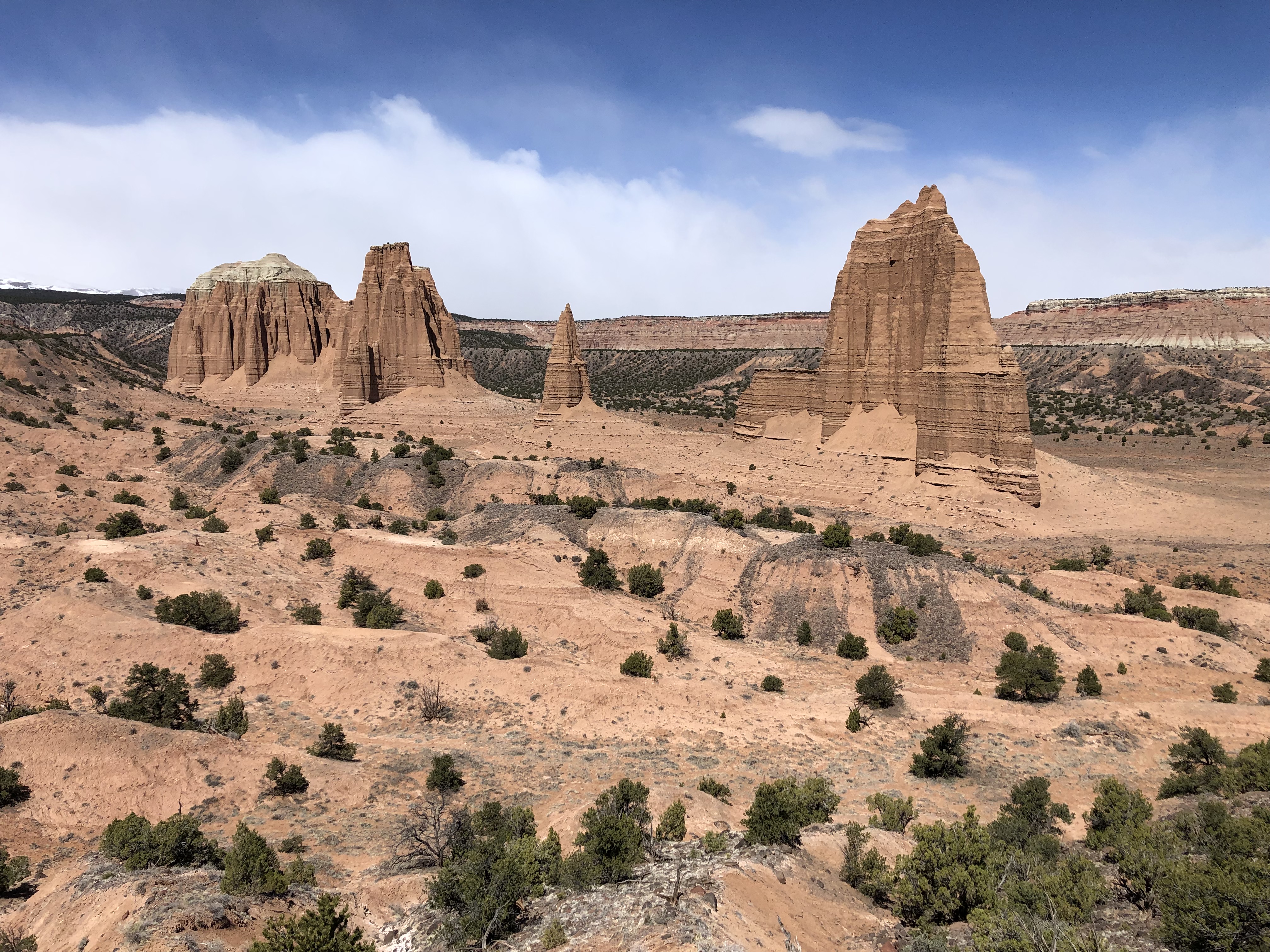
Cathedral Valley: Monolith formations up to 500 feet tall rising from flat desert. Glass Mountain (a selenite crystal mound) and the Temple of the Sun and Moon are the highlight formations. The 58-mile loop requires high-clearance 4WD and a full day. Free backcountry campsites available.
Fruita Orchards: Pick-your-own fruit in season: cherries (late June), apricots (mid-July), peaches (August), and apples (September to October). $2.00/lb to take fruit out; free to eat in the orchard. The orchards line the Fremont River near the campground; arrive early on weekend mornings in peak harvest periods when picking is competitive.
Health & Medical
Heat illness is the most common emergency; carry water continuously on summer hikes. Altitude at 5,500 feet causes fatigue for visitors from sea level. Ticks are present April through September in brushy canyon areas. No medical facility inside the park. Nearest urgent care: Wayne County Family Health Center in Loa, 30 miles west. Nearest ER with trauma capability: Sevier Valley Hospital, Richfield, 70 miles north.
Demographics & Government
Capitol Reef is administered by the NPS (established 1971). Wayne County (pop. 2,700) surrounds the park and is among the least densely populated counties in the continental U.S. Torrey (pop. 180), 11 miles west, is almost entirely tourism-dependent. The LDS Church has significant local membership; some Torrey businesses close on Sundays.
Legal & Substances
Recreational marijuana is legal in Utah for adults 21 and over but prohibited inside all NPS boundaries under federal law. Alcohol is permitted at campsites; no bar or restaurant inside the park. Torrey has one licensed restaurant serving alcohol. Utah grocery stores sell beer up to 5% ABV; full-strength spirits require a state liquor store. Firearms are permitted under Utah open-carry laws; discharging a weapon in the park is prohibited.
Customs & Shopping
The Visitor Center carries trail guides and geology books. No dedicated gift shop inside the park. Torrey has two restaurants and a general store with camping supplies. Full resupply in Richfield (70 miles north, Walmart). Utah sales tax in Wayne County is approximately 6.35%. Tipping 15-20% is standard at Torrey restaurants.
Accessibility & Inclusion
The Fruita area is largely ADA-accessible: the Scenic Drive, Visitor Center, and Fruita Campground restrooms all meet standards. The Fremont Petroglyphs boardwalk (0.1 miles, paved) is wheelchair-navigable. Hickman Bridge and Grand Wash involve unpaved rocky terrain and are not accessible. Cathedral Valley is inaccessible for mobility-impaired visitors. Service animals are permitted throughout the park.
Digital Nomad Corner
Capitol Reef is a 2-4 day detox from desk work, not a remote-work base. Cell service is absent inside the park, and the limited WiFi options make sustained productivity difficult. The Lodge at Capitol Reef (Mile Marker 98.5) offers WiFi averaging 15-25 Mbps in rooms, degrading on summer evenings.
Costs: Fruita Campground: $25/night (reserve at recreation.gov, books 6 months ahead). The Lodge: $180-260/night. Torrey motels: $95-160/night. A 3-day trip with Torrey lodging, meals, and park entry runs $400-600 per person. For reliable remote work, base in Cedar City (180 miles southwest) and day-trip to the park.
Visas: B-2 tourist visa allows up to 6 months; ESTA Waiver Program covers 90 days for nationals of 42 eligible countries. No U.S. digital nomad visa exists; remote work for a foreign employer on a B-2 is a legal gray area under USCIS rules.
Keep planning: Amicalola Falls State Park Guide, Arches National Park Guide: Delicate Arch & Top Trails and Badlands National Park Guide: Loop Road and Wildlife.